


By Salome Zaalishvili
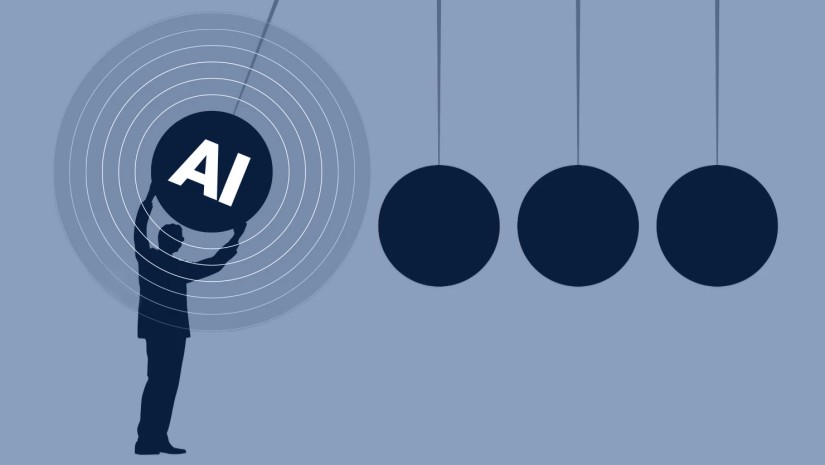
With the unveiling of Midjourney [AI image generator program] in 2022, image and text based AI technology has started to be more intensely incorporated into our everyday lives. AI has become a sort of a buzzword put into every product name to generate initial hype and revenue. How does AI really impact our daily lives, job stability and creative opportunities. What’s beyond the nonsensical techy words, will AI replace humans?!
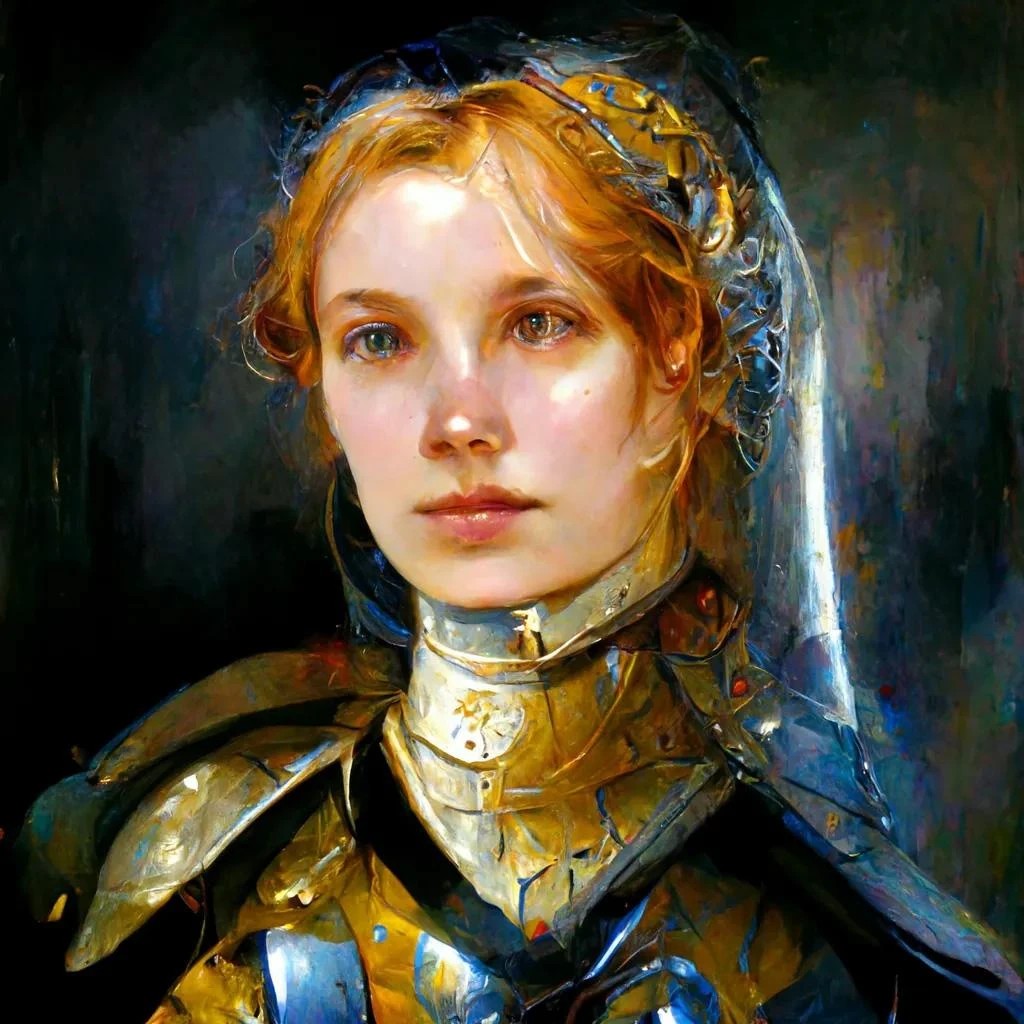
Image generated using Midjourney V1
Humans vs AI - limitations of existing AI models
AI models accelerate the process of understanding and interpreting data. We can more efficiently collect data, analyze it, find patterns and make predictions, but questions arise when we mention human creativity. AI is a computer model, AI cannot think and have human emotions, it can only “spit out” a target image or a text based on the prompt you give it based on available data.
The question of whether AI can completely replace human creativity is complex. Generative AI tools operate differently from human learning and creativity. Theo Omtzigt, chief technology officer at Lemurian Labs, told CNBC in December 2023 that without a clear understanding of how humans learn and develop creativity, it is challenging to instill these qualities in an artificial system. Technically speaking AI can't create what doesn’t already exist or a human hasn’t already imagined, in order for AI to be able to expand we need for humans to keep creating, if we don’t update their database with the newest information available current AI models will get stuck in time.
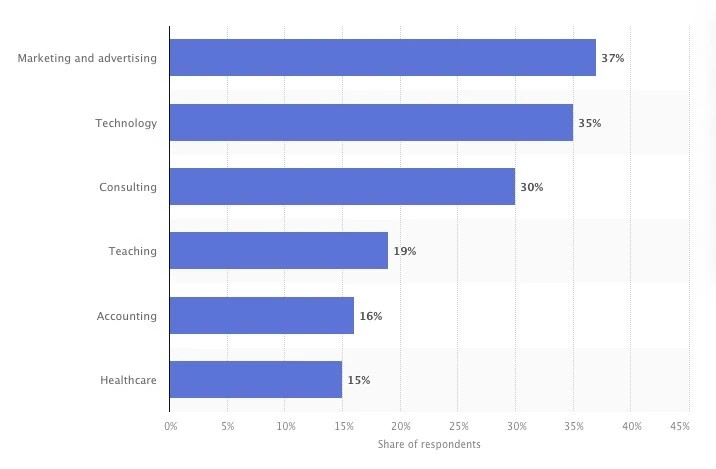
Rate of generative AI adoption in the workplace in the United States 2023
Statista
Despite experts assuring us that AI will not be able to replace the human mind in creative fields, generative AI tools are expected to disrupt certain industries. According to statistics on Generative AI adoption rate at work, marketing and advertising sector already had a 37% AI adoption rate by 2023. According to the World Economic Forum, about 85 million jobs could be replaced by automation and Artificial Intelligence by 2030. Office workers, customer service representatives and production workers are predicted to be among the most affected job categories.
AI integration into Ecommerce - legal hurdles and how companies are overcoming them
E-commerce welcomes AI integration, image based retail websites have been testing out different forms of AI integration for a few years now, but this process hasn't gone down without a few hiccups.
The most recent company to sue over copyright infringement is Warner Bros. Discovery, according to the lawsuit filed in the central district court of California on the 4th of September Warner Bros Discovery alleges that Midjourney was trained on the company’s intellectual property, the studio attaches dozens of images showing the tool’s outputs compared to stills from its movies and TV shows. Batman, Superman and Scooby-Doo are just a few of the characters midjourney has clearly copied. 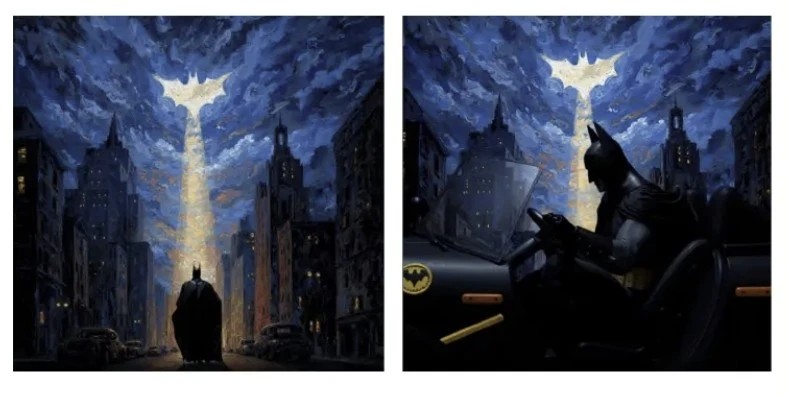
Stills from a video generated by Midjourney
Most AI image generators currently are considered to be commercially unsafe, meaning big brands are still wary to trust the existing AI models since the legal waters surrounding the AI usage are still quite murky and the data most AI is being trained on is largely copyrighted material; As a result there is a huge gap in the market for a commercially safe stock library, what has been the most recent and safest approach is training AI on a set list of data the companies have full copyright of.

Image modified using eBay’s native AI enhancement tool
Source
Large marketplaces like Etsy, eBay and from August of this year, with the update in their terms & conditions, Vinted have started to actively use the hosted image and text based data to train AI models, we are yet to see what the data collection will be used for beyond product suggestions and product image enhancement, but we can see current examples of AI implementation elsewhere.
Dyson, a large player in the household appliances market, has been actively using AI to give accurate and tailed descriptions of their products to customers to maximize sell through rate with more integration to come.
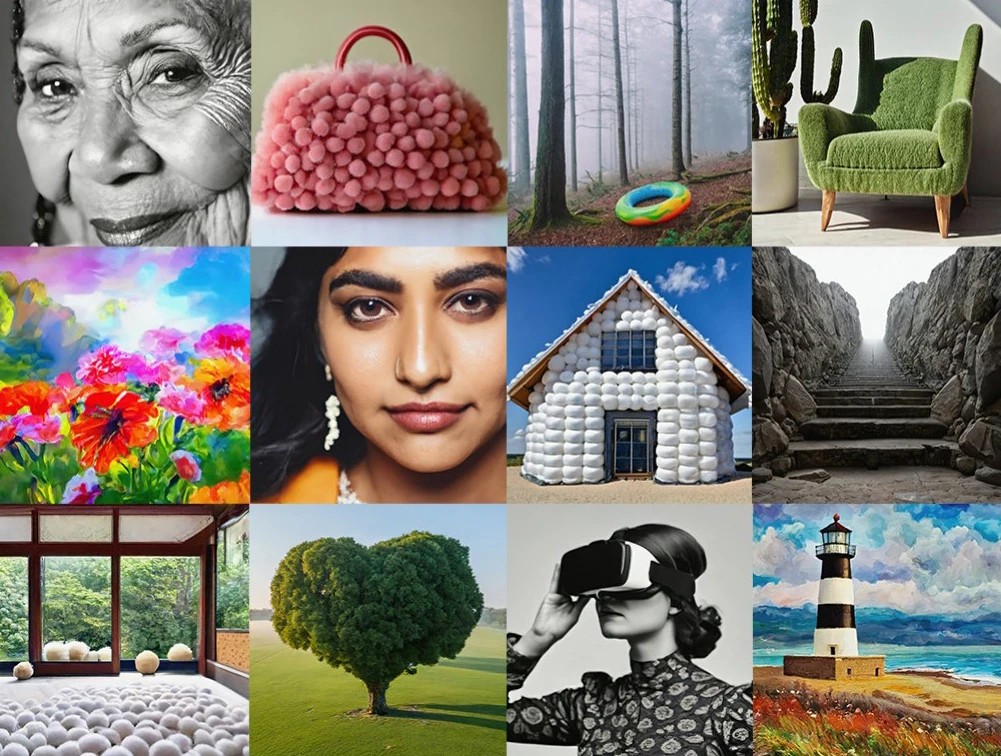
Getty Images
There’s plenty of websites today that solely focus on generative art and imagery, Adobe has also been actively pushing AI and has been integrating it into Creative Cloud, GettyImages has started to offer a paid service allowing users to create or modify already existing commercially safe and legally protected images using their native AI.
Emergence of AI advertisements on the market

AI generated advertising inside Vogue’s August Issue
AI adverts and art are slowly creeping into the commercial world, Vogue’s August issue made headlines across the internet with Guess advert clearly depicting AI “models”, despite the fact that the inclusion of these AI-generated “models” has led to sparked concerns about unrealistic appearance standards compared to real models, debate over alternative hiring practices and subscription cancellations from appalled users, the advert went viral online with dozens of articles written on it and millions of views across multiple social media platforms the campaign can be considered a success, this marks the first time an AI model has appeared in a print advertisement for a major fashion magazine.
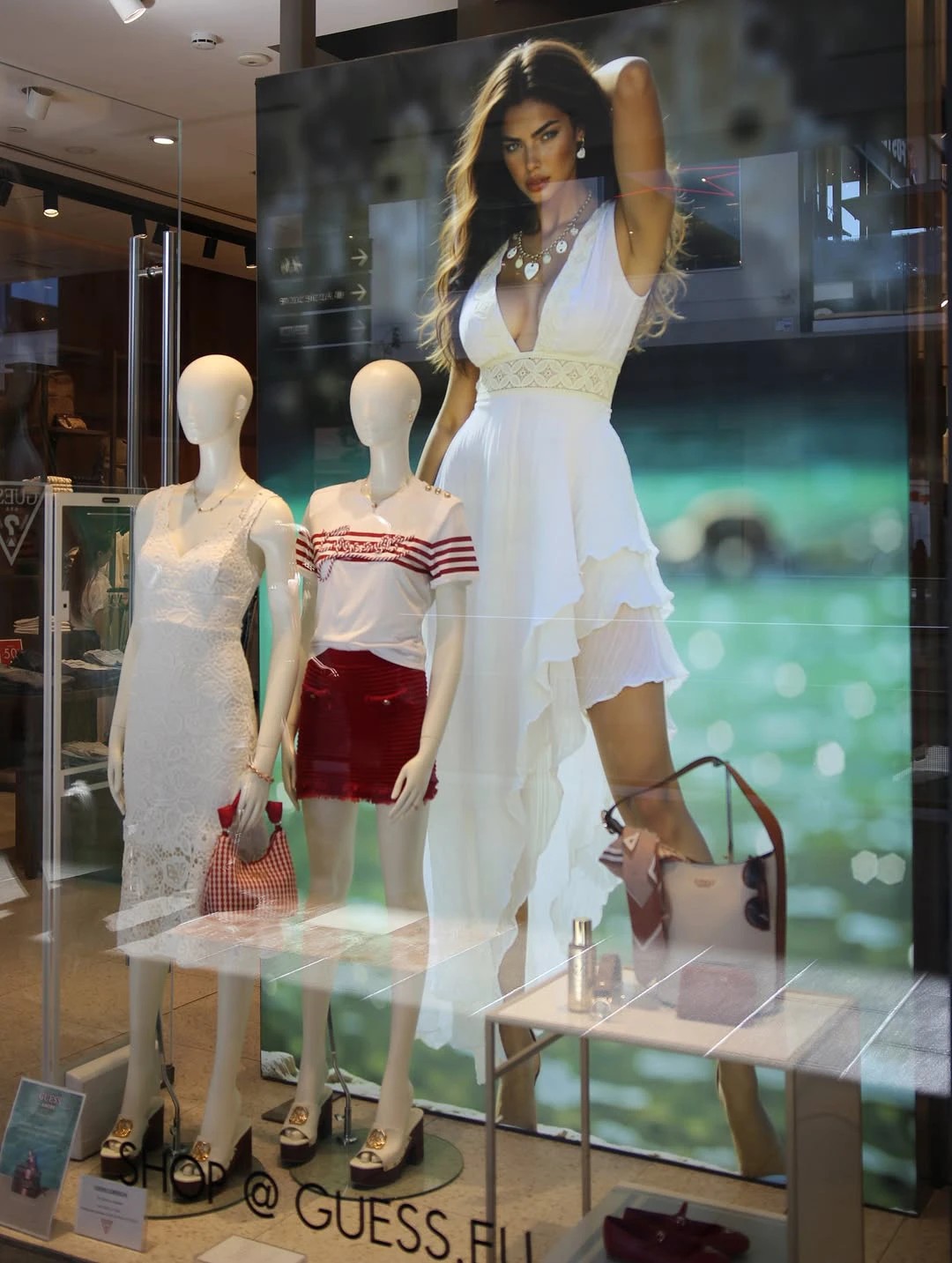
An image generated by Seraphinne Vallora displayed inside a Guess store
The advert was created by Seraphinne Vallora - an AI startup. When commenting, Co-founders Valentina Gonzalez and Andrea Petrescu emphasized that "AI models are not meant to replace humans, but rather serve as an alternative. We still use real models for photography, and this process itself is a creative process, designed and executed by humans." while their official website claims to "save on expensive photographers, makeup artists, venue rentals, and model hires," raising criticism about whether they actually employ creative talent.
Where do we stand today
According to a comprehensive report published by Wondercraft, an AI audio generation company, 38.7 percent of creators currently use AI throughout their workflow, with 44.2 percent using AI in parts of their process. That means nearly 83 percent of creators who responded to the survey are using AI in some shape or form.
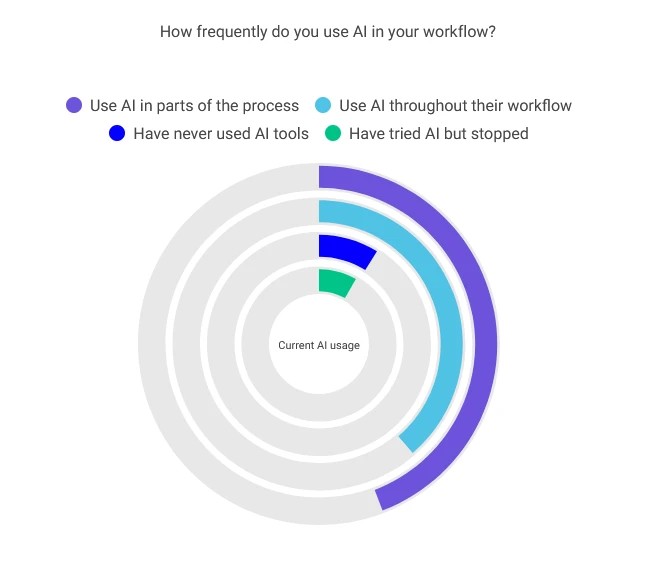
The AI Image Generator Market is estimated to increase from USD 8.7 billion in 2024 to USD 60.8 billion in 2030, experiencing a compound annual growth rate (CAGR) of 38.2% during the forecast period. More than 15 billion images were created using text-to-image algorithms in 2022-2023 only. To put this in perspective, it took photographers a few dozen years, from the first photograph taken in 1826, to reach that mark.
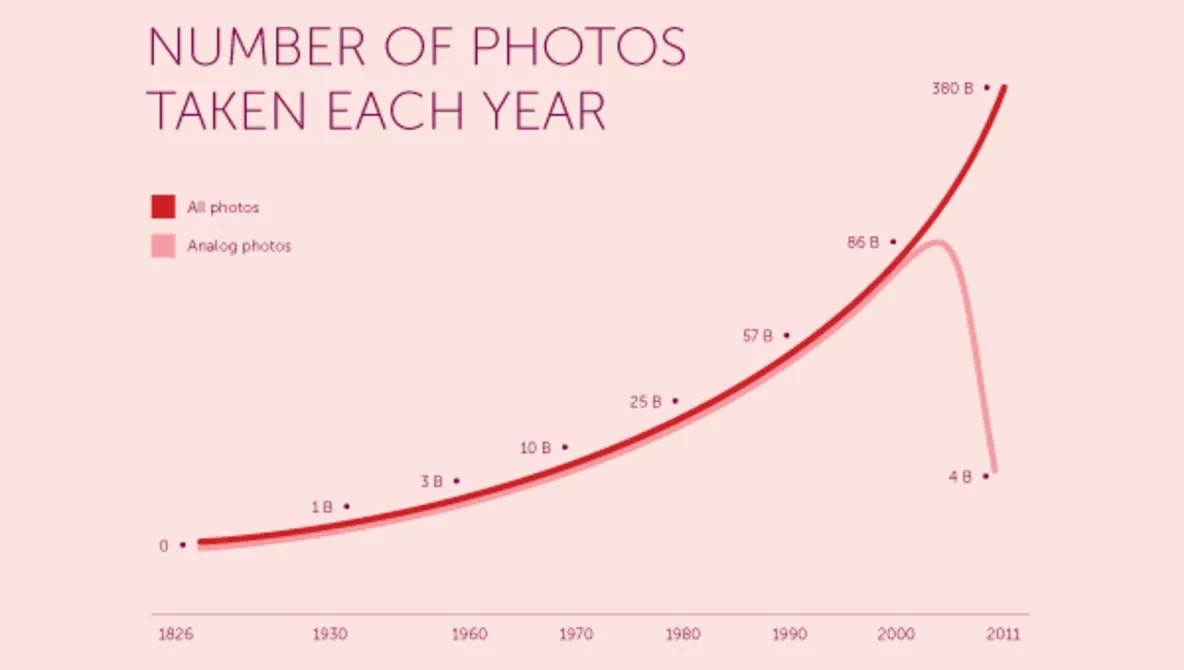
The wider integration of AI technology is still new, but with the rising demands of the creative industry pushing individuals towards inhumane productivity and perfection most will turn to AI to take the workload off them when possible, it is inevitable that we see more and more people adapting to using AI tools as a form of an assistant or collaborator, as for when it comes to AI replacing humans it will take years of research for that to even become a possibility.