


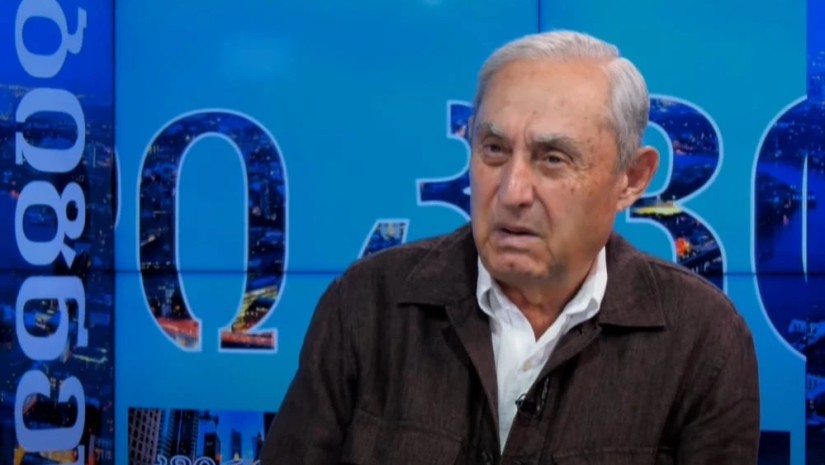

Georgian businessman and former state official David Saralidze has voiced concern over the recent detention measures taken against Mamuka Khazaradze and Badri Japaridze, co-founders of TBC Group. In an interview with BMG, Saralidze emphasized that such actions could damage both Georgia’s economic credibility and its investment climate.
“I don’t think these prison measures are good for business,” Saralidze said, pointing out that the arrests threaten not only individual reputations but the foundations of economic progress built over the past three decades.
Saralidze, who played a key role in the formation of Georgia’s Tax Service and Ministry of Finance, highlighted the critical role that Khazaradze, Japaridze, and the TBC Group played in shaping Georgia’s modern economy during the challenging 1990s.
“The tax inspectorate had no real history before the market economy. In 1993, the national budget was only $40 million. Within three years, it rose to 1 billion GEL, with a GDP of 7 billion GEL. That growth wasn’t just a result of laws, it came from unity and support,” he recalled.
Saralidze emphasized that entrepreneurs like Khazaradze and Japaridze emerged during this transformative period, helping to establish the foundations of private enterprise in Georgia. “I have no personal ties with Mamuka, I’ve never borrowed from TBC Bank, but I know the value of the projects the TBC Group has created,” he said.
One of those projects is Lisi Development, which transformed a largely undeveloped area on the outskirts of Tbilisi into one of the capital’s most desirable districts. “People from my generation remember it as just a forest,” Saralidze said. “Now it’s a model of modern urban planning. That didn’t happen easily.”
Saralidze warned that the arrests could undermine Georgia’s access to vital foreign investment networks, networks that groups like TBC have cultivated for years.
“Every person who can go and talk to investors abroad is essential to Georgia’s future,” he explained. “TBC Group has built strong partnerships and facilitated portfolio investments, where a Georgian entrepreneur convinces a foreign investor to put money into the country, even without being physically present.”
According to Saralidze, these types of investments are not just financial, they represent confidence in Georgia's long-term potential. Cutting off such relationships, he warned, could significantly slow the country’s economic momentum.
While Saralidze acknowledged that a new generation of entrepreneurs will eventually emerge, he warned that time will be lost in the process. “Such businessmen must be warned, not replaced. If we remove them from the business landscape today, we will lose years of experience and trust.”
In closing, he reiterated that politically motivated legal actions against key economic figures threaten to destabilize not just reputations, but the structural progress made in Georgia’s private sector.
“We have people in Georgia who helped move this country forward. Let’s not be so quick to push them out. This will not end well, for business or for the country.”