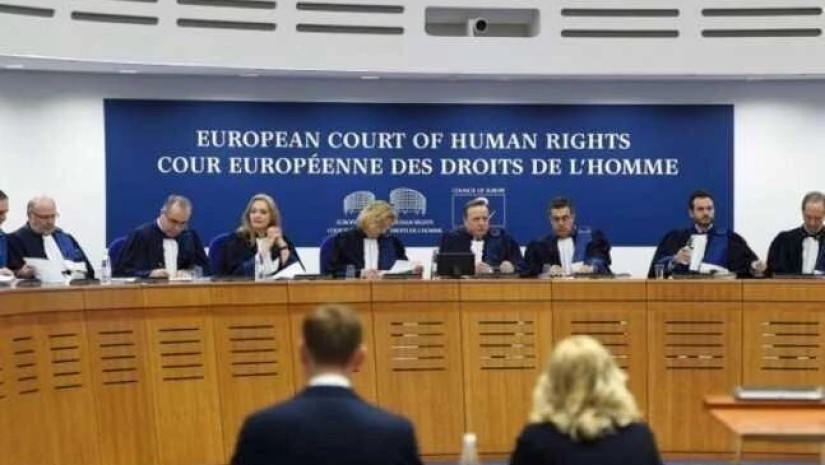

The Grand Chamber of the European Court of Human Rights has announced the judgement on the case of Georgia v. Russia. the European Court of Human Rights held, by sixteen votes to one, that Russia had to pay Georgia 10,000,000 euros in respect of non-pecuniary damage suffered by a group of at least 1,500 Georgian nationals.
The compensation has to be distributed to the individual victims by paying EUR 2,000 to the Georgian nationals who had been victims only of a violation of Article 4 of Protocol No. 4 (collective expulsion), and EUR 10,000 to EUR 15,000 to those among them who had also been victims of a violation of Article 5 § 1 (unlawful deprivation of liberty) and Article 3 (inhuman and degrading conditions of detention) of the European Convention on Human Rights, taking into account the length of their respective periods of detention.
In a judgment on the merits, delivered on 3 July 2014, the Court held that in the autumn of 2006 a coordinated policy of arresting, detaining and expelling Georgian nationals had been put in place in the Russian Federation and had amounted to an administrative practice for the purposes of
Convention case-law.
The Court also held that there had been a violation of, inter alia, Article 4 of Protocol No. 4, Article 5 §§ 1 and 4 and Article 3 of the Convention, and of Article 13 taken in conjunction with Article 5 § 1 and with Article 3.
As the question of the application of Article 41 of the Convention was not ready for decision, the Court had reserved it and invited the applicant Government and the respondent Government to submit their observations on the matter and, in particular, to notify the Court of any agreement that they might reach. As the parties had not reached an agreement, the applicant Government had submitted their claims for just satisfaction and the respondent Government had submitted their observations.
On 6 November 2015 the President of the Grand Chamber invited the applicant Government to submit a list of the Georgian nationals who had been victims of a “coordinated policy of arresting, detaining and expelling Georgian nationals” put in place in the Russian Federation in the autumn of 2006. The applicant Government filed a list of 1,795 alleged victims on 1 September 2016. On 13 September 2016 the President of the Grand Chamber also asked the respondent Government to submit their comments on the list filed by the applicant Government, which the respondent Government did on 13 April 2017.