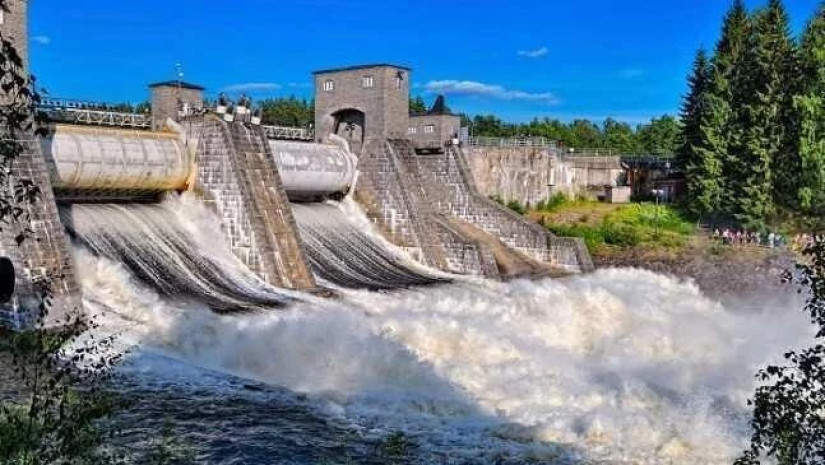

According to Galt&Taggart, electricity generated by domestic sources increased by 30.2% y/y to 1.1TWh in April 2018, 25.2% above the planned level. Hydro generation showed significant increase (+41.1% y/y) in April 2018, 21.9% the planned level:
• Enguri/Vardnili generation more than doubled increasing by 135.4% y/y. This significant increase can be explained by good hydrological conditions and last year’s low base (-13.8%). Notably, in April 2018, Abkhazian region consumed only 35.7% of electricity generated from Enguri/Vardnili, for comparison this share equaled 96.9% in April 2017.
• Generation of other regulated and deregulated HPPs also increased by 6.0% y/y and 17.0% y/y, respectively, due to high water flow and addition of new HPPs (Dariali and Khelvachauri) to the group of deregulated HPPs. The surplus in hydro generation reduced thermal generation (-58.6% y/y) and imports (-92.3% y/y).
Electricity imports almost halved (-92.3% y/y) to 11.2 GWh in April 2018 and accounted for only 1.0% of total supply. Most of the imported electricity came from Russia (87.3% of total), while the rest came from Azerbaijan.
The guaranteed capacity fee was down 7.8% y/y to USc 0.73/kWh in April 2018, due to increase in consumption, which serves as a base for guaranteed capacity fee calculation. Guaranteed capacity was provided by all five sources for entire month, with only Gardabani CCGT operating for the first decade of the month, while other thermal power plants being mostly on standby.