


Autor: Rainer Michael Preiss, Partner & Portfolio Strategist at Das Family Office in Singapore
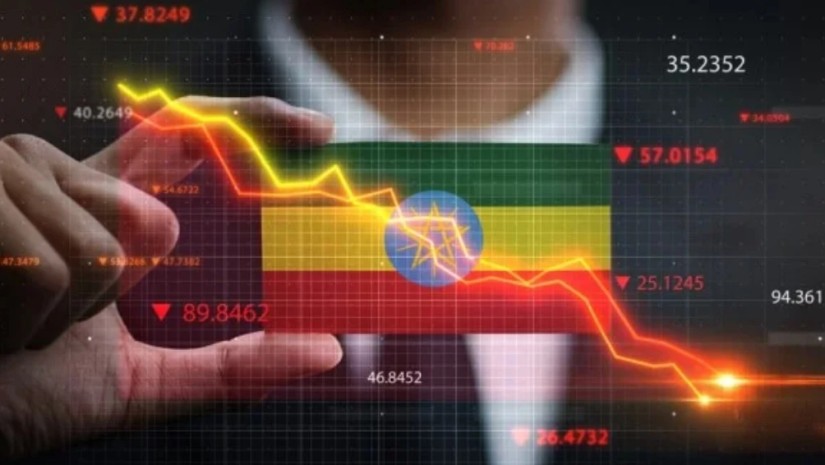
Addis Ababa means new flower and the city has a new stock market. Ethiopia, one of the fastest growing economies in the world also has the newest and youngest stock market not only in Africa but in the world. Ethiopia has registered some of the continent's fastest economic growth rates for years.
Ethiopia is the oldest African country, yet in many respects it is in Africa, rather than of Africa.
There are few countries in Africa that are as enriched and burdened by the past as Ethiopia
Federal Democratic Republic of Ethiopia (FDRE) has the potential highest growth in Africa and Africa youngest stock. Family office clients and Smart money should become aware of Ethiopia investment opportunities.
In early January Ethiopia inaugurated its new stock market—the Ethiopian Securities Exchange (ESX)—marking the country's first stock exchange since the 1970s and the red terror of the Mengistu regime.
In March 2025, Ethiopia began awarding licenses to first-of-their-kind financial intermediaries CBE Capital S.C. and Wegagen Capital Investment Bank. This marks a crucial step forward—though still early in the development of a functioning capital market.
Africa has 54 internationally recognized countries and about 30 stock exchanges, Ethiopia the newest and potentially most interesting stock market.
Ethiopia’s 2026 forecasted growth rate—between 7 % and nearly 9 %—places it among the top-performing economies globally. Within Africa, Ethiopia remains among the leaders for high real GDP growth.
Ethiopia is not only Africa’s second-most populous nation — it is also one of the continent’s oldest continuous civilizations. With a recorded history stretching back over 3,000 years, it was home to the ancient kingdom of Aksum, a major trading empire and an early adopter of Christianity. Uniquely among African states, Ethiopia was never colonized, maintaining its sovereignty through the late 19th- and 20th-century scramble for Africa, except for a brief Italian occupation (1936–1941) that ended with liberation during World War II. Ethiopia was also home to Africa’s last emperor, Haile Selassie I, a towering figure in Pan-Africanism and international diplomacy, who reigned from 1930 to 1974. Similar to the Khmer rouge of Cambodia, Ethiopia’s DERG reined by red terror and completely closed the country.
Today however and under Nobel prize winner Ethiopia prime minister Abi Ahmed, Ethiopia as Africa’s second-most populous nation is one of its fastest-growing economies— and the country has reappeared on the capital-markets map with the formal launch of the Ethiopian Securities Exchange (ESX). After decades without a functioning securities market, the ESX offers a potentially transformative platform to channel domestic savings into business investment, give firms an alternative to bank financing, and open new opportunities for both local and international investors. But the upside comes with material risks: market infancy, limited liquidity, macro volatility and governance uncertainties. Below I outline the core elements of the investment case, who stands to benefit, and the practical risks investors should weigh.
Why this matters now
The ESX’s launch is part of a broader policy push to liberalize Ethiopia’s economy: the government has floated the currency, relaxed some sectors to foreign participation, and set up a regulatory framework (the Ethiopian Capital Market Authority) to supervise the new market. The exchange has already begun trading money-market instruments and listed government T-bills — a pragmatic first step that builds trading infrastructure and price discovery before a broader set of equity listings. The exchange’s creation reflects a strategic desire to mobilize private capital for economic growth and reconstruction after years of conflict and economic strain.
Market structure and early signals
ESX is structured as a modern platform with an accompanying Central Securities Depository and an interbank electronic trading facility that was piloted in late 2024. Several domestic banks and state-owned enterprises contributed capital to the exchange’s setup, signalling initial local buy-in; pilot activity has already enabled significant interbank trading volumes. The authorities have publicly targeted dozens — ultimately up to 80–90 — listings over the coming decade, with large state-owned assets such as Ethio Telecom repeatedly flagged as potential headline listings that could generate scale and liquidity.
Investment opportunities
Early-stage equity exposure — A new market naturally means first-mover opportunities. Local champions (banks, telecoms, logistics firms, large consumer goods companies) could list and provide outsized returns if Ethiopian growth resumes and governance improves.
Fixed-income and yield play — The initial listing of government T-bills and the interbank platform create a liquid venue for short-term securities and a local yield curve — attractive for domestic institutional investors and foreign investors comfortable with local-currency exposure.
Private capital exits — A functioning secondary market gives private equity and venture investors an exit route, encouraging more upstream investment into Ethiopian SMEs and growth companies.
Infrastructure and FX-linked plays — As the exchange deepens, opportunities in financial services (brokers, asset managers, custodians), fintech and infrastructure financing via debt issuances can scale faster than in an unlisted environment.
Why investors should be cautious
Market infancy & liquidity risk. New exchanges often suffer from thin trading, wide bid-ask spreads and concentration of market cap in only a few names — making entry and exit difficult for large investors. Expect initial illiquidity.
Macroeconomic & currency risk. Ethiopia has experienced inflationary pressure and external financing challenges in recent years; currency volatility and debt questions remain relevant to foreign investors. These macro factors can compress returns and complicate repatriation of funds.
Political and security risk. Regional and domestic tensions can affect investor confidence and operational continuity. Political commitment to deeper privatization and independent regulation will be watched closely.
Regulatory, governance and disclosure standards. Market integrity depends on robust enforcement, company reporting and protections for minority shareholders. Building that culture takes time and resources.
Practical considerations for investors
Start with smaller, staged allocations. Consider portfolio exposure through a phased approach: local-currency short-term government securities first, then selective equity exposure as liquidity develops.
Partner locally. Use local custodians, brokers and advisors who understand operational, tax and FX procedures; compliance complexity favours on-the-ground partners.
Hedge currency when needed. Foreign investors should plan for currency risk — either through hedging (where available) or by structuring allocations so that returns are meaningful in local-currency terms.
Watch for anchor listings. The listing of a big, well-governed company (for example, a portion of Ethio Telecom or large banks) could materially improve market depth and attract foreign portfolio flows. Follow timetable announcements closely.
Bottom line
Ethiopia’s securities exchange is a landmark structural step that — over the medium term — can unlock meaningful private capital for local businesses and provide new investment avenues for regional and international investors. In the near term, however, it will be an illiquid, high-risk market that rewards patient, informed, and locally partnered investors more than short-term speculators. For investors who believe in Ethiopia’s long-term growth story and who can manage macro, political and liquidity risk, the ESX offers a rare early-entry window into one of Africa’s largest untapped markets. For others, the prudent approach is to monitor anchor listings, institutional participation, and regulatory track records before making sizable commitments.
Ethiopia’s long-Term Vision is Targeting ~90 listings in 10 years, especially including major state-owned enterprises to liberalise its economy.
The Ethiopian Capital Markets Authority (ECMA) has said it wants to gradually open the market to institutional and foreign investors in the coming years, once trading systems and regulations stabilize.
They are working on foreign investor guidelines, expected after 2026.
What’s Coming Next
Phase 1 (2025–2026): Ethiopians only on ESX, building local broker/dealer ecosystem.
Phase 2 (2026–2028): Controlled access for diaspora Ethiopians and foreign institutional investors.
Phase 3 (after 2028): Broader opening for global investors, with custodians, FX arrangements, and repatriation rules.
This information is provided for educational and informational purposes only and does not constitute financial, investment, legal, or tax advice. Investing in Ethiopia involves significant risks, including but not limited to political, economic, regulatory, foreign exchange, and liquidity risks. Ethiopia’s capital markets are in the early stages of development, and access for foreign investors is limited or subject to change without notice. Past performance of investments in similar markets is not indicative of future results.
Potential investors should conduct their own independent research and due diligence and seek advice from qualified financial and legal professionals before making any investment decisions. Neither the author nor any related parties assume liability for any losses, damages, or consequences arising from reliance on the information provided herein.