




Mother's Day is a special occasion to honor maternal love in all its forms. One of the most meaningful ways to mark this day is through art - Across centuries, artists have used this theme to explore human relationships, emotions, and the very essence of life. From soft, colorful illustrations to iconic masterpieces, artworks celebrating motherhood are as diverse as the experiences they depict.
In this article, we will look at some of the most expensive art depicting mothers and motherhood to ever be sold at auction.
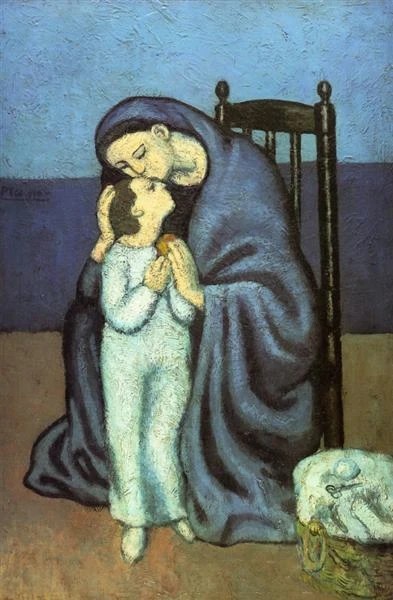
Pablo Picasso ($24.8 million): Maternité (1901)
Picasso’s Maternité (1901) depicts a mother and child, often interpreted as a tender, serene scene, sometimes reminiscent of the Virgin Mary, though painted during a period of emotional struggle for the artist following the death of a friend.
At the time of sale the auction house described the painting as a “majestic, tender but unsentimental affirmation of maternal love”
Over the course of his long career Picasso returned to the theme of motherhood countless times, his interpretation of the theme also changed with time, depicting all aspects of motherhood from warmth and happiness to sadness, poverty and the pure agony of losing a child as seen in one of his most famous works - Guernica. Maternité (1901) belongs to the earliest phase of Picasso's Blue Period (1901–1904), paintings of this period depict a mother figure that reflects sadness, melancholy, and poverty. Such portrayals also hark back to Emile Zola and Naturalist impulses of the late nineteenth century. The life-giving mother figure is paradoxically placed in a dark, blue-gray context that evokes death, illness, and suffering. “The almost monochromatic use of blue in this period, and its traditional association with the Madonna, are superbly combined to produce a set of haunting, almost ghostly images”
At the time of its 1988 sale, it set a record for 20th-century art and the fourth-highest price ever paid for an artwork, selling for $24,8 million at Christie’s.

Louise Bourgeois ($32.8 million): Spider (1996)
Louise Bourgeois' Spider (1996), her iconic giant spider—is one of her most celebrated works, the work sold for $32.8m at Sotheby's in New York on May 18, 2023.
Bourgeois returned to the theme of spiders later in life, during her eighties, sculpting the form at scales ranging from miniatures to the towering renditions now synonymous with her name. Her most iconic spider has broken the record for most expensive artwork by a woman three times in a row, first time she broke the record in 2006, when one of her spiders sold for $4 million at Christie's in London.
Bourgeois has widely acknowledged that the figure of the spider was an ode to her mother, Joséphine, a woman who repaired tapestries in the family’s textile restoration workshop in Antony, a suburb of Paris. Bourgeois lost her mother when she was just 21 year old, experiencing a deep emotional crysis due to the event she tried comitting suicing by jumping into a river. As she has described: “My best friend was my mother and she was deliberate, clever, patient, soothing, reasonable, dainty, subtle, indispensable, neat, and useful as a spider”.
It has to be noted that all of Bourgeois most expensive artworked sold in the past two decades are all depicting Spiders, with the last three sold in 2015, 2019 and 2023.
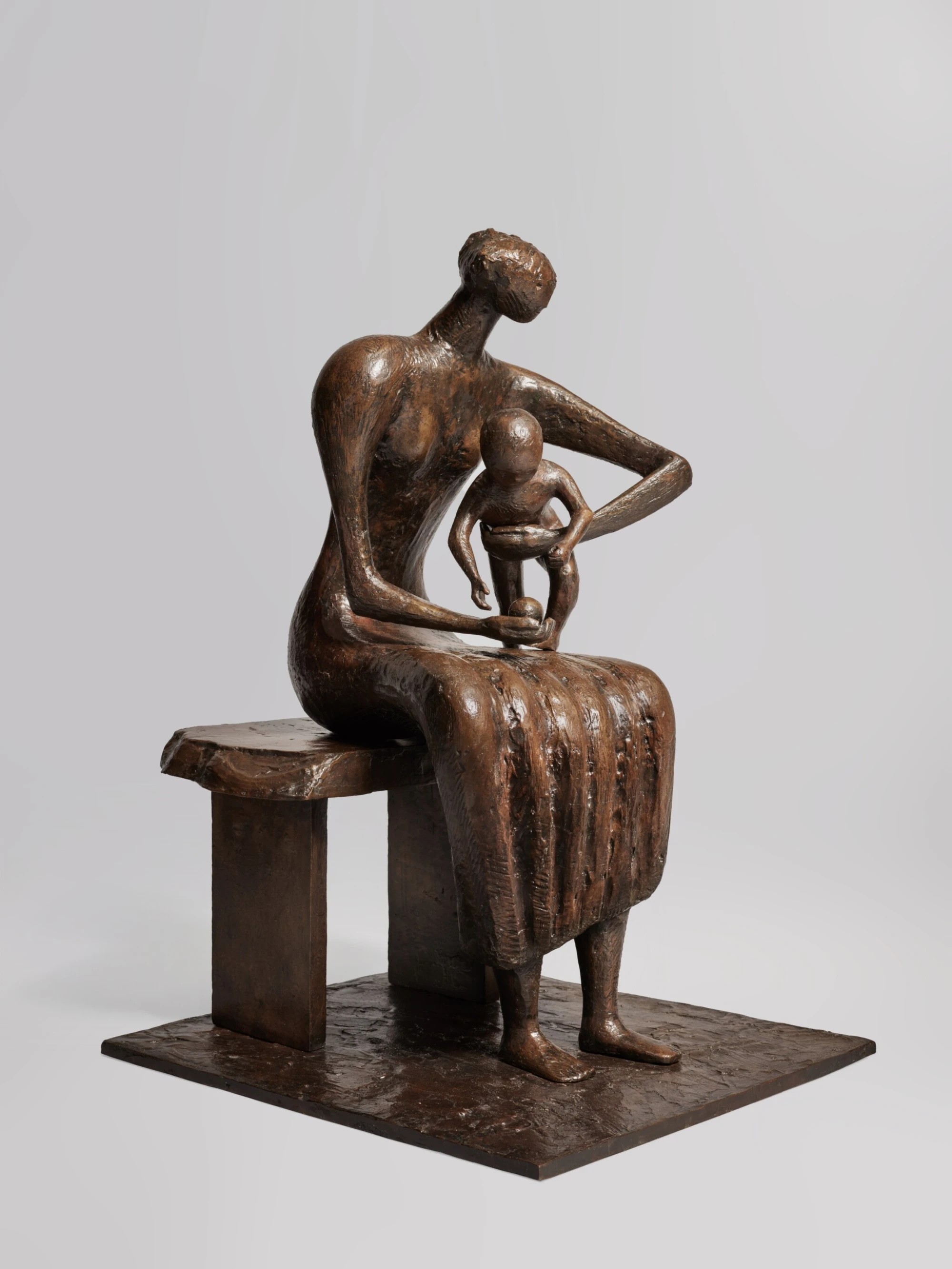
Henry Moore (£5.0 million): Mother And Child With Apple (1956)
The mother and child theme was one of the most important and enduring subjects in the career of Henry Moore. He returned to it repeatedly from the early 1920s until the 1980s, producing dozens of variations in stone, bronze, and drawings.
Mother And Child With Apple (1956), the mother exudes strength and stability, grounded and protective, as she interacts with her standing child, who playfully engages with an apple in her lap. This scene captures a tender and everyday human connection. Part of a limited edition of 10, the artwork fetched £5 million at Christie's in February 2014, marking a record price for this piece.
Moore’s fascination was partly inspired by prehistoric and non-Western art. He was deeply influenced by Neolithic figurines, African sculpture, and Mexican monuments, where mother-and-child imagery often symbolized fertility, life, and protection.
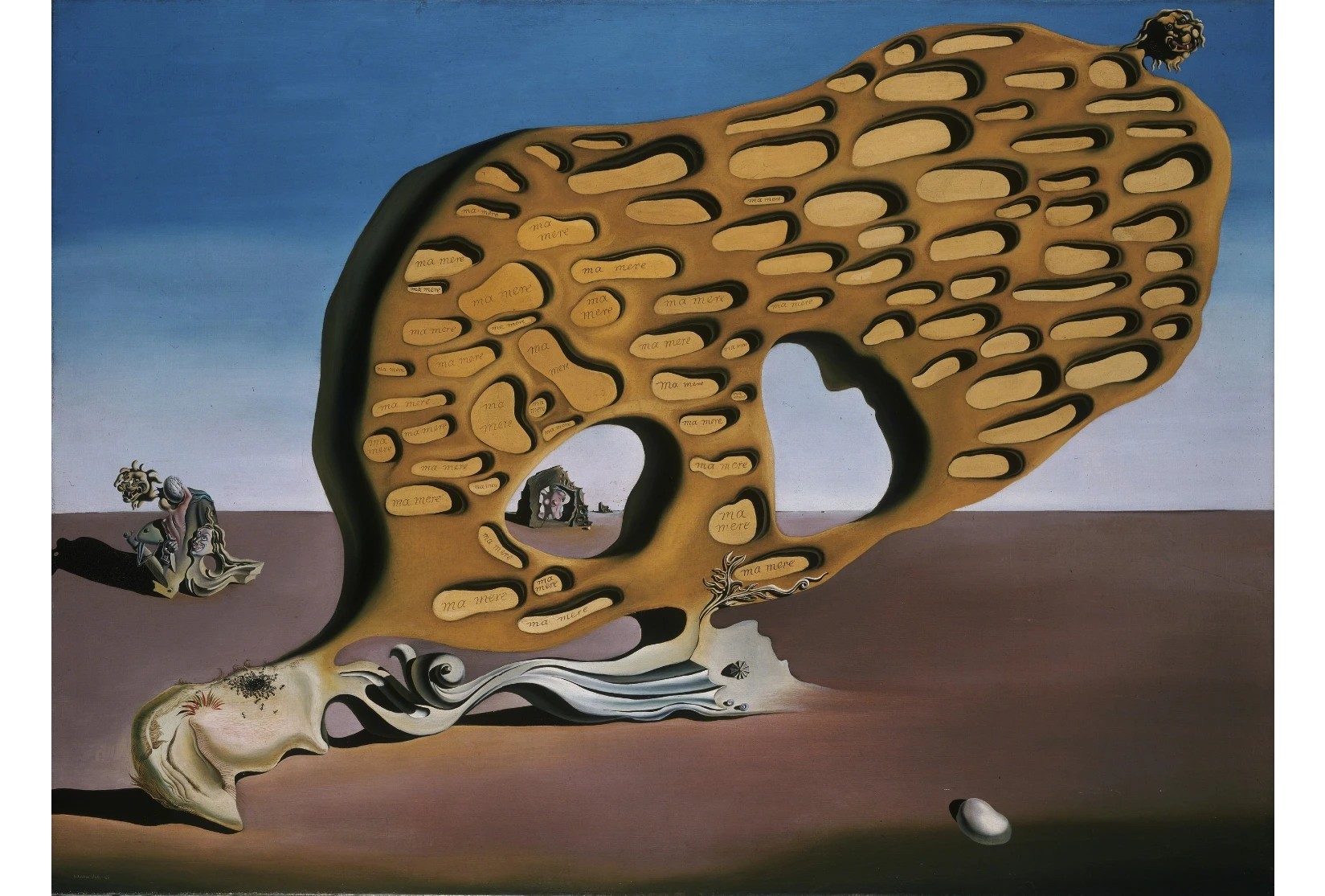
Salvador Dalí ($807,408, Record in 1982): Ma Mere (My Mother)
Salvador Dalí was an icon of Surrealism, the 20th-century avant-garde movement that sought to release unconscious creative potential through art that featured dreamlike imagery. Dalí’s fantastical prints, paintings, sculptures, films, and writing helped cement the movement’s identity. Working off psychoanalytic ideas, Dalí rendered fantastical creatures and landscapes that could unsettle and awe.
Dalí’s mother, Felipa Domènech Ferrés, died in 1921 when he was 17. Dalí later said her death was: “the greatest blow I had experienced in my life.” His father married her sister the following year. Dalí's carried his yearning for his mother with him through out his life, and is made evident in this painting, not only through the title, but also through the repetition of "ma mère" (French for my mother) on the rock like form. The rock that Dalí identifies himself with is attached to the lower left of the larger rock structure, indicative of Dalí's attachment to his mother and of a desire to be connected to her again. Dalí's rock is covered in ants which symbolizes death and decay possibly indicative of Dalí's awareness of his own mortality, especially in reference to the death of his mother.
Dali himself considered the painting to be one of his 10 most important, it was last sold in 1982 at Christie's London for $816,480 which is equivalent to $2,7 million today. The work set a record for the most expensive work by a living artist sold at an auction.