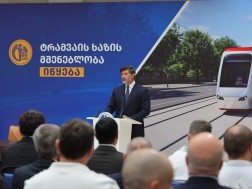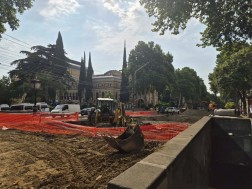



Tbilisi City Hall has invested GEL 1.815 billion in infrastructure projects in recent years, according to a summary presentation led by Mayor Kakha Kaladze and Deputy Mayor Irakli Bendeliani. The report highlights major improvements in urban safety, transportation, and housing across the capital.
Landslide and Slope Stabilization
Deputy Mayor Bendeliani emphasized that landslide-prone areas remain a serious concern in Tbilisi. The city monitors these zones closely and implements preventive measures. For instance, anti-rockfall nets were installed along the Chabua Amirejibi highway and 16 other locations, covering 128,000 sq m. In Vashlijvari, a new road was built only after slope stabilization and the construction of 12 concrete retaining walls.
Overall, retaining wall construction has been carried out at around 800 addresses.
Reinforcing Dilapidated Buildings
Approximately 700 aging residential buildings have undergone reinforcement, with another 26 set for completion by the end of 2025. Kaladze noted that many of these are designated cultural heritage monuments, where redevelopment is restricted. A new incentive program allows developers who restore such monuments to receive development rights in other districts of the city, such as the suburbs.
Support for Homeowners’ Associations
City Hall has also invested ₾285 million into a homeowners' association support program. As a result, around 2,000 elevators have been replaced, more than 1,200 entrances rehabilitated, and rooftops and courtyards renovated across the city.
Major Transport Projects
Tbilisi has seen major upgrades to its transport infrastructure:
- 3 new overpasses and ramps
- 1 new road bridge
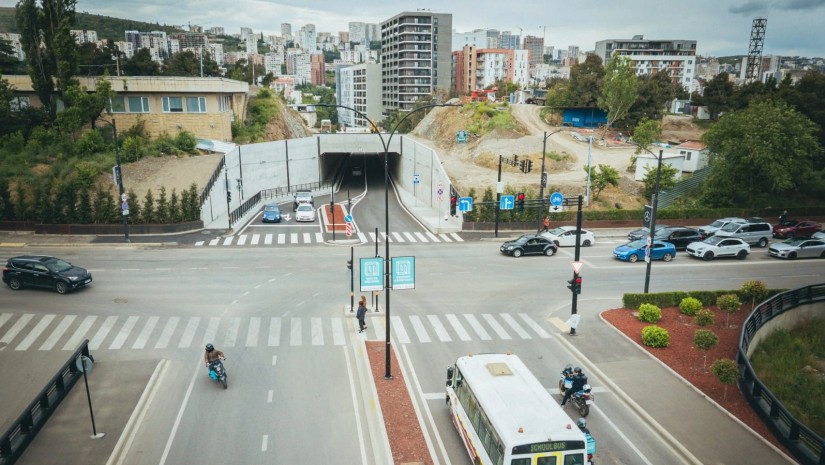
- 2 new tunnels, including one connecting University and Kavtaradze Streets
Reconstruction projects: Vakhushti Bagrationi Bridge, Gldanula River Bridge, Ponichala underground overpass, and others
Upcoming: Rehabilitation of the bridge near the Ortachala hydroelectric power plant by the end of this week
Utilities and Drainage Challenges
Bendeliani also acknowledged ongoing challenges with water supply, sewage, and drainage networks, adding that significant work has been done in these areas in recent years to address the problem.