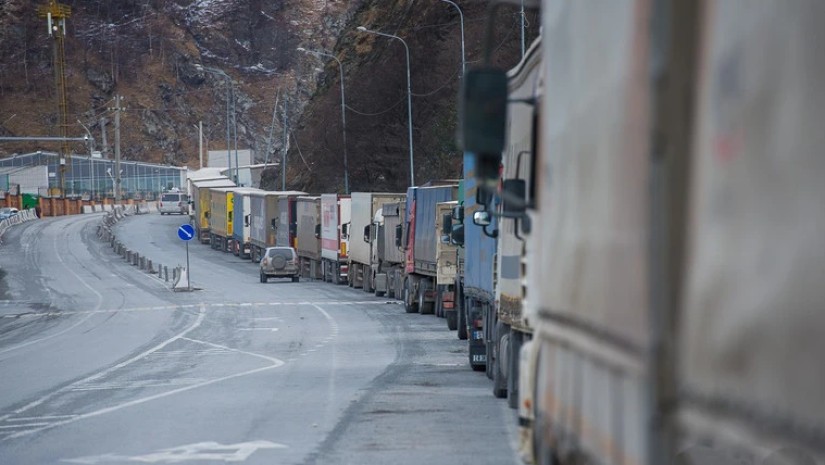

The Georgian Land Carriers Association has described the first six months of 2025 as "clearly difficult" for the country’s land transport sector, citing a notable decline in cargo demand across multiple directions, particularly toward Central Asia and third countries.
In an interview with TV-program Business Course, Irakli Nemsadze, Chairman of the Association, explained that a key base for Georgian carriers is Turkey, which serves as a transit hub for shipments headed toward Europe and Central Asia. However, economic developments in Turkey have significantly affected the sector’s performance.
“Due to inflationary pressures, the cost of goods in Turkey has risen sharply, making Turkish exports less competitive in surrounding markets. As a result, overall cargo turnover has decreased,” Nemsadze said. “This has been a major factor in the current shortage of cargo, leaving many Georgian carriers underemployed.”
He emphasized that while transportation toward Europe remains relatively stable, other direction, including the North, East, and regional markets, have seen significant declines. The heavy reliance of Georgian carriers on shipments from third countries has exposed them to various vulnerabilities, including permit quotas and market restrictions.
“Georgia's domestic economy is not strong enough to support the country’s surplus transportation capacity in imports and exports routes,” Nemsadze noted. “Most of our transport fleet is engaged in shipments to third countries. When problems arise in those markets, such as inflation in Turkey, it directly affects us.”
According to Nemsadze, this instability has led some clients to explore alternative routes, further reducing the volume of cargo passing through Georgia. In response, some transport companies have begun selling off parts of their fleets or exiting the market entirely.
“European routes have remained the most resilient during this period,” he added. “But for others, especially those operating toward Central Asia, China, or regional neighbors, conditions have become very challenging. Complaints are widespread across the sector, and business exits are on the rise.”