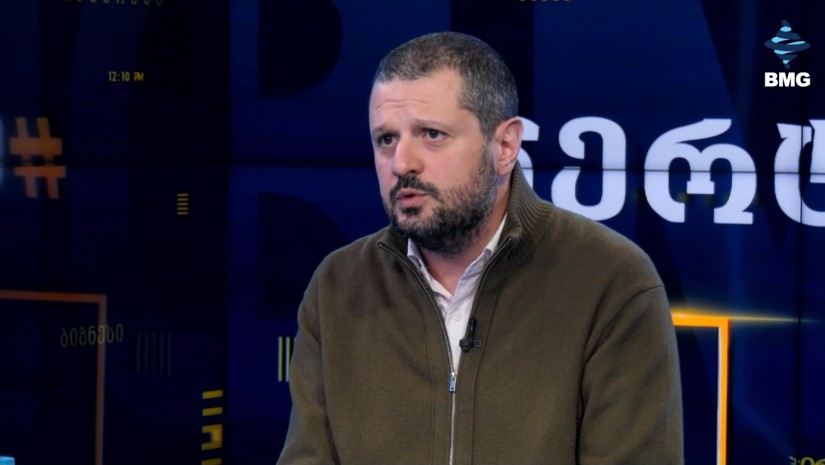

Georgia’s proposed 2027 budget places greater emphasis on social spending than on stimulating economic growth, according to economist Giorgi Khishtovani, who shared his assessment during an interview with BMGTV’s programme Tertili. The government forecasts 5% economic growth next year, while the consolidated budget is expected to reach GEL 38.24 billion, with healthcare, education and social protection accounting for approximately half of total expenditure.
Khishtovani said the budget primarily targets vulnerable groups, including pensioners and socially disadvantaged citizens, rather than long-term economic development. He also questioned the efficiency of rising social expenditures, pointing to weaknesses in social assistance programmes and the growing costs of universal healthcare. According to the economist, the government is mainly funding legally required obligations rather than investing in broader development.
He described the projected 5% economic growth as largely “virtual” and “accounting-driven,” arguing that it depends heavily on the ICT sector, oil re-exports, gambling and Georgia’s transit role. He noted that the ICT sector benefits from tax incentives and that these activities may not reflect sustainable growth across the wider economy. Khishtovani also highlighted plans to borrow GEL 4.8 billion in 2027, including GEL 2.8 billion domestically, warning that increased domestic borrowing could withdraw resources from the economy and banking sector.
Khishtovani praised the Ministry of Finance for its cautious approach to public debt but criticised the budget for lacking pro-business initiatives and structural reforms. He described it as the budget of a “fearful government” focused on preserving the status quo rather than encouraging development. He concluded that Georgia needs to move away from excessive fiscal caution and prioritise reforms and sustainable economic growth.