


CMC, a construction project management firm with 17 years of experience, is entering a new phase of growth - backed by an updated management model, a more assertive push into international markets, and considerably bigger ambitions.
More than 150 completed projects, a team of nearly 150 professionals, and experience accumulated more recently on international markets: this is the foundation on which the company is now building its next chapter.
The vault of the National Bank of Georgia, the Public Service Hall, Batumi Stadium, the Funicular restaurant, and the headquarters of ACBA Bank in Armenia are just a sample of CMC's portfolio. Over the years, the company has served clients across a range of project management disciplines: design and project management, construction supervision, tender management, budgeting, and quality control.
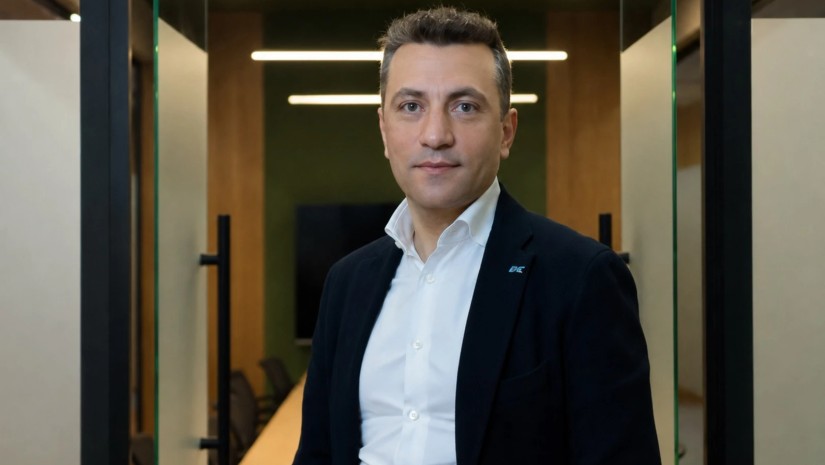
In 2026, change at CMC starts at the top. Giorgi Vakhtangishvili has taken over as CEO, bringing experience that spans banking, real estate, infrastructure, energy, and technology.
Over the course of his career, he has led the mobilization of more than $1.5 billion in foreign direct investment and has taken part in IPOs and bond placements on international capital markets, as well as in M&A transactions and the transformation of major businesses. His track record also carries an international dimension through his work in the United States, at Andromeda Health Corporation.
Under his leadership, m2 Real Estate was built from the ground up and became market leader in just its second year of operation. At Georgia Global Utilities, he oversaw a large-scale managerial and digital transformation, placed $250 million in bonds on international markets, and completed the sale of a controlling stake in the water business to Aqualia for $225 million.
Now Giorgi Vakhtangishvili's task is to bring that experience to bear on CMC's next stage: strengthening the company's management systems, expanding its international footprint, and turning CMC into a stronger player across the regional market.
How does he plan to put that experience into practice? What has changed inside the company since he arrived? And what role could CMC play in shaping the culture of project management across the region? Giorgi Vakhtangishvili answers BM.GE's questions.
- CMC already has 17 years of experience, a significant project portfolio, and a track record of working in international markets. Why did the need for a new stage of development arise precisely now?
- The company has now built up enough knowledge, experience, and human capital to take CMC's expertise further into international markets. Over the past 17 years, a team of roughly 150 people has set a high standard of service, and today, that experience can bring real value to other countries as well.
We deliberately choose markets that are at a stage of development where demand for CMC-type services is growing fast. Right now, we see that potential in Armenia, Uzbekistan, Kazakhstan, Saudi Arabia, the UAE, and of course Georgia itself.
Our main focus is on growing economies where professional project management and consulting services aren't yet fully established. In these markets, the choice is often between a shortage of local expertise on one hand and very expensive international firms on the other, which makes it hard for many local developers and investors to access quality professional services.
That's exactly where we see CMC's opportunity: to offer international standard expertise through a model that's more flexible and better adapted to the local market. In doing so, we're not just expanding our own business; we're also helping push the real estate sector in these countries toward more professional, more structured development.
- What criteria does CMC use to choose new markets, and does this mean a Georgian company, built on years of experience, is now offering services to countries where this line of business is still in its early stages?
- We select target countries using several criteria. The first, naturally, is growth in the real estate market itself; this is a sector where enormous amounts of capital move, where demand for residential, commercial, investment and hospitality projects is rising, and which therefore carries real weight for the broader economy.
But market growth alone isn't enough for us. The second key factor is how ready a country is to receive foreign investment, how open the market is, how favorable the business environment is, and whether there's a genuine appetite to attract international capital.
The third criterion is the level of development of the professional consulting market. In many of our target countries, the market isn't yet saturated with the kind of complex consulting services CMC offers. That gives us the chance not only to enter the market and establish a position quickly, but to help shape the sector itself.
I'd say CMC's role in these markets isn't limited to advising on individual projects. In a sense, we also act as a strategic "tracker" for the sector, watching where real demand exists, where investment should be directed, what kind of projects the market needs, and how capital can be allocated more accurately and on time.
Whether we're talking about a hotel, a residential project, offices, retail space, or a major investment development, when a strong professional consulting firm is present in the market, decisions end up grounded far more in data, in real market demand, and in economic logic.
Ultimately, our goal isn't simply to take part in delivering projects; it's to help build a real estate market that is more structured, more attractive to investors, and sustainable over the long run.
- Today CMC is entering a new stage of growth, and internal transformation is already underway. What's changed in the market, in project complexity, and in CMC's ambitions that made a stronger governance structure necessary?
- The biggest shift in construction project management has to do with information technology. On top of that, the integration of artificial intelligence has clearly brought major changes to our day-to-day life and to the industry as a whole; it has created competition and made it possible for many services in our field to be replicated and developed in other countries. It also let us manage processes better and improved the quality of our business analytics. As a result, we're now able to serve a wider range of clients and meet their needs more effectively, thanks to technologies that are already available. The quality of our services is rising significantly, and that rise in quality translates directly into reduced risk for our clients. The better and faster the technology side develops, the more deeply AI becomes integrated into our business the better our clients will feel about working with us. Over the long term, one of our goals is to bring artificial intelligence into our operations as fully as possible.
- Giorgi, you've worked in both local and global markets. What from your own experience are you applying at CMC first?
- My personal experience in this area matters a great deal, because over the years, I've had the chance to manage international projects across different countries, working with international investors, multinational teams, and complex budget structures. That's exactly the experience we want to bring into CMC's model today.
Our task is to build relationships with investors, project owners, and government institutions on a more institutional footing. That means an investor or client should have a fully transparent picture, knowing exactly where, and how effectively their capital is being allocated. The state should be able to see that permits granted and commitments made are being fulfilled. And the companies involved in a project should operate in a professionally organized environment and receive a high standard of service.
In practice, this development cycle looks similar across many developing countries. It requires three components to come together: a qualified, long-term-minded investor; a willing and ready state; and strong local developer institutions. We see one of CMC's central roles as building an effective connection between those three components.
That's also where our competitive advantage comes from. CMC's experience isn't limited to the Georgian market. On the contrary, it's especially valuable for countries that are today at roughly the stage Georgia was at 10 to 15 years ago.
Over that period, Georgia went through a major transformation: systems were put in place, large industrial and infrastructure projects were completed, both the public and private sectors built up practical experience, and the market itself became far more professional.
Today, some of our target countries are going through that very same process. So, for CMC, these aren't simply new markets; they're environments where we can convert experience from a development cycle, we've already been through into real, practical value. I believe that's exactly what allows us to be not just a consulting firm, but a genuine partner in the institutional and systemic development of the sector.
- So, would you say CMC's "new scale" means having a real voice and making a real contribution in how construction project management develops as a discipline?
- Exactly, that is CMC's role. In Georgia, the company already functions as one of the key players driving systemic development in the industry, and we entered the Armenian and Uzbekistan markets with that same mission.
We choose countries by the same logic: we're interested in markets where the real estate sector is in an active growth phase and where there's room to introduce more structured, professional, institutional approaches.
What matters most to us is that moment when the market is already growing but still needs the right framework, experience, and professional management. That's exactly the stage where CMC can create the most value.
- When you took over the company, what was the first thing you felt absolutely needed to change?
- The first major step was building an international board. We brought in senior industry experts Bruno Martorano and Kim Bradley, who have years of experience managing major investment and real estate projects. This is an active board: we regularly align our strategies for entering new markets and our major decisions with them. Their experience lets us continually calibrate our vision against international standards.
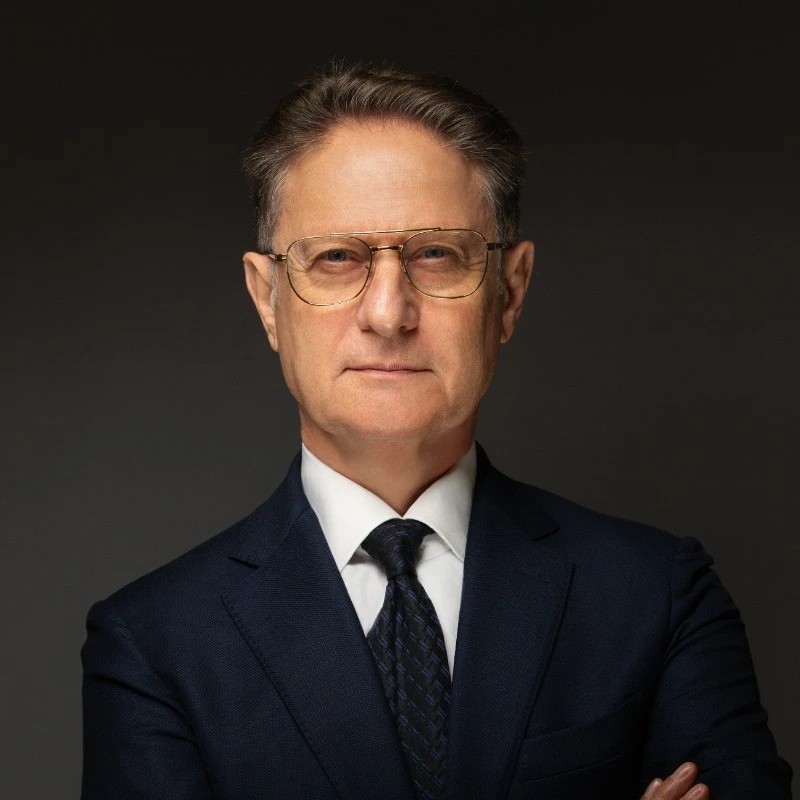
Bruno Martorano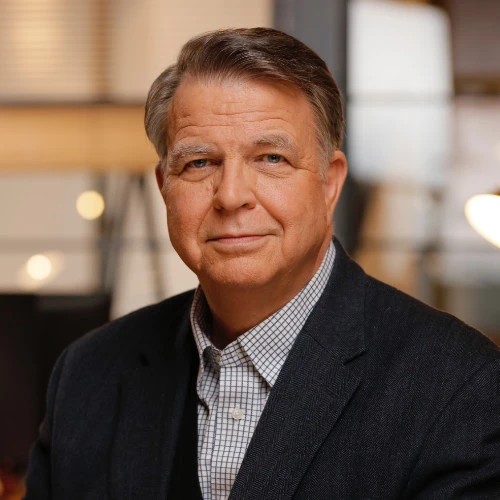
Kim Bradley
The second major change was shifting focus to regions and individual countries. We introduced a Country Manager model, so that in each market we have a local partner who understands the country's specifics, its players, and its business environment. We've applied the same approach within Georgia itself; the eastern and western regions will now have separate management.
We're building local units along the same logic in Armenia, Kazakhstan, Uzbekistan, Saudi Arabia, and the UAE. Our goal is to gradually establish strong business units in these countries, comparable to what CMC has built in Georgia.
The strategic target is ambitious: over a three-year horizon, we want Georgia's share of CMC's total sales to fall to around 20%, not because the Georgian market shrinks, but because the international portfolio grows so quickly.
The third change is strengthening management. Our executive team has been joined by managers, both Georgian and international, with hands-on experience managing large infrastructure and complex projects. This team gives us a much stronger operational base from which to carry out regional expansion.
- A new management model, and a target of bringing Georgia's share of sales down to 20% of the total portfolio does this mean CMC is entering a qualitatively new stage of development?
- One of our main goals is to build strong organizational systems in sales, operational management, accounting, and communication. We want CMC to be able to manage projects to a single standard and consistent quality across every country we operate in.
Technology will play a particularly important role in this. We've already implemented BIM (Building Information Modeling/Management) system, which lets us manage construction and design information in a single digital environment, track a project's status in real time, and make decisions faster and more accurately.
Our goal is for every part of CMC to be ready for the technological changes already underway, changes that will only accelerate in the coming years. Integrating AI capabilities is especially important to us. We want to use technology not as an add-on tool, but as one of the core foundations of management efficiency, quality, and scalability.
In our business, the winners will likely be whoever adopts these capabilities sooner.
- Why did building an internationally staffed board become important at this stage of CMC's development?
- Building an internationally staffed board matters because our foreign board members have already delivered successful projects in our target countries; technological shifts have already happened for them, under their management. Therefore, regarding the direction in which we should develop and how to avoid making mistakes, sharing their experience is invaluable to us. Bringing these people on board, as part of our global positioning, was about avoiding mistakes and hedging our path of development.
- As CEO, what do you consider your main personal responsibility at this stage of CMC's growth?
- Follow this progress step by step. The biggest challenge today is that, as a rule, change isn't something everyone welcomes. People are afraid of change. My job is to carry these changes through, even though there may well be obstacles along the way.
My personal mission is to make CMC one of the flagships of technological change. We're already actively working toward that in Georgia, starting with the rollout of a unified operating system that will move the company's workflows into a more transparent, structured, and manageable environment. Our goal is to gradually transition the company's entire operating cycle into a technologically robust system, and to tie our business development as closely as possible to modern information technology.
For me, the central challenge is exactly this: making sure technological development isn't a process detached from the company. On the contrary, CMC needs to be ready to quickly adopt new tools, integrate them, and use them to strengthen efficiency, quality, and scale.
- Giorgi, you mentioned BIM, which CMC has already been using for many years. What's changing today in how it's used?
- Using BIM today simplifies a huge number of disciplines within project documentation. Everything sits in a single space, in 3D format, and any change, whether already made, in progress, or planned, can first be modeled and planned virtually within the project. There's a principle called digital twins, one of the core components of BIM, which makes it possible to carry out any project or change first in a virtual space, thinking through the associated risks, evaluating budgets before implementing it in real time and real space. That saves our clients a lot of additional cost and risk.
- What role will artificial intelligence play in CMC's new management model?
- Our goal is for every critical area of CMC to have its own AI agents. In other words, the company's operating model going forward will rest on both human teams and digital agents that carry out specific functions faster and more efficiently.
We've already taken the first step; our management team has been fully retrained, so we understand precisely what AI is capable of and where it can genuinely be applied in the business.
The next stage is a complete mapping of our information and business processes for AI. We need to determine which processes can be automated and streamlined, where AI can work independently, and where human professional judgment and involvement remain essential.
We plan to finish drawing that line in the coming months. The end goal is a model where humans and technology don't replace each other but reinforce each other's capabilities.
In the coming months, we should be able to deploy AI agents that help us with specific pieces of work. In practice, that means creating a space where every type of information is organized into categories and clusters, with AI handling part of that information, freeing up people's time to do the things only we can do.
To give you an example: in architectural decision making, which we offer across different countries, we're already using AI agents. That means when different countries have different construction and building-code regulations, we can already adapt projects automatically; an AI agent working within BIM adapts the design for that specific country. For instance, when we're preparing a proposal for a prospective client, our sales AI agent recognizes that a given example is intended for Armenia, and adapts the entire design accordingly, because it knows the Armenian market requires different design elements.
A great deal of work that might once have taken months now takes hours. For example, reviewing full project information for an initial proposal, comparing project documentation that used to take our five-person team weeks to work through. Now it takes about two hours and probably one administrator.
Our move into new markets has only been possible because our internal processes are already built to be systematic, technology-driven, and scalable.
- At the start of our conversation, you mentioned that the company's goal is to attract international investors. What do the changes underway at CMC mean directly for clients and investors? What's CMC's core promise to them?
- With this management model and our updated approach to growth, CMC will deliver far higher-quality, more complete service. We'll be able to fully assess project risk, fully control and take responsibility for budget, quality, and timeline. We'll also be more efficient with both time and budget. Also, we'll be able to cover risks for clients that CMC's services may not have directly addressed before. In short, we'll become a more essential partner for our clients to make sure their projects succeed. We now have more tools than ever to manage our clients' risk. Ultimately, the role of the CMC service is to safeguard the client's services. A satisfied client means we've properly managed the risks tied to construction and design on their behalf. We're now working to bring that risk management to a qualitatively new level.
- CMC's international expansion isn't just about adding new geographies. What's your vision for regional development?
- That's right, our regional development plan is part of our overall responsibility. Different countries are at different stages of development, but for an investor, one thing matters equally everywhere: having complete, structured project and budget information before planning.
That's exactly why CMC can get involved in new markets at a much earlier stage while an idea is still being formed, while due diligence is underway, while an asset is being valued, and while an investor is still deciding whether to buy land and what kind of project to develop.
At that stage, we can already advise on the right business model, how to plan the investment, and how to achieve maximum project efficiency.
That's where CMC's transformation into a full-fledged business and investment advisor begins. That's the company's future, both in Georgia and in new markets. The only difference is that in developing countries, where the sector is still taking shape, our role and influence will be even more visible.
- Of the new markets, Armenia is geographically the closest to Georgia. What does Armenia represent for CMC's regional strategy?
- Armenia is, first of all, a familiar market, because of its geographic proximity, and because our economies are similar. The development Armenia is going through now is familiar to us. So, we have a clear sense of what changes will unfold in its economy, what kinds of investors will arrive, and what kinds of projects will attract investment. That's exactly why our experience is especially relevant in Armenia. Here we can transfer approaches and models we've already tested in Georgia almost directly and not just take part in individual projects but take a leading role in shaping the direction the sector develops. For example, we regularly meet with donor organizations and banks to discuss projects. It matters to them that local investors and developers bring projects that have gone through CMC, which raises the likelihood of financing. It is precisely this trust that CMC leverages with international financial institutions in Armenia.
Today we're already working on several major projects in Armenia. Among them is Dalan Technopark, a large-scale project where CMC handles construction supervision.
We also carried out full project management for ACBA Bank's headquarters, and we're working with Renshin, one of Armenia's leading and strongest development companies, particularly in residential real estate.
These projects show clearly that CMC is no longer just present in the Armenian market; CMC also positions itself as a highly trusted professional partner.
- The second focus area for the company is Central Asia. Where does CMC stand in positioning itself in Uzbekistan?
- Uzbekistan has a large economy, and the market there is correspondingly large in scale. A new city is being built, known as New Tashkent. We want to play an active role in that project, in the area where we've distinguished ourselves most over the past 17 years: safeguarding investments, managing project risk, and seeing projects through to completion. Uzbekistan is currently in a phase of development, and we believe our role in this process will prove invaluable. We consider ourselves one of the companies best suited to what the Uzbekistan market needs.
- What does the Uzbekistan market allow CMC itself to develop in terms of capability?
- Uzbekistan is a very important stage in our scaling. The experience we gain in this market will let us move, step by step, into larger countries and larger-scale projects.
Once the volume of our projects doubles or triples, that will open qualitatively new opportunities: larger clients, more complex projects, and a significantly expanded portfolio. As a result, transferring this experience to other international markets will become far easier.
Today, in Uzbekistan, we're in active talks with several specialized companies, including Murad Buildings, one of the country's largest developers.
We're also working with the New Tashkent administration. This is a completely new city of roughly half a million people, a project unique in its scale. We're preparing to sign a memorandum of cooperation in this area.
Our goal is to launch several real projects in Uzbekistan this year, and to make this market one of the main pillars of CMC's further international growth.
- Within your development plan for these markets, what are your next steps, and what is CMC planning to further strengthen its presence there?
- I believe now is the right time for CMC to have a physical presence in both Armenia and Uzbekistan. We're planning to open offices in Yerevan and Tashkent in August, and the company will begin operating fully in both countries.
We already have a regional manager and technical director in both markets, and the core teams are in place. Further expansion will follow the scale of projects and actual needs.
Strategic and key processes will be managed from headquarters, but local companies will have a high degree of operational autonomy. It matters to us that these are no longer thought of as "a project carried out by CMC Georgia in Yerevan or Tashkent"; these will be CMC Armenia's and CMC Uzbekistan's own projects, with local teams and local ownership.
That's exactly how we see CMC's future as a regional group that maintains a single standard while becoming a full participant in each country's local market. CMC will be a Georgian, an Armenian, and an Uzbekistan company all at once: one brand, one standard of quality, and a shared vision for growth.
- Beyond Armenia and Uzbekistan, what does CMC's international footprint look like today, and where else is the company actively present?
- We've just arrived in Kazakhstan specifically to open an office there. The company will be registered in Astana, and CMC will soon have a full presence in Kazakhstan as well.
Kazakhstan is a concentrated and competitive market, where our international competitors are also active. But CMC's key advantage is its practical experience managing international projects and working with foreign investors.
We see an opportunity in the segment where the local market needs stronger professional and institutional support to work with international capital, particularly Western-style investors.
That's exactly where CMC's niche will be connecting local market knowledge with international investment standards and building a platform that serves as a trusted professional bridge between investors and local projects.
Beyond that, this year CMC is planning to deliver projects and open offices in Saudi Arabia and the UAE.
As for Europe, we've completed individual projects in Serbia and Croatia. Since these countries are more ready to work with companies like ours, we'll be focusing our efforts there specifically.
- Within this scaling plan, how do you expect CMC's international portfolio to grow?
- If we say that, because of international expansion, Georgia's share of CMC's total portfolio should fall to around 20%, that essentially means the company's overall portfolio needs to grow roughly fivefold. That said, growth rate alone isn't our main concern. We want this expansion to be consistent and well thought through before entering any new market; we study the country's economic environment, sector structure, competitive landscape, regulations, and real investment potential in detail.
Incidentally, in the countries CMC is now entering, other Georgian companies are also actively moving in. For us, this serves as an additional signal; however, we do not base our decisions solely on general market interests—we strive to conduct our own research, risk assessments, and in-depth market analysis for each country.
So, our principle for international growth is simple: not fast, but right.
- All of this translates into revenue growth, but beyond the financial results, what does CMC gain from working in international markets?
- Above all, our goal is to build a strong international team, one genuinely capable of managing large-scale, complex projects.
That's exactly what will become the foundation for our next stage of growth, and it will let us move, step by step, into other regions too, including Western Europe and the American markets.
I can say with full confidence that CMC's next major stage of development will be the Western markets.
Seventeen years ago, CMC set out to establish a new standard of service in Georgia. Today, the company is answering a different question: how the knowledge built up in Georgia can be transformed into an internationally scaled business.
For CMC, this new stage isn't simply about more countries, more offices, or bigger projects. It's about turning Georgian experience into international competence, building a company capable of being local in multiple markets at once, while staying global in its standards.
Yerevan, Tashkent and Astana are just the beginning of that path. The next chapter, as Giorgi Vakhtangishvili puts it, is set to be written in the West.