

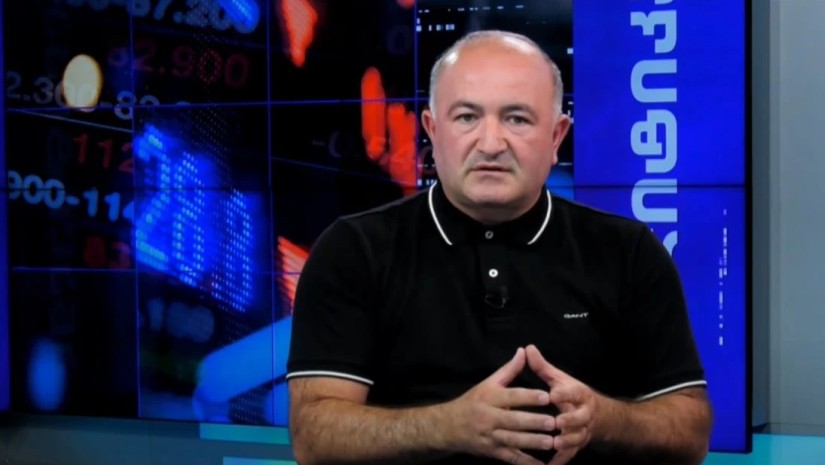

Vakhtang Bezhitashvili, president of the Georgian Fruit and Vegetable Exporters Association, has warned that the potential suspension of visa-free travel with the European Union could undermine the very foundation of Georgia's economic relationship with the bloc - namely, the Deep and Comprehensive Free Trade Agreement (DCFTA).
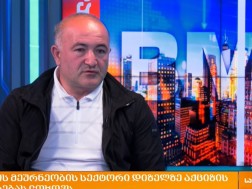
Speaking on BMG’s TV program Analitics, Bezhitashvili emphasized that Georgia’s access to the European market through the DCFTA is closely tied to the country's pro-Western political orientation. He believes that if Georgia continues to stray from democratic principles and EU-aligned policies, both visa-free travel and trade benefits could be revoked.
“If visa-free travel is abolished, it will be a huge blow—not only to the country’s prestige, but also to its economy and export potential,” he said. “While current export volumes to the EU may not be large, they are based on the assumption that Georgia is moving toward the West. If that foundation collapses, the benefits will likely be withdrawn.”
Bezhitashvili noted that Georgia was granted EU candidate status and access to DCFTA advantages because it was once seen as a country committed to democratic development and integration with Western institutions.
“Europe is not just about economic prosperity; it’s about political values: democracy, human rights, freedom. If our country veers away from this path, EU member states will eventually be forced to respond with restrictions,” he said.
According to Bezhitashvili, the EU’s trade privileges will lose relevance if Georgia no longer aligns itself politically and structurally with the European model. He criticized the government for lacking a coherent export strategy toward the EU and warned that the current trajectory risks reversing years of progress.
“Without reforms and structural changes, Georgia cannot become a member of the modern, civilized world, something our population has consistently demanded. The DCFTA will no longer make sense if we break away from this path.”
Bezhitashvili also raised alarms over Georgia’s growing economic dependence on Russia, particularly in light of declining exports to the EU. According to him, nearly 90% of Georgia’s exports now rely on the Russian market, which he describes as both unsustainable and politically risky.
“Our trade has been adapted to Russia’s market for years due to proximity, but the lack of diversification is dangerous. The EU is a solvent, attractive market, and we should be doing everything we can to increase our exports there, not the opposite,” he stated.
Despite the country’s agricultural potential, Bezhitashvili noted that exports of agricultural products to the EU remain minimal, and recent trends show a decline, rather than growth, in this area.
“If we had the capacity to export even small quantities to the EU before, why can’t we increase those volumes now? The trend is going in the wrong direction, and that’s very concerning.”
Georgia signed the EU Association Agreement, which includes the DCFTA, in 2014. At its peak in 2015, the EU accounted for 33.3% of Georgia’s domestic exports. However, by 2024, that share had fallen to 15.8%, a ten-year low, according to data from Geostat.
As Georgia faces increased scrutiny from Brussels over democratic backsliding and controversial legislation, business leaders like Bezhitashvili warn that the country’s economic orientation and long-term development are now at stake.