


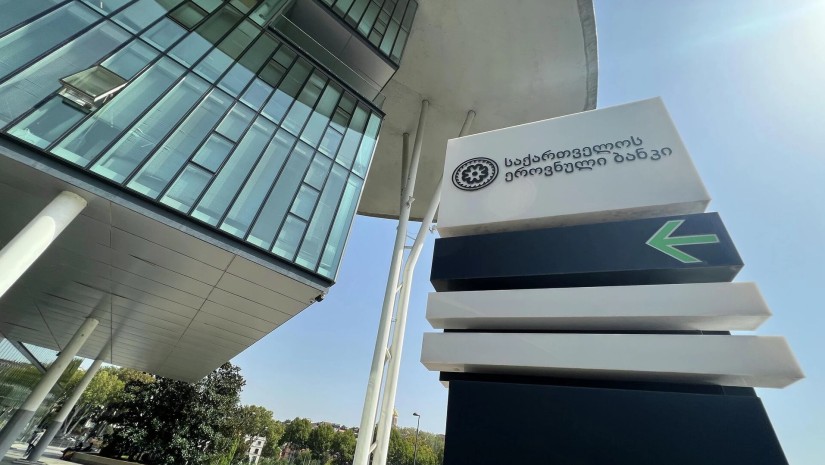

The International Monetary Fund (IMF) has emphasized the need to strengthen the governance and financial independence of the National Bank of Georgia (NBG), calling for legal amendments to restrict its ability to make discretionary financial transfers to the government.
The recommendation was outlined in the summary document released following the IMF’s Article IV Consultation with the Georgian authorities. The document reinforces key messages delivered during the IMF mission’s June 4 visit and maintains its 2025 economic growth forecast for Georgia at 7.2 percent.
According to the IMF, improving the NBG’s institutional independence remains a critical priority. While some progress has been made, such as appointing a new governor and filling vacant board seats, the Fund notes that important reforms remain pending.
“Reforms should ensure a non-executive board majority, limit discretionary financial transfers to the government, further clarify succession rules for the governor, and strengthen board member qualifications. Adopting a collegial decision-making model would further enhance governance,” the IMF stated.
The IMF also supports a shift from a presidential decision-making structure to a collegial model, under which the Board of the National Bank collectively decides on policy issues.
At the center of the IMF's concern is the NBG’s current ability to decide independently how much of its annual profit is transferred to the central government. For example, in 2023, the NBG recorded a profit of 559 million GEL, of which 303 million GEL was transferred to the state budget. In 2024, the Bank’s net profit rose to 1.1 billion GEL, with 670 million GEL allocated to the budget and 434 million GEL directed to reserves.
While these transfers are legally permitted and follow existing procedures, the IMF highlights a broader risk: current legislation allows for the possibility of discretionary transfers beyond profit-sharing, including the potential for direct financial support to the government under the guise of operational expenses. Though the NBG is legally prohibited from lending directly to the government, it is not explicitly barred from providing funds via other mechanisms.
The IMF stresses that such discretion, even if not currently misused, poses long-term risks to the central bank’s independence and credibility. The Fund has therefore recommended that Georgian legislation be amended to clearly prohibit all forms of discretionary financial transfers to the government, not just direct lending.