






Rainer Michael Preiss – Global Markets Commentary
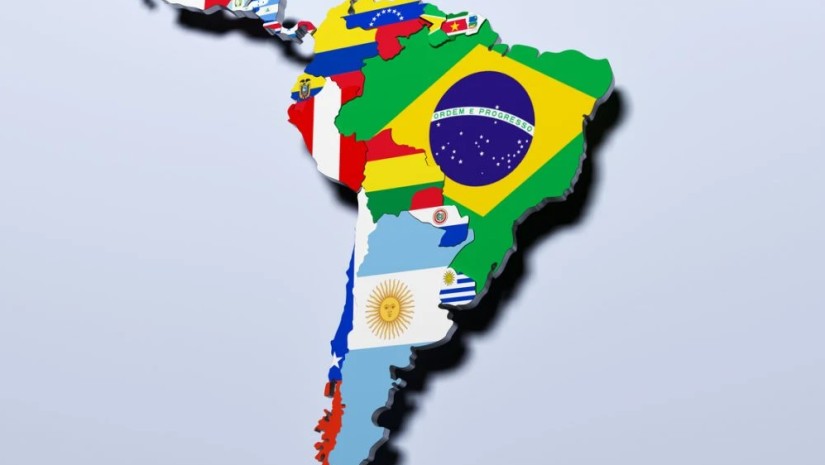
Latin American equities are often overlooked in global portfolios, yet they represent one of the most resource-rich and structurally undervalued regions in emerging markets. For private clients constructing globally diversified portfolios, Latin America offers commodity exposure, currency diversification, and potential valuation upside at a time when many developed markets trade at historically high multiples.
In the current global macro environment—characterized by geopolitical fragmentation, supply-chain re-regionalization, and the global energy transition—Latin America is re-emerging as a strategic allocation within global portfolios.
Latin America in the Global Equity Landscape
Despite a combined population of more than 650 million people, Latin America represents only around 2–3% of global equity market capitalization.
Major exchanges include:
- Brazil’s B3 stock exchange
- Mexico’s Bolsa Mexicana de Valores
- Santiago Stock Exchange in Chile
- Bolsa de Valores de Colombia
- Lima Stock Exchange in Peru
This structural underrepresentation creates opportunities for active investors and global asset allocators seeking diversification beyond traditional developed markets.
Why Latin America Matters Now
Three major macro forces are pushing Latin America back onto the radar of global investors.
- Commodities and Critical Materials
Latin America is a global powerhouse in natural resources:
Copper: Chile and Peru dominate global production
Lithium: Argentina and Chile form the “Lithium Triangle”
Oil: Brazil and Colombia
Agriculture: Brazil and Argentina
These sectors provide investors with direct exposure to global commodity cycles and can serve as inflation hedges within diversified portfolios.
- Valuation Advantage
Latin American equities historically trade at discounts to developed markets.
Typical valuation comparisons:
Region Average P/E
United States ~22–25x
Europe ~14–16x
Emerging Markets ~12x
Latin America ~8–11x
These valuation discounts often reflect:
political volatility
currency risk
governance concerns
However, for long-term investors they may also represent significant mispricing opportunities.
- Supply Chain Realignment
The restructuring of global supply chains has increased the strategic importance of Latin America.
Mexico, in particular, benefits from near-shoring trends as global manufacturing shifts closer to the United States.
Meanwhile, Brazil, Chile, and Peru benefit from global demand for critical minerals required for electrification and the energy transition.
Key Markets for Global Investors
Brazil
Brazil remains the largest and most liquid equity market in Latin America.
Key sectors include:
energy
mining
financial services
agriculture
Major companies include Petrobras and Vale, which are global leaders in oil and iron ore production.
Brazilian equities often act as a proxy for the global commodity cycle.
Mexico
Mexico benefits strongly from its integration with the U.S. economy through the USMCA trade agreement.
Key investment themes include:
- manufacturing relocation
- logistics infrastructure
- industrial real estate
- consumer growth
Mexico has become one of the largest beneficiaries of near-shoring.
Chile and Peru
Chile and Peru are among the world’s largest producers of copper, a critical metal for:
electric vehicles
renewable energy infrastructure
global power grid expansion
Copper demand is expected to rise significantly over the next decade.
Colombia
Colombia offers a smaller but strategically important equity market.
Key sectors include:
- energy
- financial services
- infrastructure
The country’s largest listed company is Ecopetrol, which also trades as an ADR in the United States under ticker symbol EC: US. Ecopetrol SA ADR (EC)
Currency Considerations
Currencies play a significant role in Latin American equity returns.
Key regional currencies include:
- Brazilian Real
- Mexican Peso
- Chilean Peso
- Colombian Peso
These currencies tend to be commodity sensitive and can be volatile.
However, they also offer high interest-rate carry, which can enhance long-term returns for global investors.
Risks Investors Must Understand
Despite strong opportunities, Latin American markets also carry several risks.
Political Risk
Policy shifts and elections can influence investor sentiment.
Currency Volatility
Exchange-rate movements can significantly impact USD-based returns.
Liquidity Constraints
Some markets remain relatively small compared with developed markets.
Commodity Dependence
Economic performance is often linked to global commodity price cycles.
Top Latin America ETFs for Global Investors
For most private clients and global asset allocators, the easiest way to gain exposure to Latin American equities is through exchange-traded funds (ETFs).
These provide diversified exposure to the region’s largest companies.
iShares Latin America 40 ETF
Ticker: ILF
Tracks forty of the largest Latin American companies and provides broad regional exposure.
iShares MSCI Brazil ETF
Ticker: EWZ
One of the most liquid Latin America ETFs, providing focused exposure to Brazil’s:
- energy sector
- mining sector
- banking sector
iShares MSCI Mexico ETF
Ticker: EWW
Provides exposure to Mexican companies benefiting from near-shoring and strong economic integration with the United States.
iShares MSCI Chile ETF
Ticker: ECH
Offers exposure to Chile’s copper and lithium sectors, important for the global energy transition.
Global X MSCI Argentina ETF
Ticker: ARGT
A higher-volatility ETF that provides exposure to Argentina’s equity market, which can experience strong rallies during reform cycles.
Portfolio Allocation for Private Clients
Within a globally diversified portfolio, Latin American equities are typically treated as a satellite allocation within emerging markets exposure.
For investors seeking commodity exposure, the Latin America allocation may be somewhat be higher and merit an overweight allocation. High conviction call.
Strategic Outlook
Latin America may benefit from several structural trends over the coming decade:
global demand for critical minerals supply-chain diversification rising Asian demand for commodities growing middle-class consumption.
Countries such as Brazil, Mexico, Chile, and Colombia are likely to play central roles in the evolving global economic landscape.
Conclusion
Latin American equities represent a small but strategically important component of global asset allocation.
For private clients seeking:
- diversification
- inflation protection
- commodity exposure
the Lat AM region offers compelling long-term opportunities.
However, successful investment requires disciplined portfolio construction, awareness of political and currency risks, and a long-term investment horizon.
Disclaimer
This article & market commentary is for informational purposes only and does not constitute investment advice, an offer, or a solicitation to buy or sell any financial instrument.
Investments in emerging markets involve higher risks, including political risk, currency volatility, and lower liquidity.
Past performance is not indicative of future results. Investors should consult their financial adviser before making investment decisions.
Rainer Michael Preiss – Partner & Portfolio Strategist DAS Family Office