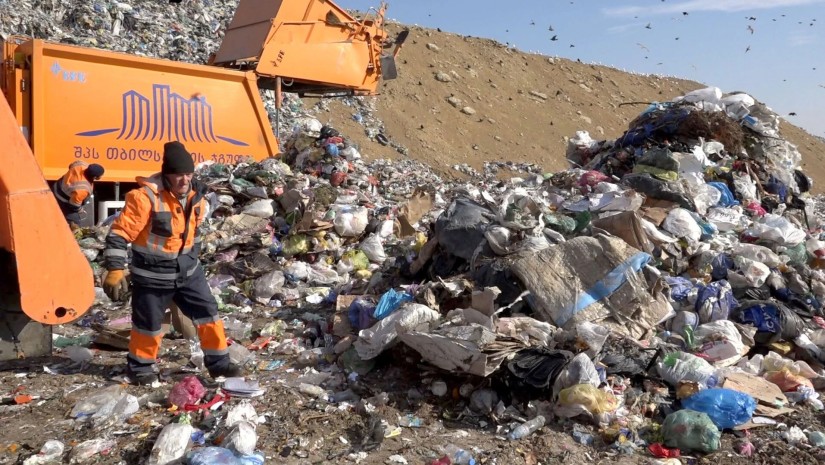

Tbilisi’s Didi Lilo municipal landfill is nearing capacity, with its active cells almost full, while approximately 12,000 tonnes of methane are generated annually without collection or utilization, according to Tbilservice Group. The landfill also produces around 54,000 cubic meters of leachate annually, with approximately 15,000 cubic meters stored in reservoirs as of October 1, 2026.
The volume of waste received has increased from 496,651 tonnes in 2023 to 560,151 tonnes in 2025. The landfill currently receives an average of 1,500–2,000 tonnes of waste per day. Plans to expand its capacity by developing an area between the third and fourth cells have faced two unsuccessful procurement attempts, and the purchasing process has been relaunched.
Construction of a leachate treatment facility is underway, with full operation scheduled for September 2027. A separate project, financed under an agreement with the European Bank for Reconstruction and Development (EBRD), envisages installing a landfill gas collection system and covering the first three cells to reduce emissions. Plans are also underway to establish material recovery and mechanical-biological treatment facilities to reduce the amount of waste sent to landfill.
Tbilisi Mayor Kakha Kaladze has called the landfill’s current environmental conditions unacceptable and said a foreign company is assessing whether relocating the facility would be feasible and economically justified. The study is expected to identify potential alternative sites, but no final decision has been made. Tbilservice Group says there is currently no technical project for the landfill’s final closure.