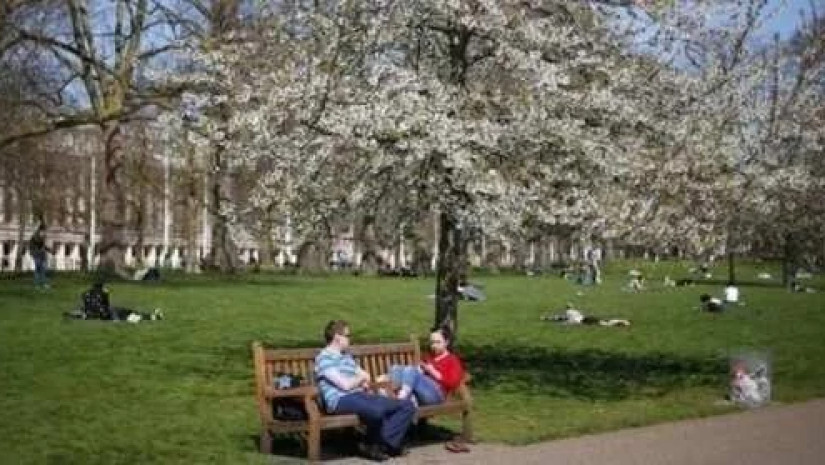

Home to 8 million trees and hundreds of high-rise towers, London is adding 40,000 trees to its skyline in a bid to turn the sprawling British metropolis into a "national park city".
Campaigners for clean air welcomed the initiative, saying London lagged mainland Europe when it came to tree cover, with high costs driving vertical development over open space.
Mayor Sadiq Khan wants to turn the tide, putting 1.5 million pounds ($1.9 million) into a woodland fund for London.
"Much-loved green spaces boost our environment and enhance our quality of life," Khan said in a statement on Thursday.
Home to The Shard, the tallest building in Western Europe, London has transformed in recent decades amid frenetic development and overseas investment. Its once demure profile is now punctuated with eye-catching skyscrapers.
"London has some great green spaces already but most of these were established in the 19th century and what is now needed is a massive effort to create new urban parks," said Michael Batty, a professor at University College London.
"But the cost of land means that this vision is often thwarted," he told the Thomson Reuters Foundation.
The number of high-rise buildings planned or underway in London has this year risen above 500 for the first time as a trend to build skyscrapers spreads to the suburbs.
Trees in cities reduce pollution, store carbon and protect people in heatwaves, saving megacities more than $500 million a year in healthcare, energy costs and environmental protection, according to research.
With one in 10 people predicted to live in cities of more than 10 million by 2030, urban forests can make these spaces healthier, say experts.
"Trees are this country's lifeblood, and by planting more of them we are helping to protect our environment," said a spokeswoman for the Forestry Commission, a government agency.
Source: Weforum.org