


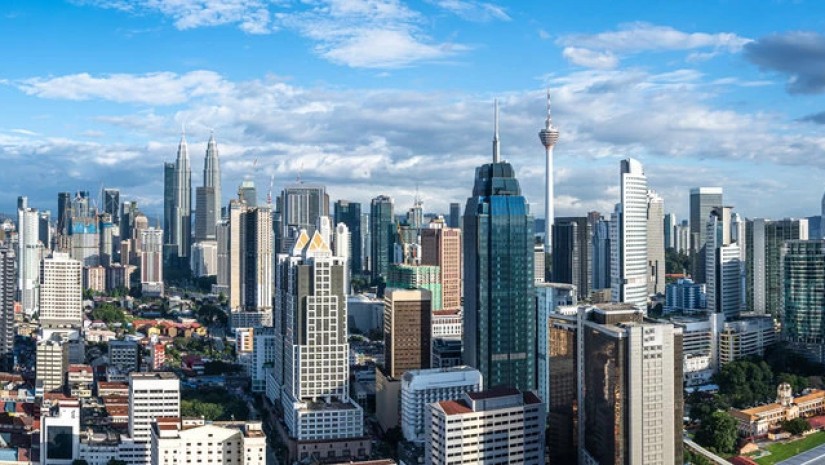

The visit of United States (US) President Donald Trump to the 47th ASEAN Summit at the Kuala Lumpur Convention Centre sends a positive signal to investors that the US continues to regard its relationship with ASEAN as important. The White House press release titled 'President Donald J. Trump Secures Peace and Prosperity in Malaysia' reinforced this narrative. Products manufactured by ASEAN countries are not meant to compete with the US, but rather to complement the global supply chain. As ASEAN Chair, Malaysia remains steadfast in upholding the region’s neutral stance, welcoming all nations that wish to cooperate and contribute towards developing the region’s economy.
President Trump’s visit and his social media announcement—'I’m coming to Malaysia'—resonated widely. For investors and private clients old enough to remember the tourism tagline 'Malaysia Truly Asia', the current question is whether to have Malaysia equity exposure within globally diversified investment and retirement portfolios. Should it be part of a Strategic Asset Allocation (SAA) or a Tactical Asset Allocation (TAA)? Global financial markets and investment committees run on narratives, and Malaysia’s story is increasingly bullish based on yield, re-rating optionality, and 'real-economy tech' potential.
Malaysia’s 'base case' street view implies mid-single-digit EPS growth in 2025, a pick-up in 2026, and a target band of 1,600–1,680 anchored near 15× forward P/E. The KLCI’s consensus forecasts for 2025–2026 project a market in slow recovery, supported by steady earnings growth and cautious optimism. The KLCI index recently closed at 1,613, while the USD/MYR rate stood around 4.22. Malaysia offers a rare mix in emerging markets: high and stable dividend yields, currency stabilization, and credible policy catalysts under NIMP 2030, NETR, and dual-5G initiatives.
Where Malaysia Sits in Today’s Market Map
- Factor profile: The market skews toward quality income—large domestic banks, telcos, and utilities. MSCI Malaysia shows 46% Financials with double-digit weights in Utilities and Industrials, offering lower volatility but limited momentum rallies.
• Valuation: Headline multiples remain below developed market averages (P/E ~15x; dividend yield ~4%).
• Currency: The ringgit has stabilized around 4.22–4.23 per USD, reducing FX uncertainty for foreign investors.
Structural Policy Tailwinds
- NIMP 2030: Industrial policy aimed at boosting manufacturing complexity and advanced E&E.
• NETR: Energy transition roadmap with ten flagship decarbonization projects.
• Dual-5G: Introduction of a second 5G network to enhance competitiveness and connectivity.
• Investment momentum: Record RM378.5bn approved investments in 2024, mostly in digital infrastructure.
Cyclical Drivers and External Risks
Foreign participation remains inconsistent in 2025, with bouts of net selling despite occasional resilience. GDP growth is expected at 4.0–4.8% with manageable inflation. Key external risks include global tariff policies and USD strength, though the ringgit’s current stability provides a cushion.
Portfolio Construction: What to Own
- Income and Resilience: Large banks, utilities, and telcos with stable dividends and strong balance sheets.
2. Real-Economy Tech: Semiconductor and E&E plays linked to AI and automotive demand.
3. Natural Assets: Plantations and staples as defensive hedges against inflation and volatility.
Comparative ASEAN Context
Compared to Indonesia, Vietnam, and India, Malaysia’s equity story focuses more on cash yield and industrial policy execution than hyper-growth. Against Thailand and the Philippines, Malaysia offers a steadier currency and more investable digital-infrastructure pipeline.
KLCI Consensus Forecasts – 2025 Outlook
Consensus 2025 KLCI targets range between 1,590 and 1,690, averaging around 1,642, based on forward P/E of 14.5–15.5×. Earnings growth is projected at 2.5–5% for 2025 and 6.8–7.2% for 2026. Sector opportunities lie in financials, energy, and export-related industries. Malaysia remains a defensive play within the ASEAN equity landscape.
In conclusion, Malaysia stands at the intersection of yield, policy reform, and regional positioning. While not a market of explosive growth, it offers dependable returns and upside optionality should foreign flows re-engage. As President Trump vowed to 'Make America Great Again', investors allocating to Malaysia might echo the sentiment: 'Make KL Stocks Great Again.' For a great portfolio & global asset allocation.
Rainer Michael Preiss, Partner & Portfolio Strategist at Das Family Office in Singapore
This publication is for informational and discussion purposes only and does not constitute an offer, solicitation, recommendation, or investment advice to buy or sell any security, financial instrument, or investment product. The information contained herein is based on sources believed to be reliable, but no representation or warranty, express or implied, is made as to its accuracy, completeness, or correctness. Opinions expressed reflect current judgment as of the date of publication and are subject to change without notice.
Past performance is not indicative of future results. Investments in equities, fixed income, or alternative assets involve risks, including possible loss of principal. The value of investments and the income from them may fluctuate due to changes in market conditions, interest rates, or exchange rates. Investors should consult their own professional advisors regarding the legal, tax, accounting, or financial implications before making any investment decision.
Neither the author nor any affiliated entity accepts any liability whatsoever for any direct or consequential loss arising from the use of this publication or its contents.