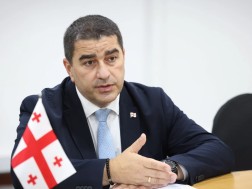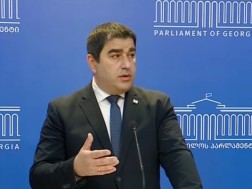


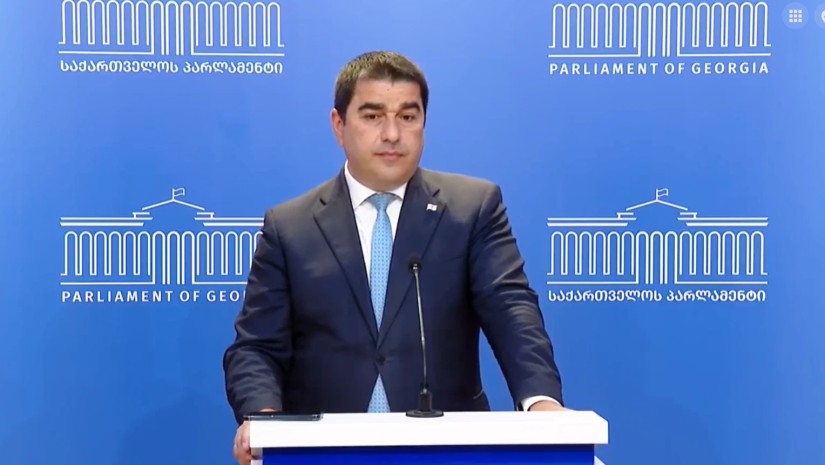

Georgian citizens living abroad will no longer be able to participate in the Parliamentary Elections, set to take place in 2028. The Following changes have been announced by the Speaker of the House, Mr Shalva Papuashvili.
According to Papuashvili, more than 100 changes have been made to the electoral law since 2011, which calls for the creation of a brand-new set of Laws concerning the elections.
The Key change that was proposed to the new electoral law concerns Georgian citizens living overseas.
“The Third block covers the improvement of democratic processes and the renewal of the electoral law. The current law was introduced in 2011 and has seen over 100 changes and amendments. Due to this, the overall structure of the law has become incoherent and calls for significant reform. For this reason, the new electoral law will address the aforementioned challenges.
Therefore, the Georgian Parliament will be presented with the new electoral law, which will achieve the systematisation of norms and technical refinement. The Law will be singular, definite and resolute. The reforms will improve the normative framework of the electoral process.
Key change to the law will address the issue of Non-resident citizens, Georgians living abroad. Firstly, we must underscore that the right of every Georgian citizen to participate in the elections, passively or actively, will not be infringed.
The change will affect the procedure itself, which will make sure that, just like the local elections, every person voting in Parliamentary elections will be within the Georgian borders. The following change will be in accordance with the 24th Amendment of our nation’s Constitution, concerning the state’s responsibility to uphold the free will of the electorate, which in itself contains the responsibility to protect it from external influences.
Moreover, non-resident citizens face higher risks of information manipulation. Generally, people receive the news about the political and economic situation from two sources: One is formal, where the information is filtered through the editorial channels, the other is “Unfiltered” - raw information acquired from personal, societal and governmental interactions.
In the era of disinformation and false narratives, the same information from these two sources might be radically different from each other. The very nature of this ordeal increases the risk of an uninformed judgment by the electorate. Therefore, voting solely from Georgian territory increases the legitimacy of the whole process and decreases the probability of external influences. The following model is wholly in accordance with the International Law and is effective in countries such as Ireland, Malta, Israel and Armenia. To underscore once more, the right to vote has not been interfered with. Just like before, every Georgian citizen of age will have the right and an opportunity to participate in the elections. The only thing they will have to do is to return to their homeland once every four years”, - Said Mr Papuashvili in a statement. Regarding the question from one of the journalists, whether the right to vote has been infringed, Papuashvili said that it would not be infringed.
“Whoever has the interest and intent to participate in the country’s political life, will have to return home once every four years and vote accordingly”, - Stated Papuashvili.
Georgian polling stations overseas were set up in 53 different cities of 42 different countries. The total number of stations was 67 as of the 2024 elections.
A total of 95,910 emigrants were registered overseas. 57,528 (59.98%) of which were female and 38,382 (40.02%) were male.
34,296 of these citizens voted in the 2024 elections.