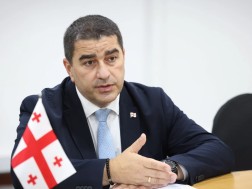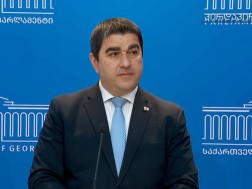


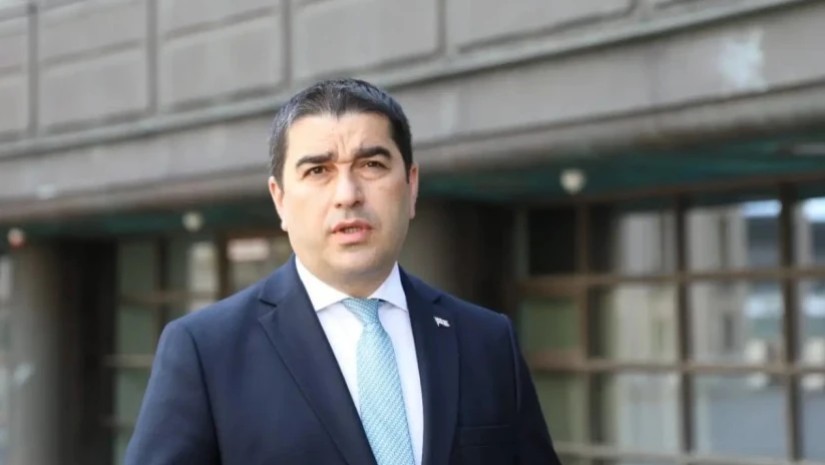

“Everyone should know one truth: in reality, there is no negotiation process regarding accession to the European Union. It is a process of fulfilling Brussels’ assignments, which at some point Brussels itself will acknowledge. Calling this process ‘negotiations’ is an absolute farce,” said Shalva Papuashvili, Speaker of the Parliament of Georgia, in comments to the media.
According to him, the EU accession negotiation process does not in fact involve bilateral dialogue and instead represents the unilateral fulfillment of directives imposed by the European Union.
As Papuashvili noted, he became familiar with this reality back when he was studying EU law. He said that while meeting certain criteria and regulations is natural when joining an organization, it is unclear when additional, formally undefined requirements emerge beyond them.
“It is understandable that if you want to join an organization, you must meet its criteria and regulations. But it is unclear when, beyond that, invented criteria, assignments, and directives are imposed, behind which lies a desire to establish control over a sovereign country,” Papuashvili said.
The Speaker cited the vetting of judges as one example, noting that such a procedure has not been conducted in any EU member state.
He also stated that, in the past, the requirement to elect the Prosecutor General by a qualified majority served the purpose of “gaining control over the institution with the participation of a marginal minority under their influence.”
“In reality, the process of EU accession negotiations is the unilateral issuing of assignments and the execution of those assignments to suit unelected Brussels bureaucrats. They do not even leave you the freedom to have different options; at most, you can postpone the fulfillment of an obligation,” Papuashvili said.
He noted that a significant portion of EU legislation has already been transposed in Georgia under the Association Agreement, yet recently a new trend has emerged from Brussels — the introduction of additional requirements that are not defined by directives or binding documents.
“For example, the vetting of judges is a product of the imagination of unelected Euro-bureaucrats. No EU document provides for such a thing, and no such procedure is carried out in any member state. Other countries are being asked to do this for a simple reason: it is a lever through which they try to influence another country’s judiciary,” Papuashvili said.
According to him, external actors are involved in vetting processes in Moldova and Ukraine, seeking to exert influence over local justice systems so that countries are “governed through the judiciary.”
Papuashvili also recalled the nine recommendations issued by the EU, noting that one of them involved the participation of foreign-funded non-governmental organizations in decision-making at all levels of government.
“Essentially, you are required to grant foreign-funded NGOs the right to veto and interfere in domestic politics. Why do they themselves not involve such organizations in all the decisions they make?” Papuashvili said.
He added that in every case where the EU and EU-affiliated ambassadors and NGOs accused the Georgian judiciary of injustice, the EU ultimately lost.
“The European Union has been comprehensively defeated in every case involving the Georgian judiciary,” Shalva Papuashvili said.