


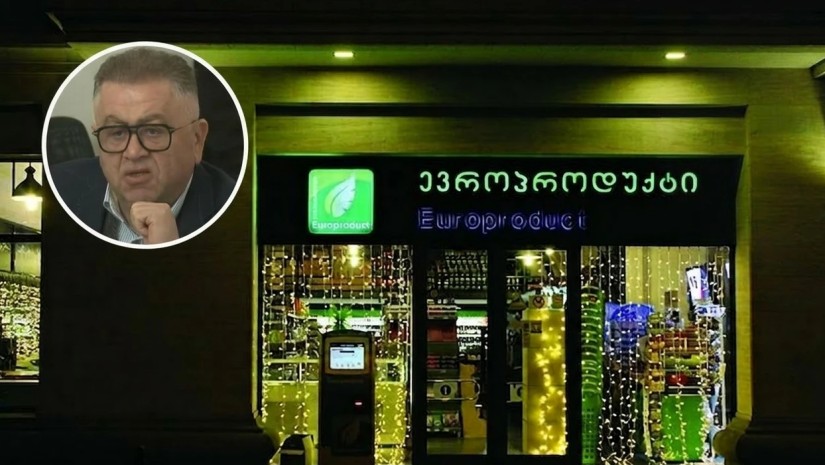

Europroduct director Giorgi Tavdishvili says the public has a distorted perception of the company’s pricing, largely because the chain targets a different market segment than mainstream retailers. Speaking before the parliamentary group studying food prices, he emphasized that Europroduct’s assortment and price category are not comparable to traditional supermarkets, which affects both customer expectations and foot traffic.
According to Tavdishvili, more than half of Europroduct stores are company-owned, meaning they do not incur rental costs, an expense that significantly reduces profits for other chains. This, he argues, creates the false impression that Europroduct has unusually high profit margins. He added that the retailer does not rely on staple goods such as buckwheat or basic cooking oil to drive sales and therefore should not be compared directly with mass-market chains. “We sell premium products; the oil we offer isn’t the same product sold by competitors. People look at us as if we’re bourgeois, and frightened customers don’t even come inside,” he said.
In response, MP Nino Tsilosani questioned the company’s social responsibility, noting that Tavdishvili’s comments suggested neither distributors nor retailers were contributing to high food prices. She suggested his remarks made it seem as if the committee’s work was unnecessary. Tavdishvili replied that primary-need goods make up only a small portion of Europroduct’s turnover and have limited impact on the company’s profitability.
Europroduct’s comments come amid an ongoing parliamentary inquiry into rising food prices—part of the government’s broader campaign to address inflation in essential goods. So far, producers, distributors and retailers have pointed fingers at one another, with many blaming retailer fees for increasing final consumer prices.