

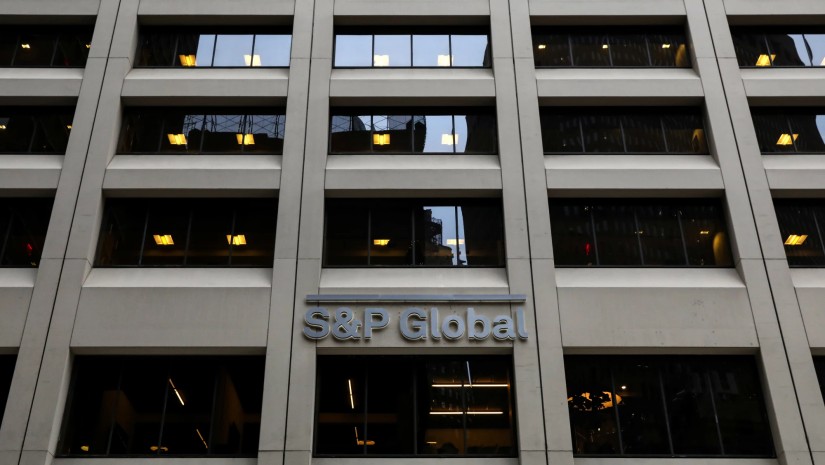

According to the latest assessment by S&P Global, political tensions in Georgia have decreased, but uncertainty remains elevated. The agency kept the country’s sovereign rating unchanged at BB with a stable outlook.
S&P notes that tensions have eased since the 2024 elections, but political polarization remains high, limiting broader dialogue. Relations with Western partners remain weak, EU accession is effectively stalled, and U.S. engagement is cautious, increasing medium-term political and regulatory uncertainty.
"Political tensions have cooled since the 2024 elections, with protests subsiding and partial opposition re-engagement in parliament, although political polarization remains elevated and limits broader dialogue.
Relations with Western partners remain weak, with EU accession effectively stalled and U.S. engagement cautious, reducing external policy anchors and increasing medium-term policy and regulatory uncertainty.
Economic growth has remained very strong despite political uncertainty, supported by robust domestic demand, and is expected to continue outperforming peers in the near term.
Over the past few months, the political climate has stabilized with a gradual decline in large-scale opposition protests following the 2024 electoral cycle. In late 2025, the For Georgia party ended its parliamentary boycott and resumed participation in legislative proceedings, marking a partial return of opposition representation. Nevertheless, most major opposition parties, including the United National Movement and Lelo, continue to boycott parliament, limiting opposition engagement within formal institutions. While public order has remained stable, political polarization persists and limits broader political dialogue. However, this has not materially disrupted day-to-day government functioning to date.
These domestic political developments have attracted increased international attention and impeded Georgia’s relations with both the EU and the U.S. Relations with the EU have cooled materially, with accession-related engagement effectively stalled following the suspension of Georgia’s accession process in mid-2024 and the subsequent halting of parts of EU financial assistance. The EU has also suspended visa facilitation for Georgian diplomatic and official passport holders and reduced the intensity of high-level political dialogue, citing concerns over governance developments, including the enactment of the Law on Transparency of Foreign Influence and the conduct of recent elections. While formal cooperation frameworks remain in place, progress on integration benchmarks has slowed and EU conditionality has become more explicit.
Relations with the U.S. also remain strained, although concrete policy consequences have so far been limited. While the bipartisan MEGOBARI Act passed the U.S. House of Representatives in May 2025, it has remained on the Senate floor since then, with no clear indication that it will advance to enactment. In this context, and amid broader global geopolitical priorities, Georgia does not appear to rank highly on the U.S. foreign policy agenda. This reduces the likelihood of near-term escalation beyond rhetorical or legislative signaling", - the document reads.