


Autor: Rainer Michael Preiss, Partner & Portfolio Strategist at Das Family Office in Singapore
Having too little money in life can be a problem, too much money can also be a burden or problem, but this can be fixed by conscientious asset allocation. An allocation to rare earth or critical materials should be part of strategic asset allocation in a globally diversified portfolio.
(REEs) in global portfolios might still be underrepresented in many investors’ portfolios but like bitcoin and crypto It could offer attractive long-term returns and can create better investment portfolios. Demand for minerals such as lithium and graphite used in EV batteries could increase as much as 4,000% over the coming few decades.
Copper is said to be the only metal with a PhD. USA president Trump recently added silver and copper to the USA list of critical materials. Smart money and private clients should take notice.
Economists and market analysts monitor copper prices closely because they often reflect shifts in global economic activity before other indicators, earning it the nickname "Dr. Copper, the metal with a Ph.D. in economics, private clients and smart money investors should do the same.
Copper is widely viewed as the “doctor” of global economic health and shifts in U.S. policy often act as powerful catalysts for price re-rating and investor flows. The U.S. reopening coincides with structural global demand drivers—electrification, energy transition, grid modernization, and AI/data-center expansion—that reinforce copper’s long-term bullish trajectory.
AI deserves excitement — it represents breakthrough innovation. But its most celebrated companies already reflect a future priced into their valuations. Copper, meanwhile, powers that same AI revolution data centers, automation, and electrification, yet remains valued far more modestly.
Being a smart investor is to understand the hype and potential bubble surrounding Ai theme stocks like NVidia but it is not about avoiding AI. It’s about investing in the backbone that AI and the broader economy cannot advance without, and that is copper the only metal with a Phd.
In the 20th century, oil was one if not the most important commodity and the investment world spoke about arab and Saudi arabia oil sheikhs
In the 21st century the focus is increasingly on rare earth and critical materials and the country of Kazakhstan and its currency might get more global invest attention and focus as fiat currency backed by rare earth.
While New York City and Wall Street have a new mayor, it is important to recall that Wall Street runs on narratives and that it is also a large marketing machine that can influence investor psychology and global asset allocation.
Rare earth elements are becoming the new oil in the age of artificial intelligence and energy transition. Global investors used to follow oil in the last century, this century global investors and smart money should follow copper prices.
Just as Saudi Arabia has long been regarded as the Kingdom of Oil, Kazakhstan could emerge as the Saudi Arabia of critical materials. In time, the Kazakh tenge may even be viewed by global financial markets as a currency backed by critical materials.
The global market for critical minerals is currently valued at $328 billion and is projected to reach $586 billion by 2032. By 2030, significant new mining capacity will be required to meet demand, especially for copper and other essential minerals. Kazakhstan’s vast potential places it at the forefront of this global growth, this could make tenge denominated assets shine like Gold.
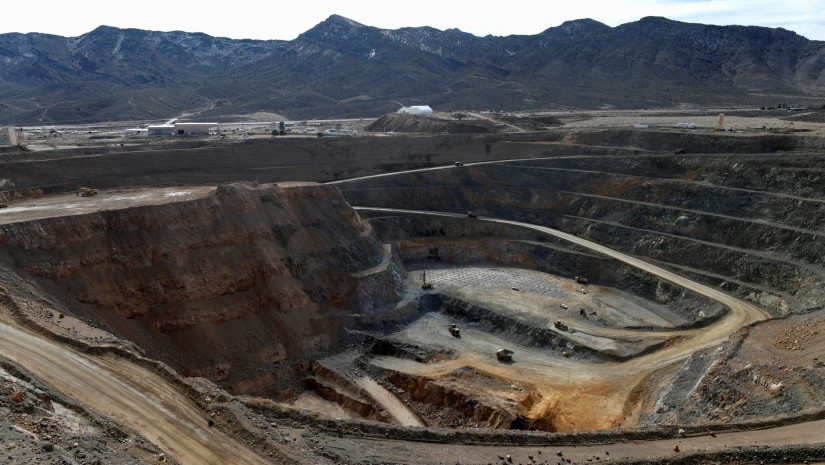
Kazakhstan is typically ranked among the top 10 copper-producing countries in the world. Copper has become a strategic mineral, similar to lithium, rare earths, and uranium.
Copper sits at the intersection of electrification, energy transition, and global infrastructure growth — with demand rising and supply constrained, making it a strategic long-term investment theme. Portfolio construction and asset allocation should include some allocation to copper and copper producing companies going into 2026 & beyond investing in copper, copper futures, and copper equities involves significant risks and may not be suitable for all investors. Before investing, you should carefully consider your financial situation, investment objectives, risk tolerance, and seek professional financial advice if needed.
Diversification is key to managing risk and should be considered when adding copper investments to your portfolio.
In many investment decisions the so-called route to market is important, similar to when you have money in any bank, money in which currency and in which bank in which country and at which interest rate or profit rate or no rate if an Islamic investor., are important questions.
The availability of REE-focused funds or ETFs may vary depending on factors such as region, market demand, and investor interest. It's essential to conduct thorough research and consult with a financial advisor before investing in any specific fund or ETF to understand its objectives, holdings, and risks. Additionally, new funds or ETFs may emerge, so it's important to check latest information from financial institutions and market data providers.
Determining the appropriate portfolio weighting for rare earth elements (REEs) in a balanced portfolio depends on various factors, including your investment goals, risk tolerance, time horizon, and overall investment strategy. REEs can be considered a niche or specialized sector within the broader commodities market, so their inclusion in a portfolio should be carefully evaluated.