

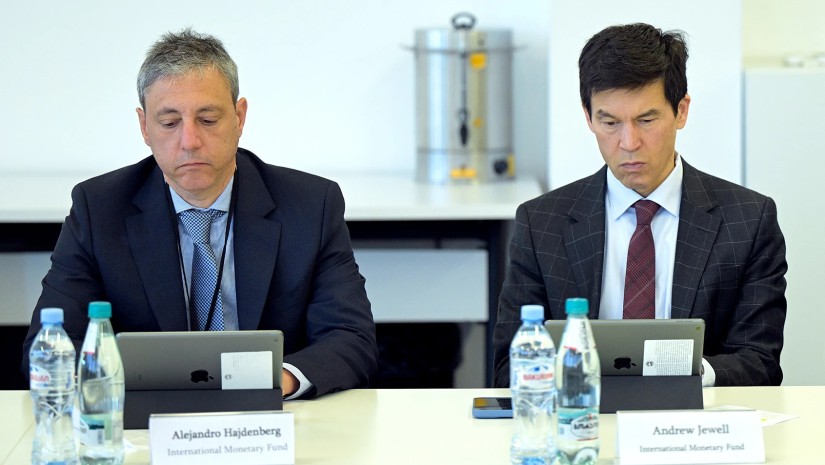

Alejandro Hajdenberg, the head of the IMF mission in Georgia, stated that in the event of supply shocks, such as increases in food and fuel prices, policymakers must exercise caution to avoid damaging the country’s fiscal sustainability.
He made these remarks during a press conference at the National Bank of Georgia, where he discussed strategies for managing economic shocks and combating inflation.
Hajdenberg emphasized that to maintain price stability, the tax rate on fuel should not be reduced.
"The main issue is the uncertainty about the duration and intensity of the shock. This is a supply shock, as opposed to a demand shock," he said.
Typically, in such cases, the central bank’s response is not to tighten monetary policy since its instruments are demand-focused. However, if shocks are persistent and high food prices start spreading to other goods — since, for example, fuel is an integral part of the production of many other goods — or if inflation significantly exceeds target levels and starts affecting inflation expectations, this could influence business and consumer decisions on consumption, saving, and wage setting.
"If inflation expectations exceed the target level, this will signal the need for a tightening of policy. As the President of the National Bank mentioned, the central bank’s primary tool is the use of the policy rate."
If, as previously noted, the shocks lead to significant increases in food or fuel prices, which in turn affect economic activity and especially impact vulnerable segments of the population, the appropriate response is to provide targeted social assistance to these groups, rather than large-scale subsidies. The latter may often be unnecessary or fiscally too costly.
Another policy that should be avoided, he said, is the reduction of taxes, such as lowering fuel taxes to keep prices down, as this sends incorrect signals to the economy. "Prices should be allowed to reflect the market situation," Hajdenberg concluded.