


Global Markets Commentary | Opinion
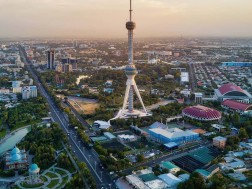
Uzbekistan has spent much of the past decade opening its economy to the world. The establishment of the Tashkent International Financial Centre (TIFC) could become one of the most important steps in the next stage of that transformation.
In 2026, Uzbekistan moved to establish a special legal and institutional framework for the TIFC, with the ambition of attracting international capital, deepening domestic capital markets and integrating the country more closely into the global financial system. The proposed architecture includes a special legal regime, international commercial dispute resolution and a platform for banking, securities, insurance, fintech, Islamic finance and related professional services.
These are important foundations. But creating an international financial center is ultimately not about constructing buildings, granting tax incentives or writing legislation.
It is about building trust.
And on this point, Tashkent can learn enormously from two very different but extraordinarily successful financial centers: Singapore and Switzerland.
Financial Centers Are Built on Trust
International capital is remarkably mobile. A family office in Zurich, an asset manager in Singapore, a sovereign wealth fund in the Gulf or an institutional investor in London can allocate capital almost anywhere. Financial centers therefore compete not merely on tax rates or office costs but on something considerably more valuable: institutional credibility.
Investors need to believe that contracts will be enforced, regulations will remain reasonably predictable, courts will operate independently and capital will not become hostage to political considerations.
Singapore understood this very early. Its financial center was built around rule of law, regulatory clarity, consistency, rigorous supervision and an insistence on financial integrity.
Switzerland built its financial industry around a similar proposition. Its advantage was never simply banking secrecy. Switzerland's deeper competitive advantages have been political stability, property rights, monetary credibility, legal certainty and a highly developed ecosystem of banks, asset managers, lawyers, fiduciaries and financial professionals.
Tashkent should therefore resist the temptation to measure TIFC's success primarily by the number of registered companies. The more important question is: Do international investors trust the jurisdiction with their capital?
Lesson One: Institutions Matter More Than Incentives
Financial centers frequently begin by offering tax advantages. These can help attract early participants, but tax incentives alone rarely create enduring financial centers. Capital ultimately follows institutions.
The most valuable asset TIFC could develop would therefore be an international reputation for predictable rules, independent dispute resolution and consistent enforcement. The international commercial court is consequently far more important than it might initially appear.
Its judges should be internationally respected. Decisions should be transparent and accessible. Commercial disputes should be resolved efficiently. And investors must be confident that judgments will be enforced.
A financial center cannot become internationally credible if participants believe that political connections matter more than contracts. Legal certainty, regulatory predictability and judicial independence must become institutional culture rather than merely legislative language.
Lesson Two: The Regulator Must Be Independent and Respected
Switzerland provides another important lesson. A successful financial regulator must be close enough to government to understand national economic objectives, but sufficiently independent that international institutions believe licensing, supervision and enforcement decisions are made professionally.
TIFC should therefore aspire to create a regulator whose reputation eventually becomes an asset in itself. A TIFC license should mean something.
It should tell international investors that an institution has met serious standards regarding capital, governance, compliance, beneficial ownership and professional competence. Tashkent should seek quality before quantity. Twenty respected international financial institutions would contribute more to TIFC's credibility than hundreds of lightly regulated entities.
Lesson Three: Become the Financial Capital of Central Asia
Tashkent should not attempt simply to become another Singapore or another Switzerland. That would misunderstand its opportunity. Its natural competitive advantage is geography.
Central Asia is undergoing an important economic transformation. Uzbekistan and Kazakhstan are reforming their economies, infrastructure investment is accelerating, capital markets are developing and a new generation of entrepreneurs is accumulating significant private wealth. Yet much of the region's international financial activity continues to take place outside Central Asia.
This creates an opportunity: Tashkent could become one of the principal places where Central Asian capital meets global capital.
The objective should therefore extend beyond attracting banks. TIFC should develop an ecosystem encompassing international and regional banks; asset and fund managers; family offices and multi-family offices; private equity and venture capital; insurance and reinsurance; securities brokers and custodians; international law and accounting firms; Islamic finance; fintech; infrastructure finance; and wealth structuring and succession planning.
This would create something far more valuable than a financial free zone: a genuine capital-allocation ecosystem.
Lesson Four: Private Wealth Should Be Part of the Strategy
Here Switzerland and Singapore provide perhaps the most relevant lesson. Both discovered that wealth management creates an entire financial ecosystem around it.
Private banks attract wealthy families. Those families require asset managers, lawyers, accountants, trustees, fund administrators, insurance specialists, tax professionals and increasingly family-office services. Singapore has deliberately developed this ecosystem into one of the world's leading centers for asset management and family wealth.
Uzbekistan should think similarly. Central Asia is creating considerable entrepreneurial wealth, but much of that wealth is ultimately administered through Dubai, Switzerland, Singapore, London or other international financial centers.
TIFC should ask a strategic question: Why shouldn't part of that wealth be managed from Tashkent?
Developing a credible family-office and private-wealth regime could therefore become one of TIFC's most interesting long-term opportunities.
Lesson Five: Never Compromise on Financial Integrity
There is, however, another side to international wealth management. Money laundering, corruption, sanctions violations and opaque beneficial ownership can destroy the reputation of a financial center extraordinarily quickly.
TIFC should learn from the experiences of established centers rather than repeat their mistakes. Strong know-your-customer requirements, beneficial-ownership transparency, sanctions compliance and anti-money-laundering enforcement should be regarded as competitive advantages rather than bureaucratic obstacles.
Tashkent should aim to become the place where legitimate Central Asian wealth feels safe - not where questionable capital feels anonymous. That distinction will determine its international reputation.
Lesson Six: Develop Human Capital
Singapore did not become a financial centre simply because international banks opened offices there. It developed thousands of bankers, portfolio managers, analysts, lawyers, accountants, compliance specialists and technology professionals. Switzerland did the same over generations.
Uzbekistan must therefore invest heavily in financial human capital. Universities should develop programmes in investment management, financial law, quantitative finance, compliance, fintech and international taxation. Partnerships could be established with foreign universities, professional organizations and financial institutions.
TIFC should also make it easy for experienced international professionals to work in Uzbekistan while simultaneously encouraging foreign institutions to develop local talent. The ultimate objective should not be to import a financial industry. It should be to create an Uzbek financial profession.
Lesson Seven: Build Markets, Not Just Institutions
TIFC will succeed only if it connects with Uzbekistan's broader capital-market development. That means encouraging IPOs, corporate bonds, investment funds, pension assets, ETFs, infrastructure securities and eventually deeper regional capital-market integration.
Uzbekistan's privatisation programme could become particularly important. Rather than viewing privatisation merely as the sale of government assets, Uzbekistan could use it to build domestic capital markets.
Successful listings of major Uzbek companies could increase market liquidity, broaden domestic ownership and attract international institutional investors. TIFC could ultimately become the bridge connecting Uzbek companies with investors in London, Singapore, Dubai, Zurich, Seoul and elsewhere.
Singapore, Switzerland - and a Tashkent Model
The most important lesson from Singapore and Switzerland is actually that Uzbekistan should copy neither.
Singapore succeeded because it understood its position between East and West and became a trusted gateway to Asia. Switzerland succeeded because it combined political stability, legal certainty, monetary credibility and specialist expertise in cross-border wealth management.
Tashkent must discover its own comparative advantage. And that advantage is potentially powerful.
Uzbekistan sits at the demographic and geographic heart of Central Asia. It has the region's largest population, an increasingly dynamic private sector, considerable infrastructure requirements and historical connections stretching across the Silk Road from China to Europe and the Middle East.
TIFC can therefore position itself as a financial bridge connecting Central Asia with global capital. It can also complement rather than simply compete with the Astana International Financial Centre. Two credible financial centers could deepen Central Asia's overall financial architecture and make the region considerably more visible to international investors.
Competition between Astana and Tashkent could ultimately benefit both.
The Twenty-Year Test
International financial centers are not built in five years. They are built over decades.
The appropriate measure of TIFC's success will therefore not be how many institutions register during its first few years. A better test would be to ask where Tashkent stands in 2047
Do international investors choose TIFC law for regional transactions? Do Central Asian companies raise capital there? Do international banks locate regional teams in Tashkent? Do wealthy families establish family offices there? Do international asset managers manage Central Asian portfolios from Tashkent?
And perhaps most importantly: When investors think about Tashkent, do they think about trust?
If the answer eventually becomes yes, Uzbekistan will have created something much more important than another special economic zone. It will have created an institution.
Singapore and Switzerland demonstrate that financial centers ultimately depend on something that cannot simply be legislated into existence: credibility accumulated patiently over many years. Tashkent now has an opportunity to begin building it.
Rainer Michael Preiss – Partner & Portfolio Strategist, DAS Family Office