


autor: Rainer Michael Preiss – Global Markets Commentary
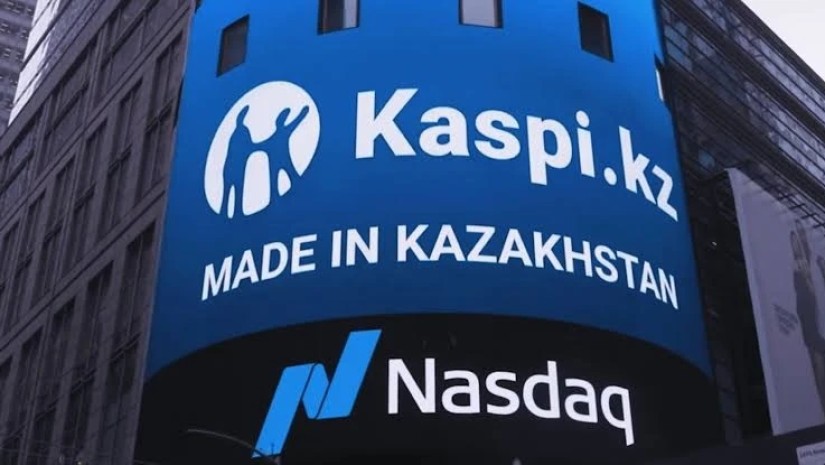
Kaspi.kz is one of the most unusual companies available to global equity investors. Based in Kazakhstan but listed on Nasdaq under the ticker KSPI, Kaspi has built an extraordinarily successful digital ecosystem combining payments, e-commerce, financial services and merchant solutions within a pair of highly integrated Super Apps.
For global private clients and family offices, Kaspi offers something difficult to obtain elsewhere: exposure to the digitalisation of Central Asia, financial inclusion, e-commerce and consumer growth through a highly profitable technology platform, combined with an increasingly important expansion strategy into Türkiye.
The investment case is compelling, but it is no longer simply a Kazakhstan story. The acquisition of a controlling stake in Turkish e-commerce platform Hepsiburada has changed both the potential upside and the risk profile of the company.
The Super App Ecosystem
At the centre of Kaspi's success is its Super App ecosystem. Rather than asking consumers to use separate applications for banking, shopping, payments and financial services, Kaspi integrates everyday financial and commercial activities into a single digital environment. Consumers can make payments, transfer money, shop online, purchase travel, obtain financing and access other services through the Kaspi.kz Super App. Merchants interact with customers through the complementary Kaspi Pay Super App.
This creates powerful network effects. More consumers attract more merchants. More merchants make the platform more useful to consumers. Higher transaction volumes generate more data, allowing Kaspi to improve its financial products, customer experience and credit decisions. New products can then be introduced to an already highly engaged customer base without requiring the marketing expenditure normally associated with building a completely new business.
The company operates through three principal platforms: Payments, Marketplace and Fintech. Instead of functioning as three independent businesses, the platforms reinforce one another. This integration is one reason Kaspi has historically generated unusually strong profitability for a growth-oriented technology company.
In the first quarter of 2026, Kaspi reported Total Payment Value of approximately ₸11.35 trillion, representing 14% year-on-year growth. Marketplace Gross Merchandise Value reached approximately ₸2.16 trillion, increasing 19%, while Marketplace revenue increased 49%. Fintech Total Finance Value was approximately ₸2.61 trillion. These figures demonstrate that Kaspi is not a speculative technology company attempting to monetise users at some distant point in the future. It is already a large, profitable, transaction-driven financial ecosystem.
From Kazakhstan Champion to Regional Platform
Historically, one of the main concerns surrounding Kaspi was that Kazakhstan is simply not a very large country. Kaspi achieved extraordinary penetration within its domestic market, but once a digital platform becomes deeply embedded across much of the economically active population, domestic growth inevitably becomes more difficult.
The strategic answer has been international expansion. Kaspi's acquisition of a controlling interest in Hepsiburada, one of Türkiye's leading e-commerce platforms, represents the most important strategic development in the company's history. Kaspi currently owns approximately 85% of Hepsiburada. Türkiye provides access to a population several times larger than Kazakhstan's and a substantially larger addressable e-commerce and financial-services market.
If management can successfully apply elements of the Kaspi ecosystem—including payments, merchant services, fintech and integrated digital commerce—to the Turkish market, the company's long-term addressable market could expand dramatically. The 2025 results already demonstrate the financial impact of the acquisition, with Marketplace segment revenue increasing substantially and Hepsiburada contributing materially.
But Türkiye also introduces new risks. Kaspi's success in Kazakhstan was built over many years within a market where the company understands consumers, merchants, regulators and competitive dynamics exceptionally well. Türkiye is larger, more competitive and has experienced considerable inflation and currency volatility. Investors should therefore view Hepsiburada as both Kaspi's largest growth opportunity and one of its largest execution risks.
Why the Business Model Is Attractive
The investment attraction of Kaspi rests on several characteristics rarely found together. It benefits from powerful network effects, has a highly transaction-driven model, operates a relatively capital-light digital platform compared with physical retail or branch-heavy financial institutions, has historically generated substantial profitability while continuing to grow, and participates simultaneously in the transition from cash to digital payments, increasing e-commerce penetration, financial inclusion, consumer credit and the digitalisation of small and medium-sized businesses.
This makes Kaspi difficult to classify using conventional sector definitions. It is partly a bank, partly a payments company, partly an e-commerce marketplace and partly a technology platform. A useful international comparison might combine elements of MercadoLibre, PayPal, Block, Amazon and a digital bank, although Kaspi's integrated ecosystem remains distinctive.
Valuation and Analyst View
One of the most interesting aspects of the Kaspi investment case is valuation. Despite its growth characteristics and historically high profitability, KSPI has often traded at substantially lower valuation multiples than comparable global fintech and e-commerce platforms.
As of late July 2026, the shares were trading around US$86–87. Available market data indicated a substantial earnings yield and an indicated dividend yield above 8%. That combination is unusual: high-growth technology companies normally trade at premium valuations and pay little or no dividend. Kaspi combines growth with substantial cash generation and shareholder distributions.
The apparent valuation discount reflects genuine risks rather than a simple market mistake. Investors apply discounts for Kazakhstan country risk, geopolitical proximity to Russia, currency exposure, emerging-market governance concerns and uncertainty surrounding the Turkish expansion. The key investment question is whether these risks justify the magnitude of the discount.
Analyst sentiment is constructive. Based on seven analysts tracked by S&P Global at the time of the analysis, KSPI carried a consensus Buy rating. The average 12-month price target was approximately US$98.46, with published targets ranging from roughly US$87 to US$123. Against a late-July share price around US$86.50, the average target implied approximately 14% upside. Analyst targets should not be treated as guarantees, but the consensus indicates a broadly constructive view despite the company's evolving risk profile.
Kazakhstan Remains an Important Part of the Thesis
Kaspi should also be considered within the broader investment case for Kazakhstan. Kazakhstan remains one of Eurasia's more interesting under-owned markets. It possesses substantial natural-resource wealth, relatively strong financial buffers, a growing digital economy and an increasingly important geographical position between China and Europe.
Kaspi represents the modern, technology-driven side of this investment story. Where Kazatomprom provides exposure to uranium and Halyk Bank provides exposure to conventional banking, Kaspi provides exposure to digital consumption, payments, e-commerce and financial technology. For investors constructing a Kazakhstan allocation, these businesses can therefore represent very different economic exposures rather than simply duplicating the same commodity-driven risk.
The Risks Private Clients Must Understand
The most obvious risk is geographic concentration. Despite international expansion, Kazakhstan remains fundamental to Kaspi's profitability. Economic weakness, regulatory changes or political disruption could therefore have a significant impact on the company.
Currency risk is equally important. KSPI trades in U.S. dollars, but substantial underlying revenues and earnings originate in Kazakhstani tenge, while Türkiye introduces exposure to the Turkish lira. Currency depreciation can reduce the value of local earnings when translated into dollars.
Credit risk must also be considered. Kaspi's Fintech business provides financing to consumers and merchants. A deterioration in employment, household finances or economic conditions could increase credit losses. Regulation represents another risk because Kaspi has become systemically important within Kazakhstan's digital economy. Finally, Hepsiburada creates integration and execution risk. Türkiye offers enormous potential, but investors should not automatically assume that Kaspi's extraordinary Kazakhstan economics can simply be replicated in another country.
What Should Private Clients Do?
For globally diversified private clients, Kaspi should not normally be treated as a substitute for a diversified global technology or financial-sector allocation. Instead, it is better viewed as a high-quality emerging-market satellite investment.
For investors comfortable with Kazakhstan, Türkiye, currency and emerging-market risks, an allocation of approximately 1–2% of a globally diversified equity portfolio could provide meaningful participation in the company's long-term upside while keeping company-specific risk under control. More aggressive investors with a dedicated frontier or emerging-markets allocation could consider a somewhat larger position, but the exceptional historical quality of the business should not lead investors to ignore country and execution risks. Position sizing remains critical.
Investment Conclusion
Kaspi.kz represents one of the more distinctive growth companies available in global public markets. It has built an extraordinarily powerful digital ecosystem in Kazakhstan, combining payments, marketplace and financial services in a way that creates strong network effects, high customer engagement and substantial profitability.
The Hepsiburada acquisition now gives Kaspi an opportunity to evolve from a dominant Kazakhstan technology champion into a broader Eurasian digital platform. If management succeeds, the company's addressable market and long-term earnings potential could increase substantially. If the Turkish expansion disappoints, however, investors may discover that Kaspi's exceptional domestic economics are more difficult to reproduce internationally than expected.
At approximately US$86–87 per share in late July 2026, with analyst consensus at Buy and an average target near US$98, Kaspi's valuation did not appear to require perfection. For patient private clients, that is important.
We therefore view Kaspi.kz (NASDAQ: KSPI) constructively as a long-term BUY for globally diversified private clients willing to accept emerging-market, currency and execution risk, preferably as a disciplined satellite allocation rather than an oversized core position.
Kaspi is no longer simply a Kazakhstan fintech story. It is becoming an experiment in whether one of the world's most successful Super App models can travel across borders. If that experiment succeeds, today's valuation may ultimately prove to have significantly underestimated the company's longer-term potential.
Rainer Michael Preiss
Global Markets Commentary, Partner & Portfolio Strategist DAS family office
This commentary is for educational purposes and does not constitute individualized investment advice. Emerging-market equities, financial companies and technology platforms can experience substantial volatility. Investors should consider their objectives, liquidity requirements and capacity for loss before investing.