



By Rainer Michael Preiss – Global Markets Commentary
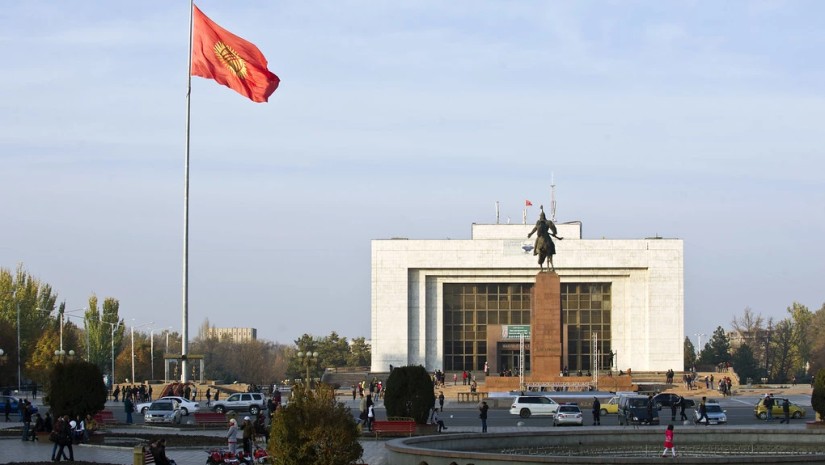
In a world where global capital is increasingly concentrated in a handful of large technology companies and well-known developed markets, some of the most compelling long-term investment opportunities can be found where few investors are looking. Kyrgyzstan is one such market. Although small by international standards, the country offers sophisticated private clients and family offices exposure to an under-researched frontier economy with attractive long-term growth potential, abundant natural resources, and a financial market that is still in the early stages of development.
Kyrgyzstan should not be viewed as a replacement for developed or larger emerging markets. Rather, it represents a specialist satellite allocation for investors seeking diversification beyond traditional global equity portfolios. Like many frontier markets, it combines the possibility of superior long-term returns with higher levels of risk, requiring careful security selection, disciplined portfolio construction, and a long investment horizon.
Located at the heart of Central Asia, Kyrgyzstan occupies an increasingly strategic position between China and the rest of the region. As a member of the Eurasian Economic Union (EAEU), the country benefits from regional trade integration and access to larger neighboring markets. Economic growth has been supported by mining, agriculture, services, remittances from overseas workers, and a gradually expanding banking sector. At the same time, continued investment in transport, energy, and digital infrastructure is improving the country's long-term economic prospects.
One of Kyrgyzstan's greatest strengths is its wealth of natural resources. Gold remains one of the country's most important exports and a major source of government revenue and foreign exchange earnings. For investors with a constructive long-term outlook on precious metals, exposure to Kyrgyz companies provides an indirect way of participating in global demand for gold. In addition, the country possesses substantial hydroelectric resources, making renewable energy one of its most promising long-term investment themes. Rising regional electricity demand and future cross-border energy exports could become important drivers of economic growth over the coming decade.
The domestic banking sector is another area that deserves close attention. Financial inclusion continues to improve as more households and businesses gain access to modern banking services. Credit penetration remains relatively low compared with developed markets, leaving significant room for expansion. Digital banking, mobile payments, and broader adoption of financial technology are helping to modernize the sector, while rising household incomes and expanding consumer lending provide additional support for long-term profitability. Well-managed financial institutions with strong capital positions and prudent risk management may become some of the most attractive listed companies in the country.
Beyond banking and mining, Kyrgyzstan offers investment opportunities linked to infrastructure, construction, logistics, telecommunications, and consumer services. As incomes gradually rise and urbanization continues, domestic consumption is expected to become an increasingly important contributor to economic growth. Companies serving the domestic market may therefore benefit from improving living standards and the gradual expansion of the middle class.
Perhaps the greatest attraction of Kyrgyzstan's equity market lies in its valuation. Unlike developed markets, where many companies are extensively researched by analysts and widely owned by institutional investors, Kyrgyz equities receive very little international attention. Limited research coverage, low passive fund ownership, and modest foreign participation can create valuation inefficiencies that patient investors may be able to exploit. History has shown that many of today's successful emerging markets were once overlooked frontier markets before attracting broader international capital.
Diversification is another compelling argument for considering Kyrgyzstan. The country's equity market tends to have relatively low correlation with the major stock markets of the United States, Europe, and Japan. While this characteristic does not eliminate risk, it may improve overall portfolio diversification when incorporated as a modest satellite allocation alongside global equities, fixed income, and alternative investments.
However, investors must also recognize the considerable challenges associated with frontier markets. Liquidity remains one of the most significant constraints. Daily trading volumes are modest, meaning that building or exiting larger positions can take time and may affect market prices. This makes careful position sizing essential, particularly for institutional investors and larger family offices.
Corporate governance standards continue to improve but remain below those typically found in developed markets. Investors should therefore focus on companies with transparent financial reporting, independent audits, experienced management teams, and consistent dividend policies. Thorough due diligence is indispensable, and local expertise can provide valuable insights into company quality and market conditions.
Currency risk represents another important consideration. Foreign investors are exposed to movements in the Kyrgyz som, which can materially influence overall investment returns when translated into foreign currencies. Political and regulatory developments should also be monitored carefully, although the country's institutional framework has become more stable in recent years.
Given these opportunities and risks, Kyrgyzstan is best viewed as a specialist allocation rather than a core portfolio holding. Conservative investors may reasonably choose to have no exposure at all, while balanced portfolios might allocate up to one percent. Growth-oriented investors with a higher tolerance for risk could consider allocations of one to two percent, while dedicated frontier market investors may allocate between two and five percent, provided they fully understand the liquidity constraints and conduct comprehensive due diligence.
Successful investing in Kyrgyzstan requires patience rather than short-term trading. Positions should be accumulated gradually, with an emphasis on quality businesses, sound corporate governance, sustainable earnings, and the ability to generate attractive long-term shareholder returns. Partnering with experienced local brokers and maintaining a disciplined investment process are essential components of a successful strategy.
Looking ahead, Kyrgyzstan is unlikely to become a major emerging market overnight. Nevertheless, the country's economic trajectory, improving financial infrastructure, expanding banking sector, and increasing regional integration suggest that its capital markets may become significantly more attractive over the next decade. As global investors continue searching for diversification beyond increasingly crowded developed markets, frontier economies such as Kyrgyzstan may receive greater attention.
For globally diversified private clients and family offices, Kyrgyzstan represents an opportunity to invest where others are not yet looking. Although the risks are substantial and should never be underestimated, careful security selection, prudent portfolio construction, and a long-term investment horizon may enable investors to participate in the country's gradual economic transformation. As with many successful frontier market investments throughout history, the greatest rewards often accrue to those willing to invest before the rest of the world discovers the opportunity.
Rainer Michael Preiss – Partner & Portfolio Strategist, DAS family Office, Singapore