


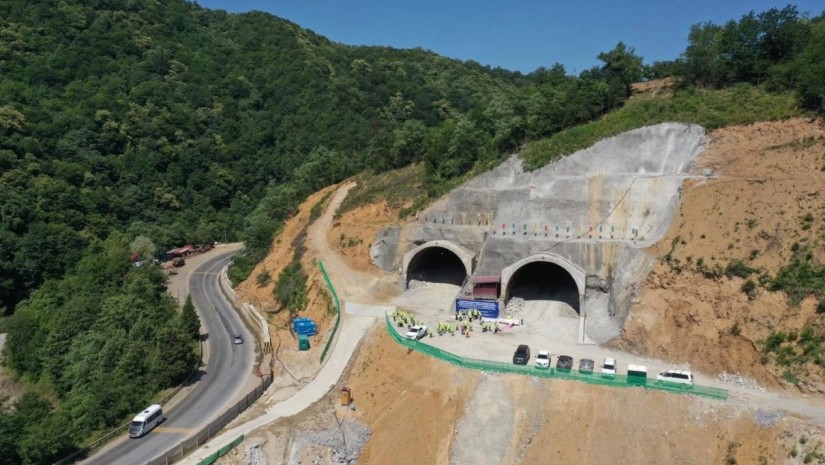

Concerns are growing over the safety of Georgia’s Rikoti highway as experts warn that critical geological risks were not thoroughly assessed before construction began.
A bulletin from the National Environmental Agency identifies thousands of natural hazard zones across the country, many of them along the Rikoti corridor, including areas at high risk of landslides, rockfalls, and mudslides.
Speaking on Business Morning, geophysicist Zurab Javakhishvili said the most complex sections, such as Khevi-Chumateleti, were poorly studied. “The road has collapsed multiple times, even after opening. Some slope reinforcements failed, and further interventions were needed, clearly, key risks were overlooked,” he noted.
He also criticized the decision to build numerous tunnels and overpasses, which further destabilized the already fragile terrain. “This section is closed during heavy rains. While that’s good for safety, a major road shouldn’t have to shut down every time it rains.”
Nino Chkhobadze, Chairwoman of the Green Movement of Georgia, agreed. She argued that fast-tracking construction permits without proper risk assessments leads to greater economic and environmental costs. “If we studied the risks properly from the start, we wouldn’t face such high additional expenses later,” she said.
The Rikoti highway project includes 52 km of four-lane road, with 51 tunnels and 97 bridges. It is funded by the Asian Development Bank, European Investment Bank, World Bank, and Georgia’s state budget, with a total cost of up to 2.6 billion GEL.