


Rainer Michael Preiss – Global Markets Commentary
April 2026
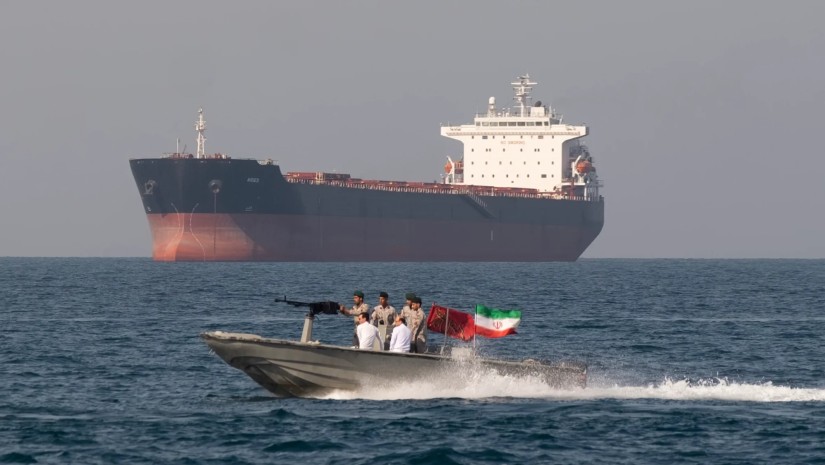
The Strait of Hormuz is not merely a chokepoint on a map. It is the jugular of global energy markets. Approximately 20% of the world's petroleum—over 17 million barrels per day—flows through this 33-kilometer waterway between Oman and Iran. When tensions rise in Hormuz, the global economy holds its breath.
In April 2026, a confluence of escalating geopolitical events—Iranian naval exercises, renewed sanctions enforcement, and retaliatory tanker seizures—has pushed oil prices into triple-digit territory. For private clients, this is not a macro abstraction. It is a direct threat to purchasing power, portfolio volatility, and real returns.
This commentary outlines the mechanics of a Hormuz oil shock and provides actionable, defensive portfolio implications for high-net-worth and family office investors.
Section 1: Anatomy of a Hormuz Oil Shock
Unlike supply disruptions from hurricanes or pipeline outages, a Hormuz shock is uniquely dangerous for three reasons:
Concentration Risk – There is no near-term substitute for Hormuz. Strategic reserves (SPR) can buffer weeks, not months. Alternative routes (the 1.8 million barrel-per-day East-West Pipeline in Saudi Arabia or the UAE's Abu Dhabi pipeline) are orders of magnitude too small.
Contagion Effect – A closure or severe disruption does not just raise oil prices. It spikes tanker insurance rates (war risk premiums), disrupts LNG shipments, and triggers margin calls across commodity markets. The 2019 attacks on Saudi Aramco facilities temporarily halved Saudi production and shocked global markets within hours.
Psychological Amplification – Markets fear what they cannot model. A Hormuz closure has no historical clean precedent. This uncertainty translates into volatility far exceeding the fundamental supply gap.
Investor Insight:
Oil price spikes above $120–$150 per barrel historically precede equity market drawdowns of 15–25% within six months, with transport, manufacturing, and consumer discretionary sectors suffering most acutely.
Section 2: How Private Clients Get Hurt (Transmission Channels)
For private portfolios, a Hormuz shock transmits damage through four distinct channels:
Channel 1 – Earnings shock: Higher input costs crush margins for airlines, logistics, chemicals, and retail. Historical analogy: 1973 oil embargo – S&P 500 fell 42%.
Channel 2 – Inflation pass-through: Fuel, food, and transport inflation forces central bank tightening. Historical analogy: 2022 energy shock – Fed hiked 425 basis points.
Channel 3 – Liquidity seizure: Risk-off flight to cash; corporate bond spreads widen. Historical analogy: 2008 and 2020 – high-yield market froze.
Channel 4 – Geopolitical de-rating: Multiples contract as risk premia rise globally. Historical analogy: Gulf War (1990) – P/E multiples fell 30%.
Private clients with concentrated equity positions, long-duration bonds, or illiquid alternatives face the greatest exposure.
Section 3: Immediate Portfolio Actions (First 72 Hours)
In a Hormuz shock, hesitation is costly. The following actions are for private clients with liquid portfolios:
3.1 Reduce Cyclical Equity Exposure
Sell or hedge: Airlines, shipping, automotive, chemicals, retail, and European industrials
Reduce weighting in: Japan (net energy importer), India (70%+ oil import dependence), Turkey and Thailand (high current account sensitivity)
3.2 Add Energy Equities (Selectively)
Integrated majors (Exxon, Shell, BP, TotalEnergies) benefit from both upstream production and downstream margins
US shale producers with hedged production profiles and low break evens
Avoid: Small-cap explorers with high debt; refining-only names where crude input costs spike
3.3 Increase Commodity Exposure
Oil futures/ETFs (USO, BNO) as tactical trades, but manage roll costs
Gold – The classic geopolitical hedge. A 10–15% allocation to gold (physical, GLD, or miners) is warranted
Copper and uranium – Supply chains for electrification and nuclear energy face secondary disruption
3.4 Adjust Fixed Income
Shorten duration – Inflation shocks hit long bonds hardest
TIPS (Treasury Inflation-Protected Securities) provide direct inflation hedging
Avoid high-yield corporate bonds – Spreads will widen as recession odds rise
3.5 Raise Cash
A 15–25% cash position provides optionality to deploy during panic selling. Renminbi and euro may weaken; USD and CHF are preferred havens.
Section 4: The Barbell Defense for Private Clients
The most resilient portfolio structure for a Hormuz shock is a barbell – defensive assets on one end, high-conviction energy and real assets on the other, with little in the middle.
Defensive Sleeve (50–60%)
Short-term US Treasuries (0–2 year duration)
Gold (physical or GLD)
Cash in USD and CHF
Defensive equities: healthcare, utilities, consumer staples
Energy & Real Assets Sleeve (20–30%)
Integrated oil majors
Midstream energy infrastructure (pipelines, storage – MLPs)
Agriculture commodities (wheat, corn, soybeans – food price inflation follows oil)
Water and timberland (real assets with pricing power)
Avoid (10–20% reduction)
Long-duration tech (valuation multiples compress)
European discretionary (energy-intensive)
Emerging markets without strategic reserves
Section 5: Scenarios and Triggers for Private Clients
Not all Hormuz shocks are equal. Private clients should prepare for three distinct scenarios:
Scenario 1 – Tanker harassment / limited seizures
Probability: 60%
Oil price range: $100–$120
Portfolio response: Tactical energy + gold; reduce cyclicals 10%
Scenario 2 – Temporary closure (2–4 weeks)
Probability: 30%
Oil price range: $120–$160
Portfolio response: Full barbell defense; raise cash to 25%; hedge equities via puts
Scenario 3 – Extended closure (8+ weeks) + military escalation
Probability: 10%
Oil price range: $160–$250+
Portfolio response: Reduce equities to 30% max; overweight gold, oil, agriculture; consider commodities trend-following strategies
Trigger to watch: Tanker war risk insurance premiums. If rates exceed 1% of vessel value, markets have not yet priced the worst.
Section 6: Beyond Oil – Secondary and Tertiary Effects
Sophisticated private clients should look beyond the first-order oil trade.
Secondary effects:
LNG disruption – Hormuz is also a key route for Qatari LNG. European and Asian gas prices will spike, benefiting US LNG exporters (Cheniere, Tellurian)
Refining margins – If crude surges but product demand holds, complex refiners (Valero, Marathon) see windfall profits
Shipping – Tanker rates explode, then container and dry bulk follow as routes lengthen
Tertiary effects (6–12 months out):
Accelerated energy transition – A prolonged shock will lock in demand for EVs, heat pumps, and nuclear. Global response will be more spending on domestic energy security.
Geopolitical realignment – China and India will accelerate strategic petroleum reserve (SPR) build-outs and seek alternative supply corridors (Russia, Central Asia, South America).
Investor Insight:
The winners of a Hormuz shock are not only oil producers, but also energy infrastructure owners, US LNG exporters, and defensive real assets that store value when fiat currencies are debased by inflation.
Portfolio Implications Summary for Private Clients
Action: Reduce cyclicals (airlines, auto, retail, EU industrials)
Priority: High
Time Horizon: Immediate
Action: Add integrated oil majors + US shale
Priority: High
Time Horizon: Immediate
Action: Increase gold to 10–15%
Priority: High
Time Horizon: Immediate
Action: Raise cash (USD/CHF) to 15–25%
Priority: Medium
Time Horizon: 1–5 days
Action: Shorten bond duration; add TIPS
Priority: Medium
Time Horizon: 1 week
Action: Avoid high-yield credit
Priority: High
Time Horizon: Immediate
Action: Add agriculture commodities via ETFs
Priority: Low
Time Horizon: 1–2 weeks
Action: Hedge equity beta with put options (5% of portfolio cost)
Priority: Optional
Time Horizon: Tactical
Conclusion
The Strait of Hormuz is not a black swan. It is a known, mapped, and recurring risk that markets periodically forget during periods of oil price stability. For private clients, a Hormuz oil shock is not a test of forecasting ability. It is a test of preparedness.
The portfolios that will compound wealth through the coming decade are not those that predict every twist in Iran–US–China relations. They are those that are structurally positioned to absorb energy shocks, inflation spikes, and geopolitical volatility without forcing fire sales or emotional decisions.
Bismarck famously said that "politics is the art of the possible." For private investors in 2026, portfolio construction is the art of the resilient. Build for the shock you know is coming, not the one you hope will not.
Disclaimer
This document is provided for general information and educational purposes only and does not constitute an offer, solicitation, or recommendation to buy or sell any security, financial product, or instrument. It does not take into account the specific investment objectives, financial situation, or particular needs of any individual or entity.
The views expressed herein are those of Rainer Michael Preiss and do not necessarily reflect the official position of any affiliated organization. These views are subject to change without notice based on market and other conditions.
This document has not been reviewed by the Monetary Authority of Singapore (MAS). It is not intended to be relied upon as financial advice, and any person considering any investment should seek independent professional advice from a licensed financial adviser.
Past performance is not indicative of future results. Investments in commodities, energy, and frontier strategies carry heightened risks, including but not limited to price volatility, geopolitical instability, illiquidity, and complete loss of capital.
The mention of specific securities, sectors, or asset classes does not constitute an endorsement or a recommendation. The author and his related parties may hold positions in assets discussed herein.
By accepting this article, you acknowledge that you have read, understood, and agreed to the terms of this disclaimer.
Rainer Michael Preiss, Partner & Portfolio strategist DAS family Office, Singapore