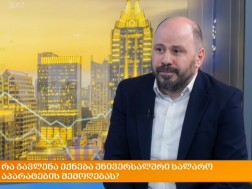




Davit Papiashvili, Managing Partner of "Kreston Georgia", declares that the recent methodological instruction issued by the Revenue Service on the cancellation of 50% of fines imposed during tax audits helps clarify certain ambiguities in the Tax Code. However, he notes that issuing such a document seven years after the law’s adoption raises questions about its timing and potential connection to challenges in meeting budget revenue targets.
As Papiashvili explained, the rule allowing for the cancellation of half of the fines has been in effect since January 1, 2019; however, many businesses were unaware of it. Under the rule, if a company agrees to pay the assessed tax and 50% of the fine within 30 days after a tax audit, the Revenue Service might write off the remaining half. For instance, if a business is fined GEL 50,000 alongside GEL 100,000 in principal tax, paying GEL 25,000 of the fine within the deadline would result in the cancellation of the other GEL 25,000. The recent instruction, he said, mainly serves to clarify how this mechanism applies, for example, confirming that it does not cover fines related to fake invoices.
While Papiashvili welcomes the clarification, he questions whether the decision to reemphasize this rule at this time could be related to budgetary pressures. “In all three quarters, the same trend is observed, apart from income tax, there are difficulties with mobilizing other taxes, and the budget is essentially being filled through overpaid taxes,” he said. According to him, this raises concerns that the state may be preparing to use stricter audit practices to increase revenue collection.
Papiashvili cautioned that while such measures have not been observed in recent years, similar situations occurred four or five years ago, when tax assessments were applied rigidly in response to fiscal shortfalls. “The main thing is that this norm should not be used abusively or illegally. In itself, clarifying the rule and removing ambiguity is not negative, but its practical application will show whether it’s a genuine clarification or a fiscal tightening tool,” he concluded.