

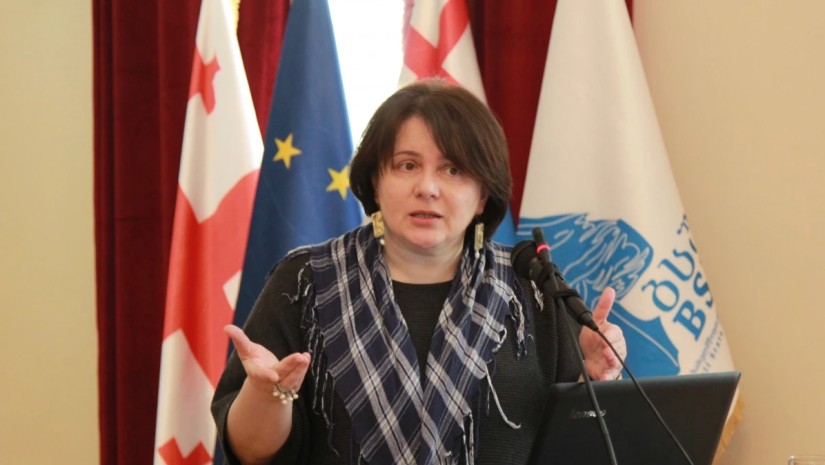

EU Project Coordinator Lika Glonti has criticized the Georgian government’s proposed education reform, warning that the transition to an 11-year school education system would effectively block Georgian students’ ability to pursue studies at European universities.
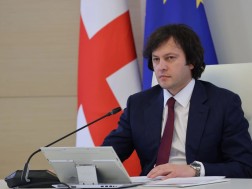
The comments follow GD Prime Minister Irakli Kobakhidze’s presentation of the education reform, which outlines several major changes, including the introduction of an 11-year school program, a 3-year bachelor’s and 1-year master’s system, and a new principle of “one faculty per state university.” The reform also provides Kutaisi becoming Georgia’s second major university hub alongside Tbilisi.
In her statement on social media, Glonti emphasized that while the reform primarily targets state universities, the new funding model would also heavily impact private institutions. According to her, since state orders would apply only to public universities, private ones would rely more on student tuition, leaving many families unable to afford education costs amid the country’s economic difficulties.
Glonti warned that this could result in a decline in the number of Georgian students, with private universities forced to depend largely on foreign enrollees, especially in medical faculties, while other disciplines could face serious decline. She concluded that the 11-year school model “blocks the path to studying at European universities,” isolating Georgia further from the European educational space.