


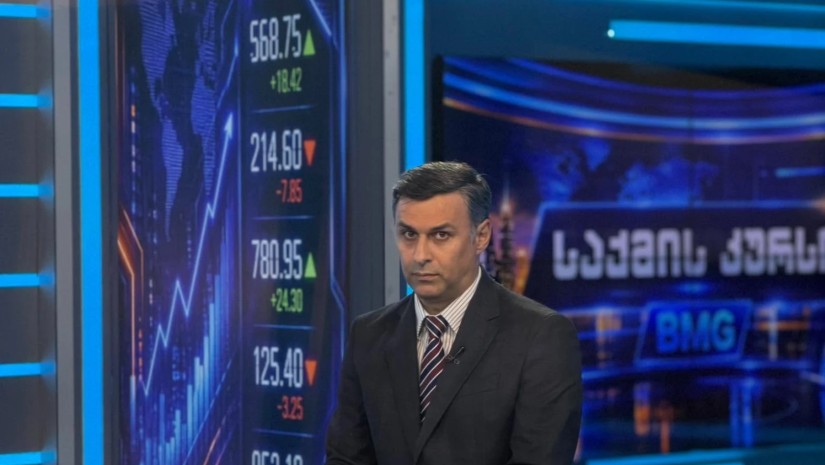

David Utiashvili, Head of the National Bank of Georgia’s Financial Stability Department, believes that halving the credit limit for individuals earning GEL 1,500–2,500 per month will have a minimal impact on overall lending, while positively affecting the sustainability of loan growth. He made the statement on Business Course. Under the new rules, the 25% PTI requirement currently applied to borrowers earning up to GEL 1,500 will be extended to incomes up to GEL 2,000 from February 1, 2027, and up to GEL 2,500 from September 1, 2027.
According to Utiashvili, the phased implementation is intended to minimize the impact on lending. He said banks have their own lending plans and funding commitments, while borrowers also have financial plans, so the changes were not introduced all at once. Utiashvili noted that the NBG does not currently face an immediate over-indebtedness risk, describing the measure as a long-term, structural step designed to have a minimal effect on lending and household access to credit.
Utiashvili said the retail loan portfolio is currently growing by around 21%, while incomes are increasing by about 10%. He estimates that the new measures could temporarily reduce retail loan growth to around 17%. In his view, this would bring credit growth closer to a more sustainable level, as household debt has been rising faster than incomes for several years. Asked why the NBG retained average rather than median wages when calibrating the rules, he said the regulator wanted to maintain the existing framework, which was calibrated in 2018 and adjusted in 2022.
Utiashvili also said the tighter rules are unlikely to push significant demand into less-regulated lending channels. He noted that the changes mainly affect unsecured consumer loans, with around 500,000 such loans issued per month, and said the NBG regulates nearly all entities issuing more than 20 loans. Developer installment plans, he added, are different because the property remains with the developer if the buyer fails to pay. Utiashvili said the NBG has seen similar regulatory changes work effectively since 2018 and 2022 and does not expect a significant informal financial sector to emerge as a result of the latest measures.