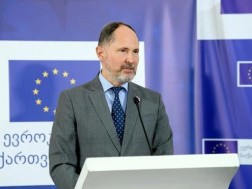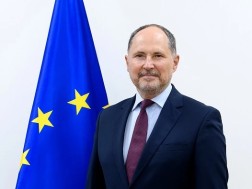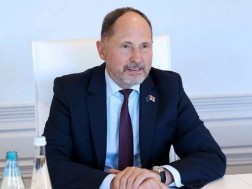


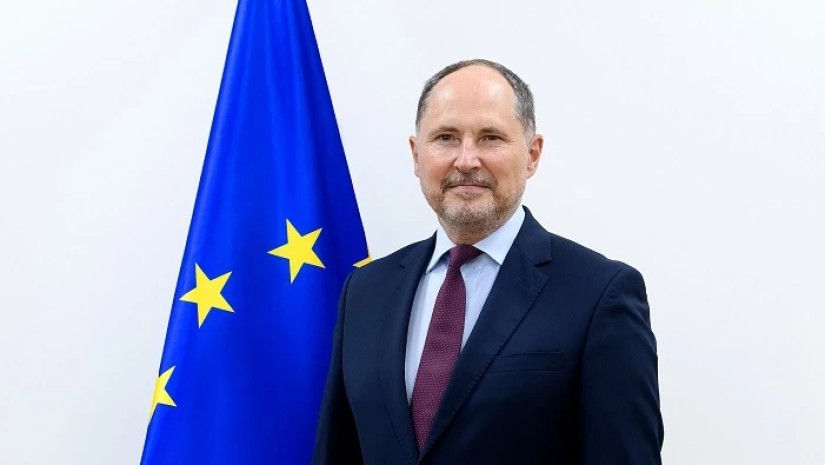

“Our intention was to punish those who are responsible for the repression, those who are responsible for intimidation, and those who are responsible for the ongoing violence,” said Paweł Herczyński, EU Ambassador to Georgia.
According to the EU Ambassador, Georgia’s democratic backsliding that has been going on for several months now couldn’t be left without our reaction.
“We admire the resilience and attachment of the Georgian people to the European future of Georgia and democratic values. We see them standing every night here, on Rustaveli Avenue, and many other places over Georgia, calling for a better future for themselves and their children. We stand by the people of Georgia. We understand their cry for a better future, a better life, a democratic country and European Georgia.
At the same time, we condemn ongoing intimidation and violence. We are shocked by people being beaten up, being threatened, being intimidated, including media representatives, including politicians, but also ordinary citizens, who are chased and beaten by masked men.
We are shocked by the impunity and the fact that, despite two months of ongoing violence on the streets, there was no one persecuted for this. And of course, as we have said, Georgia’s democratic backsliding that has been going on for several months now couldn’t be left without our reaction. Yesterday, the European Union decided to introduce the restrictions for holders of diplomatic and service passports of Georgia. So, those who represent the authorities will now have to apply for a visa if they would like to travel to the European Union using their diplomatic and service passports.
As we have said, our intention is not to punish the people of Georgia, who are standing on the streets and demanding a democratic, European Georgia. Our intention was to punish those who are responsible for the repression, those who are responsible for intimidation, and those who are responsible for the ongoing violence. This is why we have reached a decision that holders of diplomatic and service passports will have to apply for a visa when travelling to the European Union,” he said.
On January 27, the Council of EU decided to suspend parts of the EU-Georgia visa facilitation agreement. “This may lead to Georgian diplomats and officials having to apply for visa when travelling to the EU,” EU Delegation to Georgia stated.