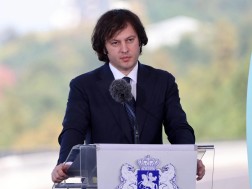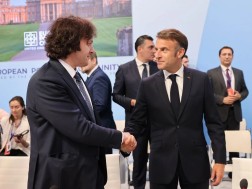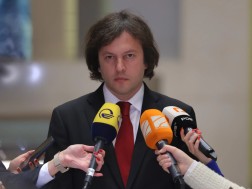


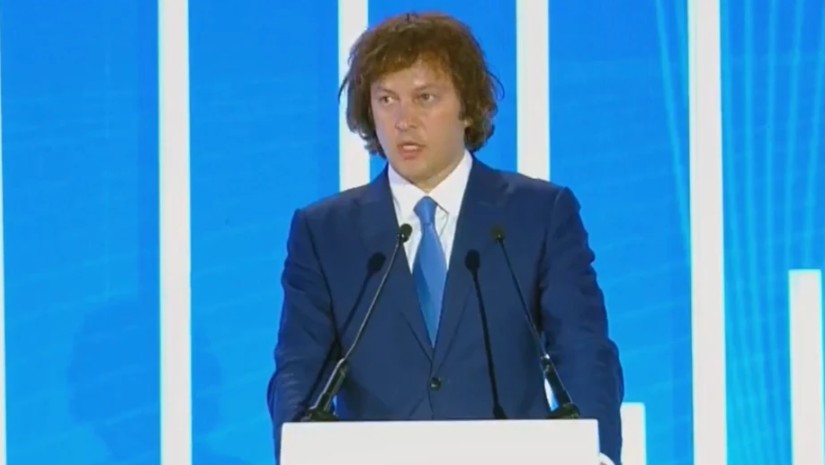

Georgian Prime Minister Irakli Kobakhidze said the state will act “responsibly” regarding the more than $400 million in compensation owed to ENKA and will seek alternatives through negotiations with the relevant investor. He made the remarks in response to a question from BMG.
“As for the payment, I will reiterate that the state will act responsibly and find ways to explore alternatives, including through negotiations with the relevant investor. We may consider alternatives based on consultations,” Kobakhidze said.
The Prime Minister also discussed the circumstances surrounding the suspension of the Namakhvani HPP project, describing the events that unfolded several years ago as “direct sabotage.” He said the state was weaker at the time and that this ultimately contributed to the project’s failure. “I would like to remind you of the context: it was direct sabotage, with protests organized without any grounds, which was followed by the decision not to build the Namakhvani HPP. At that time, the agent networks were much stronger and the state was much weaker; ultimately, this determined what happened. However, the situation today is radically different. We now have ambitious plans: three large hydropower plants are to be built, along with medium-sized HPPs and solar and wind power stations—all of which require significant effort. The processes that unfolded several years ago through these agent networks cannot be repeated today,” he said.
According to Kobakhidze, the funding of specific non-governmental organizations was also a factor in the events surrounding the Namakhvani HPP project. Discussing potential vested interests, he also mentioned electricity-importing companies. “Unfortunately, what happened has happened, but the state will act with full responsibility. NGOs funded by specific sources were involved in this. I do not wish to go into detail about who funded them, but it was precisely those whom we call the ‘Deep State’ and the ‘Global War Party.’ Electricity-importing companies may also have had an interest in funding such a sabotage campaign. A few years ago, the agent networks were much stronger, and what happened then will not happen today or tomorrow,” the Prime Minister said.
The compensation issue gained prominence after a U.S. court in the District of Columbia authorized enforcement of the amount awarded against Georgia in international arbitration. Under the arbitration ruling, Georgia was ordered to pay ENKA $297 million in principal compensation, up to $52.4 million in tax compensation, and additional sums. Interest at SOFR plus 4% also applies. Including interest accrued through 2026, the total amount significantly exceeds $400 million. The Deputy Minister of Justice also announced that the state would appeal the District of Columbia court’s ruling.
What Does the Arbitration Dispute Concern?
The arbitration dispute began in October 2021, following the termination of the investment agreement with the state on the grounds of force majeure. At the time, ENKA was preparing to begin construction of the $800 million Namakhvani HPP project and had already invested approximately $100 million in preparatory works.
ENKA initiated arbitration proceedings, alleging a serious breach of the investment agreement by the state. On June 9, 2021, then-Prime Minister Irakli Garibashvili announced that the Namakhvani HPP project would not proceed in its existing form. The international arbitration tribunal later found that the decision was inconsistent with the investment agreement signed by the state, under which ENKA was entitled to challenge government actions before an arbitration tribunal in the event of a breach.
Enka Renewables, a subsidiary of Turkish engineering and energy company ENKA, was developing the 433 MW Namakhvani HPP cascade in Tskaltubo Municipality. The project was originally scheduled to become operational in 2025–2026.