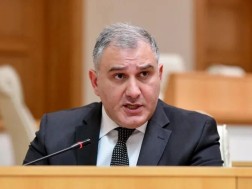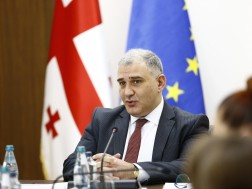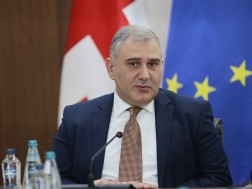


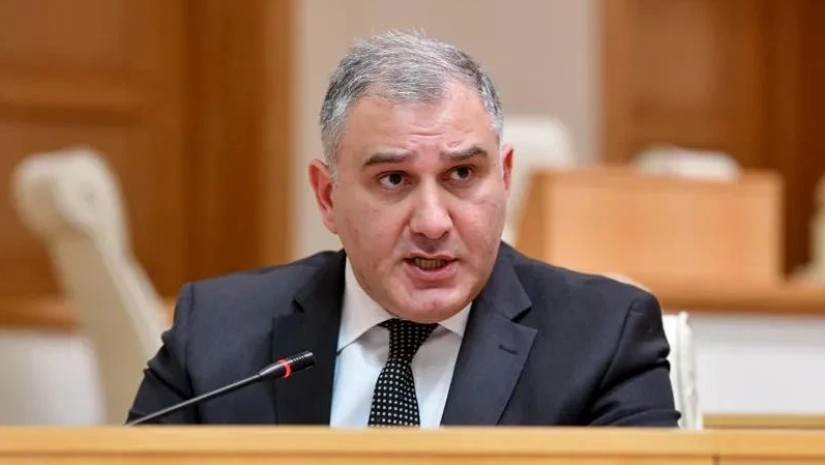

GD Health Minister Mikheil Sarjveladze outlined ambitious plans to transform Georgia’s healthcare infrastructure, announcing significant funding increases for primary care, expansion of psychiatric services, and development of world-class pediatric oncology facilities.
Minister Sarjveladze acknowledged both the exceptional talent of Georgian pediatric oncologists and the trust deficit affecting the sector.
“There are brilliant doctors in Georgia, including in pediatric oncology, and their work primarily needs to be appreciated,” he affirmed, while candidly addressing reputation challenges.
“We must face the problem and say that today, the Georgian healthcare system undeservedly does not have the reputation that would give, for example, the parent of a pediatric oncology patient the opportunity to feel at ease,” the minister admitted, calling for “necessary self-criticism” among healthcare institutions.
While the country has successfully implemented a program funding overseas treatment for pediatric cancer patients, the ministry is now focused on developing comparable domestic capabilities.
“For those who will have this ordeal, absolutely the highest standard services available in Georgia will be ready to offer,” Sarjveladze promised.
Work is already underway on a comprehensive concept to transform pediatric oncology services within Georgia, though the minister acknowledged the complexity of this undertaking.
“This is not a simple plan. It is quite complex, requiring serious forecasts regarding financial aspects, and specific clinical directions that need to be improved,” he explained, indicating implementation could begin within months.
The ministry’s strategic approach includes training a new generation of oncology specialists, ensuring sustainable domestic capacity. This professional development initiative will complement major infrastructure developments, including the groundbreaking Hadron Therapy Centre under construction in Kutaisi.
“This is a project that will make Georgia an exceptionally successful country,” Sarjveladze emphasized, highlighting that the centre - funded through philanthropist Bidzina Ivanishvili’s charity - will provide treatment capabilities that even many wealthier nations cannot offer.