


As Georgia’s quick service restaurant (QSR) industry continues to grow, the arrival and consolidation of leading American brands are transforming local consumer behavior and setting new standards for quality and efficiency.
One of the most prominent examples is Wissol Group, which today operates 130 restaurants nationwide under the Wendy’s, Dunkin’, and Subway brands. Adding to this success, Dunkin’ Georgia was recently recognized as the No. 1 franchisee in Europe.
What drives the success of global brands in Georgia? How do American marketing strategies evolve when adapted to a local audience?
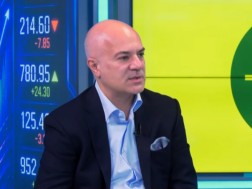
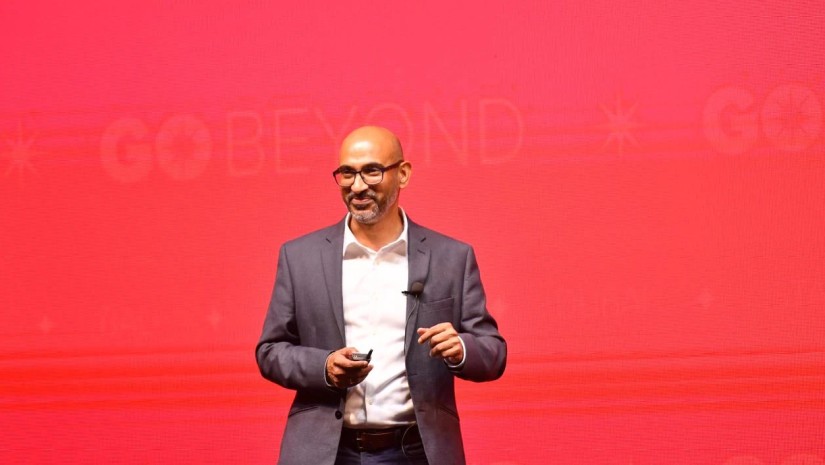
We spoke with Georgie Thomas, the Strategic Advisor for Wendy’s, Dunkin’, and Subway in Georgia, to explore how these brands are shaping Georgia’s fast-food landscape.
Mr. Thomas, could you explain in detail what your main mission is as a Strategic Advisor for Wendy’s, Subway, and Dunkin’ in Georgia?
I'm here to take Wendy's, Subway and Dunkin’ from “good to great”. That's my mission: to walk the talk and help turn strategy into results and take these brands into another level.
And not only to increase revenue or profitability, but also, I believe that my mission is to make the Georgian customers love these brands even more.
There's a big distinction between functionally wanting to satisfy your food craving and emotionally loving a brand. It's a long journey; it can't be done in haste, but I'm sure that by making everything right Wendy's, Subway and Dunkin’ will receive more love from the Georgian customers.
To be more specific on my role, I’m focused on P&L management, brand & growth advisory and business turnaround, lead strategic marketing and digital initiatives to drive sales and transactions, provide mentorship and coaching to Marketing and Operations teams on GTM (Go-To-Market), pricing and category management
Dunkin’ Georgia has been recognized as the #1 Franchisee in Europe. From an international perspective, how significant is this recognition for Georgia and for the wider quick-service restaurant (QSR) industry in the region?
This is a huge achievement, and an inspiring case-study where a small country like Georgia has entered the big league and has proved itself to be better than the other big European countries. It’s a very powerful statement where Georgia is seen as setting the standards for success within the European region.
This is bigger than just a trophy; it’s permission to think big and accelerate further for every existing QSR brand operating in the region.
And one of the most crucial positive effects is that this recognition will attract talent and retain talent which is the backbone of any QSR industry and in today’s times one of the most challenging issues.
It boosts investor confidence, raises the bar not just for the entire QSR sector in the region but also for the overall business community in Georgia.
In short: Georgia isn’t just catching up — we’re in fact leading the way! Which is extremely important.
In your view, what were the main factors that led Dunkin’ to receive such recognition?
It is essentially by first listening to and understanding the Georgian customers and then catering to their needs and wants.
Providing the best coffee in town, offering the best variety of donuts, launching several innovations through the year, offering everyday value, ensuring consistency and convenience and of course maintaining world class operational and service standards.
In the last couple of years, we have also heavily invested in the digital and technology space, keeping in mind the young generation especially the Gen Z segment.
You bring international expertise to Georgia. From your perspective, what makes the Georgian QSR market unique, and how does Dunkin’ Georgia stand out in Inspire Brands’ global family?
Georgia is very much digital-forward—with contactless payments, delivery apps, and ordering-kiosks. Frictionless ordering and ordering ahead is not a luxury anymore; it is the norm, and QSRs that do it well scale faster.
The Georgian QSR customer is very price sensitive and value for money conscious, so pricing and category management strategies must be very precise.
Also, Georgia has got a young, exuberant, University-heavy Gen Z population which adds a completely unique perspective on how to run the business.
In my view there are two main aspects that clearly differentiates Georgia to other international markets.
Firstly, Dunkin’ is deeply penetrated in terms of store development. There are 75 stores in Georgia for a population of 3.6M; and in Tbilisi with a population of around 1.3M we have 55 stores, which makes it 1 store for every 10,000 effective population which is a healthy ratio as per international standards,
Secondly, more than 50% of the Dunkin’ Georgia business comes from beverages and primarily from hot and cold coffee. This kind of coffee mix is truly commendable compared to the rest of the markets in Europe, Asia and even South America.
Based on your extensive experience, what is the biggest challenge for an international brand in gaining customer loyalty in emerging markets? Is quality alone enough?
The biggest challenge is when you are global and continue to think and act global. What works in the US market or any other legacy market does not always work in your market, it’s not always a plug in play. Of course, we should take inspiration from the best practices from all over the world and yet be flexible within a framework.
Quality opens the door but certainly is not enough. The aspects that drive loyalty are maintaining a high level of brand equity through authenticity, consistency, convenience, clear value and by being culturally fit.
What does “Field Marketing” mean, and based on your experience, what results does it bring to a brand’s success? How widely is Field Marketing implemented today in Wendy’s, Subway, and Dunkin’?
Like my earlier point, the role of Field Marketing is to “walk the talk” and ensure that strategy is turned into results. Field Marketing is where you not only support the development of a sound strategy but also ensure high quality execution on-ground. Execution is the only strategy visible to the customer and that’s the simple truth! Brands that focus on first getting a robust strategy in place and then combine it with top quality execution are the ones that succeed in the long run.
This department plays a pivotal role in the organization by being a central resource for Operations, Training, Culinary and Analytics teams. In other words, the Field Marketing team is responsible for driving comp. (same store) sales and transactions while keeping a close eye on improving profitability.
You’ve mentioned that the Georgian market is very digitally advanced, which leads me to my new question: How can the quick-service restaurant industry use AI not only to manage business processes but also to engage with customers? How can it be applied in marketing, and what are your plans in this area?
It can apply to marketing, and the way AI is going as you would agree, we’re talking about one thing now and in a few seconds, something new happens. That’s the pace of technological development in AI.
Now that we have smart kiosks everywhere, we are putting more investment into figuring out that when the customer is ordering through the kiosk, for example, how they can continuously be more engaged, rather than just being transactional. At the same time, as a brand, increase their basket size through AI.
We already have a wonderful app featuring all 3 brands and our teams are aggressively working towards increasing throughput per transaction and driving better engagement thereby enhancing the overall user-experience.
We are exploring the possibility of having dynamic and interactive digital menu boards and ordering-kiosks. The idea is to trigger different messaging and tactical upselling based on live sales and category data from the POS machine.
We have also recently hired an AI agency, primarily focused on AI generated content as the output. We are currently using this service for regular social media posts, big campaigns and strategic initiatives. However, the plan is also to test the capabilities of this kind of agency to enhance one-to-one engagement with customers.
How do you adapt global strategies of brands like Wendy’s, Dunkin’, and Subway to fit the Georgian market while maintaining international standards?
Wendy’s, Dunkin’ and Subway are big multinational brands. There is no question of not strictly adhering to the brand standards and maintaining high quality and consistency.
However, brands must be locally relevant. It is always - Think Global. Act Local. And in fact, this is no longer just good to have, it is a must in order to succeed! Adapting global strategies to the Georgian market starts first by listening carefully and understanding the needs and wants of the local customer.
Georgian consumers value international standards, but at the same time they expect a personalized, local approach — whether it is taste-preferences, service style, or innovation.
Menu innovations are developed with local flavor preferences in mind, while marketing campaigns are designed to resonate culturally with Georgian consumers.
In Dunkin’ we have the popular “Rolled Kachapuri” and “Rolled Lobiani” in the savory category which pairs beautifully with a hot cup of Americano. This is an example of a unique menu innovation.
On the strategy front, in Wendy’s we have the “Big 4 Baconators” which highlights 4 of our core and differentiated products - The Baconators. On the global front, the category is not positioned in this manner. The Wendy’s Beconator itself is regarded as the worlds’ best burger.
In Subway, the recipes of some of our menu items have been developed by a renowned local Chef. We have just started collaboration with Nutsa Surguladze for instance and she made our Croissant Sandwiches even more delicious.
How do you assess the quick-service restaurant market in Georgia – how competitive is it, and in your view, is there potential for more global brands to enter the market?
The market is going to grow further. Currently in terms of global QSR presence, not everyone is here, but slowly seeing the continued success of brands like Wendy's, Subway and Dunkin, many more brands will want to come in. I think it is competitive; it is growing and yet there is white space out there.
But every existing brand, like the Wissol Group brands’, must ensure that it won’t just sit on a pedestal and be complacent. We are relentlessly working towards improving our game in several aspects. That's how we will continue to lead the way while we leave space for others to enter.