



Rainer Michael Preiss | Global Markets Commentary
Why Trust Matters More Than Tax Incentives and PowerPoint Presentations
The Difference Between Establishing a Financial Centre and Becoming One
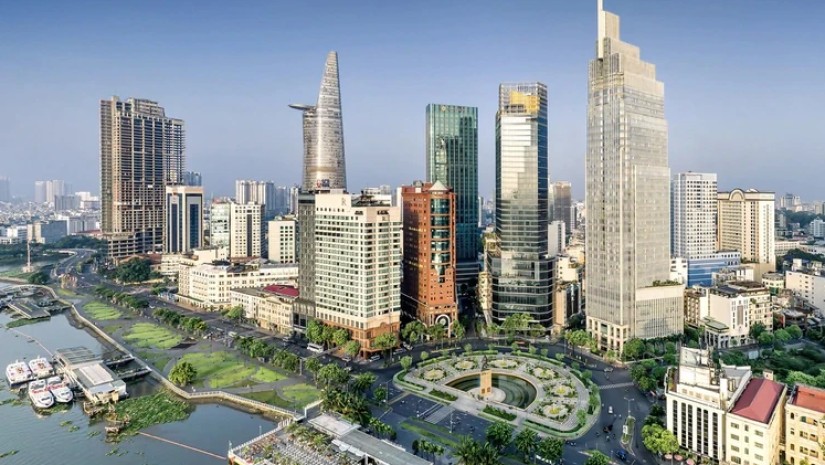
From Ho Chi Minh City to Tashkent, governments are investing political capital and financial resources in international financial centers (IFCs). The ambition is familiar: attract banks, asset managers, family offices and international capital, while positioning a country as a gateway to regional investment.
The economic case is compelling. Financial centers create skilled employment, deepen capital markets and connect entrepreneurs with investors. Yet there is a fundamental distinction between establishing a financial center by decree and becoming one in the eyes of global investors. Governments can offer tax incentives, create special jurisdictions, recruit advisers and build impressive towers. What they cannot decree is credibility. Trust must be earned through institutions, conduct and experience.
Hong Kong and the Foundations of Financial Freedom
Milton Friedman often pointed to Hong Kong as evidence of the power of free markets. Its rise reflected open trade, entrepreneurship and relatively low taxation. But commercial success also depended on enforceable contracts, financial expertise and a respected legal system.
Economic openness alone is insufficient. Investors need assurance that property rights will survive political change, disputes will receive impartial hearings and regulations will not be rewritten arbitrarily. Hong Kong’s experience illustrates how closely financial confidence is connected to the broader institutional environment.
Rule of Law, Political Accountability and a Free Press
The rule of law is the cornerstone of any credible IFC. The distinction between rule of law and rule by law matters: in the former, public authorities are themselves constrained by law; in the latter, legal instruments can become tools of executive power. The real test is not whether a court handles an ordinary commercial dispute efficiently, but whether an investor can challenge a powerful domestic interest—or the state itself—and receive a fair hearing.
Financial centers operate under different political systems. Electoral arrangements alone do not determine their success. More important for investors are transparent decisions, judicial independence, predictable enforcement and effective checks on arbitrary power. These safeguards must outlast individual leaders.
A free press is equally relevant to capital markets. Independent journalism, research and public scrutiny can expose corruption, accounting irregularities and conflicts of interest. Press freedom does not guarantee accuracy, but an environment in which claims can be investigated and challenged helps investors distinguish verified information from official promotion. Markets cannot price risks properly when inconvenient facts cannot be questioned.
Regulation Must Have Teeth
A regulator’s name, international advisers and glossy legislation are not substitutes for credible supervision. Investors ask whether licensing is transparent, whether beneficial ownership and anti-money-laundering standards are enforced, and whether politically connected firms receive preferential treatment.
A credible regulator must be able to say no: to unsuitable applicants, questionable transactions and influential institutions. Confidence grows from decisions taken under pressure, not merely from rules printed in English.
Why Tax Incentives Are Not Enough
Tax concessions can attract initial attention, particularly when a center is new. Yet international banks and family offices also weigh legal certainty, professional talent, connectivity, market infrastructure and freedom to move capital. London, Singapore and Switzerland demonstrate that durable financial ecosystems rest on more than fiscal incentives.
Tax advantages may bring capital through the door. Institutional credibility determines whether it stays.
The Hotel California Test: Can Capital Leave?
Perhaps the most revealing question is not how easily money can enter a jurisdiction, but whether it can leave. The Eagles’ famous line from “Hotel California”—“You can check out any time you like, but you can never leave”—offers a memorable warning for financial-center policymakers.
Investors need reliable mechanisms to repatriate dividends, convert currencies, transfer proceeds and restructure holdings. They accept legitimate prudential safeguards and financial-integrity rules; they do not welcome unpredictable restrictions or discretionary approvals. Memories of capital controls in various emerging markets reinforce the importance of this distinction. A financial centre that welcomes funds in good times but obstructs exits in difficult times will struggle to win lasting trust.
Family Offices: The Long-Term Test
Family offices are especially demanding clients. They manage wealth across generations, currencies and jurisdictions, with responsibilities extending to succession, governance, philanthropy and capital preservation. A marginal tax saving means little if a family doubts the integrity of courts, the security of assets or the consistency of regulation.
Singapore and Switzerland built sophisticated private-wealth ecosystems over decades. Their experience suggests that family-office success requires trusted lawyers, bankers, fiduciaries, regulators and dispute-resolution institutions—not merely a new licensing category.
Tashkent’s Opportunity
Uzbekistan has an opportunity to position the Tashkent International Financial Centre as a bridge between Central Asian enterprise and international private capital. Regional wealth creation, developing markets and growing demand for professional wealth management provide a plausible commercial foundation.
But the center’s credibility will depend on implementation rather than announcements. Can investors obtain impartial judgments? Are regulatory decisions transparent? Can proceeds be repatriated predictably? Will foreign institutions receive fair treatment when their interests’ conflict with influential domestic parties?
Tashkent should resist the temptation to imitate Dubai, Singapore or Switzerland wholesale. It can instead build a distinctive proposition in regional private banking, family-office services and cross-border investment—provided that legal safeguards, professional skills and operational independence are demonstrable. International consultants can help design institutions but cannot import trust.
Trust Is the Real Currency
International financial centers compete for confidence, not simply registrations, licenses and conference attendance. Political systems matter because they shape accountability; press freedom matters because markets depend on information; independent courts matter because disputes inevitably arise.
A government can establish a financial center by decree. Only consistent protection of rights, credible regulation and the sustained confidence of investors can turn it into a genuine one.
Disclaimer
This commentary represents the independent views of the author for general information and discussion. It is not investment, legal, tax or regulatory advice, nor an endorsement of any government or jurisdiction. Laws, policies and institutional arrangements may change; readers should verify current conditions independently.
Rainer Michael Preiss | Partner & Portfolio Strategist, DAS Family Office