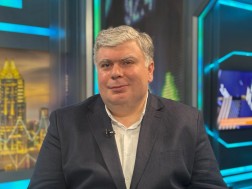


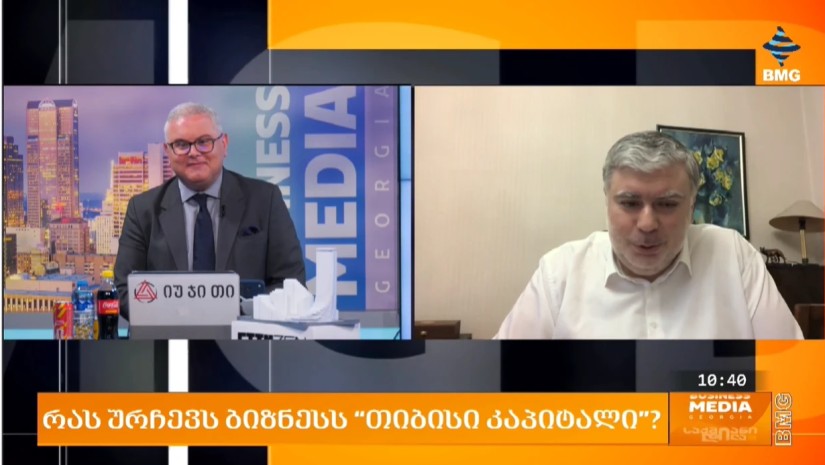

TBC Capital is advising businesses to diversify their loan portfolios and avoid borrowing exclusively in a single foreign currency. According to Otar Nadaraia, Chief Economist of TBC Group, a balanced mix of GEL, USD and EUR is optimal for companies, as it increases profitability while reducing currency-related risks. Speaking on BMG’s TV-program Business Morning, he noted that businesses should consider global currency trends as well as the geopolitical environment in the region when choosing a loan currency.
Nadaraia emphasized that companies generating most of their revenue in the local market must borrow at least part of their funds in the national currency, even if lari-denominated loans remain more expensive than foreign-currency ones. He said the share of lari in a company’s loan portfolio should ideally be around 35%, and in some cases may rise to 40–45%. Regarding foreign currencies, TBC Capital gives preference to the US dollar and recommends businesses maintain a smaller share of Euro-denominated loans, as the euro remains relatively weak against the dollar despite its slightly lower interest rates.
The Chief Economist also highlighted the potential economic implications of the war in Ukraine and the risks related to a possible resolution of the conflict. He noted that around 10% of Georgia’s GDP is linked to wartime effects, including migration. If the conflict moves toward resolution and sanctions on Russia are lifted, the Euro could strengthen; however, this scenario may also result in the outflow of migrants and a decline in the additional income the Georgian economy has received since 2022. According to him, this would make Euro-denominated borrowing riskier for businesses.
Nadaraia further stressed the importance of sector-specific considerations, noting that real estate pricing in Georgia is no longer fully tied to the dollar, with roughly 62% now denominated in lari. This means that borrowing entirely in lari also carries risks, as property prices may not rise in line with a potential appreciation of the national currency. TBC Capital’s analysis concludes that a well-structured multi-currency loan portfolio can reduce borrowing costs for companies by offering the same level of risk as lari while expanding profitability and minimizing exposure.