


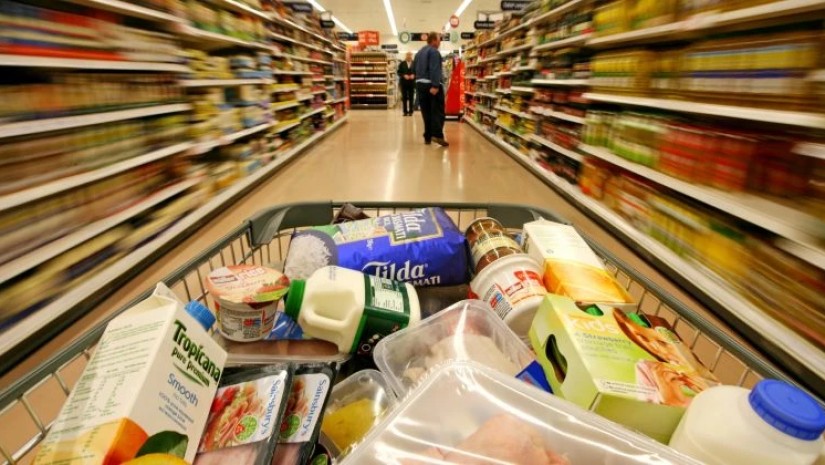

One of the main reasons why food prices in Georgia remain higher than in many EU countries is the country’s tax policy, particularly the treatment of value-added tax (VAT) on food products.
In Georgia, food is generally taxed at a standard 18% VAT, which applies to both local and imported products. In contrast, many EU countries apply reduced VAT rates to essential food items, making them more affordable. For example, packaged milk in Georgia carries an 18% VAT, while in Spain it is only 4%. Bread in Georgia is also taxed at 18%, compared with 5.5% in France. This difference contributes directly to higher supermarket prices for butter, cheese, meat products, sweets, and other food items.
To illustrate, 200 grams of butter in a Georgian supermarket costs 8 GEL, with 1.44 GEL (18%) attributed to VAT. Without the tax, the price would be 6.56 GEL. The same butter in a French supermarket, where VAT is 5.5%, would be approximately 13.5% cheaper than in Georgia.
VAT represents a major source of revenue for the Georgian state. In 2024, VAT collection is expected to generate 9.3 billion GEL, of which 7.55 billion GEL goes to the central budget and 1.77 billion GEL to local governments.
While Georgia provides VAT exemptions in certain sectors such as healthcare, pharmaceuticals, education, and primary agricultural production, these exemptions are limited to raw materials and production, not the final consumer goods. For example, farmers benefit from VAT exemptions on milk production, but not on pasteurized and packaged milk sold in stores. Similarly, exemptions apply to wheat cultivation but not to bread production. In contrast, EU VAT policies often extend reduced rates to both locally produced and imported food, which is particularly important for Georgia, heavily dependent on imported agricultural products like wheat and cooking oil. Extending VAT exemptions or reduced rates to all food products in Georgia could cost the budget up to 1.2 billion GEL in lost revenue.
EU countries generally categorize VAT into three rates:
1. Standard Rate: 17–27%, applied to most goods and services not covered by reduced or special rates.
2. Reduced Rate: 5–15%, applied to essential items including basic foodstuffs.
3. Super-Reduced or Zero Rate: Very low or zero rates applied to necessities like basic food items or exports.
Examples of VAT rates on food in selected EU countries:
- Germany: Standard 19%, reduced 7% on basic food (bread, milk, vegetables).
- France: Standard 20%, reduced 5.5% on fresh and minimally processed foods.
- Italy: Standard 22%, reduced 4% on basic foodstuffs, 10% on non-essential foods and hospitality services.
- Spain: Standard 21%, reduced 10% on most foods, super-reduced 4% on bread, milk, cheese, and eggs.
- Netherlands: Standard 21%, reduced 9% on groceries and non-alcoholic beverages.
- Sweden: Standard 25%, reduced 12% on food, 6% on certain specific goods.
- Belgium: Standard 21%, reduced 6% on fresh produce, bread, and dairy.
- Poland: Standard 23%, reduced 8% on fresh/minimally processed food, 5% on some dairy and baby food.
In summary, Georgia’s uniform 18% VAT on all food products creates a significant price gap with EU countries that use reduced or super-reduced VAT rates for essential items. Reforming VAT for food could help lower prices for consumers but would also have major implications for government revenue.