



Zambia, often described as “The Real Africa,” offers more than just scenic beauty and safari adventures. It represents a rare authenticity—untouched landscapes, deep cultural roots, and genuine hospitality. This identity has drawn not only travellers but also a growing number of investors seeking something more meaningful than glossy brochures and overdeveloped destinations.
But Zambia’s appeal is not limited to wildlife or waterfalls. Beneath its natural charm lies a nation actively shaping its economic destiny. With a young, dynamic population and a commitment to reform, Zambia is building one of Africa’s more promising financial ecosystems. At the centre of this transformation is its currency, the Zambian Kwacha (ZMW), and its capital markets.
The Zambian government is executing a bold plan to unlock long-term growth through financial development. In 2023, Zambia launched the Capital Markets Master Plan—a 10-year strategy designed to modernize and expand its financial sector. The plan aims to position Zambia as a credible frontier market, introducing new investment products such as green bonds, ETFs, and REITs, while encouraging listings and investor participation on the Lusaka Stock Exchange. It supports Zambia’s broader Vision 2030 and aligns with the country’s 8th National Development Plan. For global investors, the message is clear: Zambia wants to be open for business, and it’s laying the groundwork for sustainable, long-term engagement & growth coupled with attractive capital markets returns.
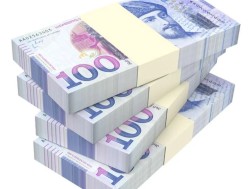
At the heart of this financial evolution is the Zambian Kwacha, the country’s official currency since 2013 when it replaced the old kwacha at a rate of 1 to 1,000. The kwacha is managed by the Bank of Zambia and serves as a medium of exchange and store of value in an economy still largely dependent on copper. Over 70 percent of Zambia’s foreign exchange earnings come from copper exports, making the kwacha highly sensitive to global commodity prices. When copper prices rise, the kwacha tends to strengthen. When they fall, the currency comes under pressure.
But copper is not the only factor shaping the kwacha’s performance. Inflation, fiscal deficits, external debt, and investor sentiment all play a role. In 2020 and 2021, the kwacha was among the world’s worst-performing currencies as the COVID-19 pandemic and sovereign debt concerns weighed heavily on the economy. In 2022, it became one of Africa’s strongest performers, buoyed by IMF support and a promising debt restructuring process. However, by late 2023 and early 2024, pressures returned due to delays in debt deals and continued dollar shortages, underscoring the volatility that still surrounds Zambia’s economic path.
Compared to other African currencies, the kwacha sits in the middle of the pack. It is not as widely traded or as globally significant as the South African rand or the Nigerian naira, nor as stable as the Botswana pula. Yet it garners close attention from regional investors, particularly because of Zambia’s mineral wealth and ongoing engagement with creditors and institutions like the IMF and World Bank. Importantly, Zambia is not part of any monetary union, so the kwacha is managed independently, offering the central bank greater flexibility but also greater responsibility.
On the international stage, the kwacha is still seen as a frontier-market currency—illiquid, non-convertible in most global markets, and high-risk. Yet for those willing to accept that risk, it also offers high-yield opportunities, particularly as Zambia pushes forward with fiscal reforms and broader economic diversification. For global investors, ZMW-denominated assets remain speculative but are increasingly part of the conversation around emerging and frontier market exposure.
One area where Zambia’s economic challenges are clearly visible is in interest rates. As of May 2025, the Bank of Zambia has set its policy rate at 14.5 percent, raised earlier in the year to counter persistent inflation, which reached 16.7 percent in January. Commercial bank lending rates are high, averaging around 29 percent, while deposit rates remain much lower at approximately 7.5 percent. These elevated rates reflect the tightrope Zambia’s policymakers are walking—trying to stabilize the currency and control inflation while still supporting growth.
The country’s history of interest rates tells a story of volatility and adjustment. In the early 2000s, Zambia battled inflation with rates as high as 68 percent. By 2010, rates had dropped to below 4 percent as the economy stabilized. More recently, rates were cut in response to the COVID-19 pandemic but began rising again in 2023 amid renewed inflationary pressure. Compared to its regional peers, Zambia’s current rates are on the higher side. Nigeria, for instance, sits at 18.75 percent, while Kenya and South Africa are at 10.5 and 8.25 percent respectively.
Looking ahead, Zambia’s economic outlook—and the fate of the kwacha—will depend on several key factors. Success in restructuring external debt will be crucial. So will the central bank’s ability to bring inflation under control. Copper prices will continue to be important, but so too will the country’s ability to diversify into sectors like agriculture, tourism, and clean energy. Perhaps most critically, Zambia must attract both domestic and foreign investment that creates real jobs and builds long-term capacity.
The kwacha, then, is more than just a currency. It is a mirror reflecting Zambia’s macroeconomic journey—its vulnerabilities, its reforms, its potential. In many ways, it captures the spirit of the nation itself: resource-rich, underappreciated, reform-minded, and determined to shape its own future.
For global investors willing to look beyond short-term volatility, Zambia assets and its kwacha may represent not just risk, but opportunity. Just as those who ignored Bitcoin at $1,000 missed a transformative moment, those who dismiss Zambia & African assets today might one day look back at the kwacha as the quiet beginning of something significant in Africa’s rise.
Rainer Michael Preiss, Partner & Portfolio Strategist at Das Family Office in Singapore