

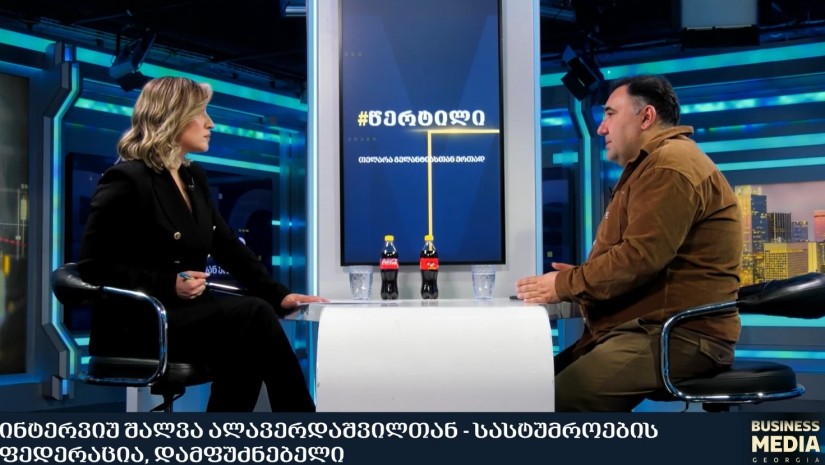

Georgia’s hotel industry is facing growing challenges despite rising tourist arrivals. According to Shalva Alaverdashvili, founder of the Hotels Federation, the sector’s profitability has sharply declined, and the payback period for investments has significantly increased. As a result, more hotel owners are abandoning tourism and converting properties into businesses with more stable revenue streams, among them, the banking sector. One more hotel in Tbilisi is reportedly being transformed into a bank.
Alaverdashvili says oversupply, rising costs, and shrinking margins have left hotel owners deeply disappointed. Many investors who entered the hospitality market with expectations of quick returns are now struggling to cover loan obligations. Owners who financed hotel development with profits from other industries, such as construction, are now using those same external businesses to service hotel-related bank debts. He notes that he still lacks precise data on how many hotels in Tbilisi have closed or changed profile in 2025.
The current situation marks a drastic shift from the sector’s peak years of 2016–2017, when gross operating profit was nearly 70% higher and hotels expected to recover investments within eight years. Alaverdashvili argues that Georgia’s tourism history is divided into two phases: before and after the 2019 “Gavrilov Night,” which disrupted growth and was soon followed by the pandemic. Although tourism grew by 8.4% in 2025, he stresses that this increase is insufficient to balance the disproportionate growth in hotel room supply.
Room capacity has expanded from 8,000 rooms in 2016 to 40,000 today, pushing prices downward. While the average daily rate (ADR) for four- and five-star hotels was $118 in 2017, it dropped to around $60 in 2025. This mismatch, Alaverdashvili warns, weakens the sector’s investment appeal. If investors once expected to recoup their spending within eight years, today the payback period has stretched to 25–30 years, fundamentally altering the market’s attractiveness.