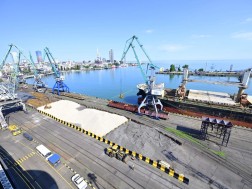


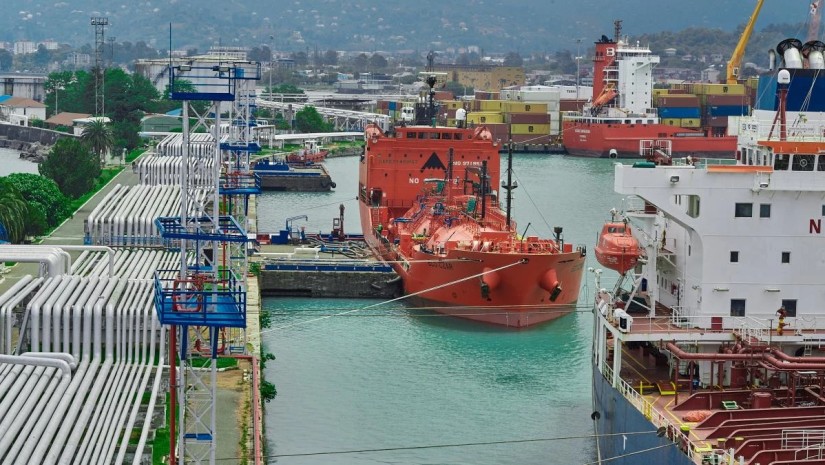

Batumi Oil Terminal, the operator of Batumi Port and the oil terminal, has decided to abandon plans for building new storage infrastructure and expanding its facilities. Instead, the company plans to optimize its existing logistics assets by reducing capacity, dismantling some tanks, taking others out of operation, and changing their functions.
The decision is outlined in an updated Environmental Impact Assessment (EIA) document submitted to Georgia’s Environmental Supervision Department. Batumi Oil Terminal has operated the port and terminal since 2006 under a 49-year lease agreement. Its operator is Kazakhstan’s KazTransOil, part of the Samruk-Kazyna sovereign wealth fund group.
According to the document, the main reason for revising investment plans is the terminal’s long-term underutilization. While the existing environmental permit allows for the annual handling of 5.02 million tonnes of oil and petroleum products, actual cargo turnover between 2020 and 2025 ranged from 1.05 million to 1.93 million tonnes, representing only 21-38% of designed capacity.
The company expects cargo turnover to rise to around 4.3 million tonnes annually between 2026 and 2030, but this would still remain below the terminal’s full capacity. As a result, the company plans to focus on more efficient use of existing assets, maintaining technically suitable tanks, reallocating them for different operations, and dismantling only facilities that require removal due to their condition.