


The Prime Minister of the “Georgian Dream” government, following the Interior Minister, states that the Ministry of Internal Affairs did not purchase the banned chemical substance “Camite” even during the time of the “National Movement.” However, he also says that the inventory list of the GDD presented in the BBC investigative film is authentic, and that substances under the UN3439 code were purchased by the MIA in 2009, during Vano Merabishvili’s tenure. The Prime Minister says that certain substances were used to disperse the 2024 protest rallies, but an investigation must determine whether these substances were prohibited or not, and full information about what the powder purchased under the UN3439 code during Merabishvili’s time actually contained will be revealed after the investigation.
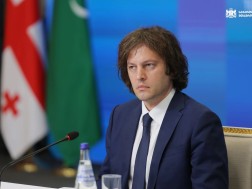
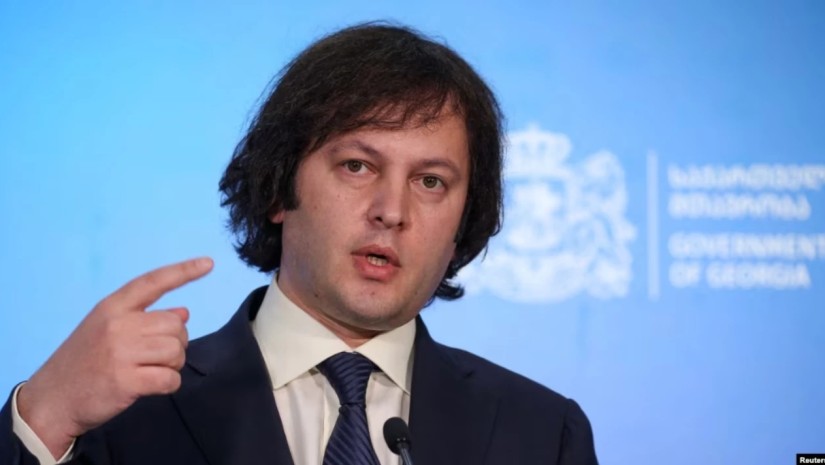
At a press conference held today at the Government Administration, Irakli Kobakhidze stated that the BBC must answer for the “false information it disseminated,” and that for this purpose the GD government, along with the State Security Service investigation, will appeal to the British communications regulator and to international law.
On this issue, journalists from “TV Pirveli” and “Formula” asked detailed questions to the GD Prime Minister, including about the responsibility of the Prime Minister himself and of Vakhtang Gomelauri. However, Irakli Kobakhidze said that his own responsibility will not be raised, and if anyone’s responsibility may be discussed, it is Vano Merabishvili, not Vakhtang Gomelauri, during whose tenure the 2024 protests were dispersed.
Below is the full text by Irakli Kobakhidze:
Q. The assumption made by the BBC is based on several pieces of information, including confidential information. One of the codes, UN3439, is suspicious… Is the MIA going to publish information about what substance was used during the dispersal?
Kobakhidze : As for the involvement of the substance, a substance was involved, but the main thing is whether this substance was prohibited or not. The BBC spoke in practically affirmative terms about the use of Camite, although the MIA has confirmed that this substance was not actually used and was never purchased by the MIA, including under the National Movement regime. The rest is under investigation, and the results will be made public.
Q. The MIA will not tell us what was used – whether it was legal or not?
Kobakhidze: The first information has already been published, and the MIA has already exposed the BBC as lying. Detailed information will be released as soon as the investigation is published. The Ministry has already denied the use of Camite based on the documentation and analyses in its possession.
Q. This chemical code includes many substances, not only Camite. Gomelauri said one thing and Gela Geladze said another. Why are you waiting for the investigation to be completed—tell us now and dispel the speculation, if you consider it speculation?
Kobakhidze: Vakhtang Gomelauri said that the substance certain people were talking about was purchased in 2009. Under no circumstances did Gomelauri confirm that Camite was used. Later, the Interior Minister stated publicly that Camite was not used. Therefore, there is no contradiction: Gomelauri generally said that the powder was purchased in 2009; Geladze said the powder did not contain Camite.
Q: We do not know which one is true, so why not publish what the substance actually contained? A whole year has passed since the protests.
Kobakhidze: We will use three things for this: first, the investigation of the State Security Service; second, we will appeal to the British regulator; and third, international justice. All three instances will work.
Q: BBC specialists say that all substances under this code are prohibited…
Kobakhidze: No, that is a lie. One of the substances under this code is Camite, which is prohibited, but there are dozens of substances, a large part of which are not prohibited.
Q: So other substances could have been used?
Kobakhidze: Of course, non-prohibited substances.
Q. Do you confirm the inventory list published by the BBC?
Kobakhidze: Yes, under the code there are both prohibited and non-prohibited substances.
Q. Were substances under this code purchased by the state?
Kobakhidze: Of course; there are both prohibited and non-prohibited substances there, and the non-prohibited substances were the ones that were subject to purchase.
Q. Can you tell us when you used them? Were substances under this code used during the 2024 protests?
Kobakhidze: Most likely. But the code itself does not tell you anything, because it includes dozens of substances, most of which were not prohibited.
Q. Has the state never purchased substances under the UN3439 code?
Kobakhidze: Camite is also under this code, but what can be said already is that the powder did not contain Camite.
Q. Did this powder contain other prohibited substances?
Kobakhidze: That will be determined by the investigation, and then the information will be presented to the public. Whether Vano Merabishvili purchased something prohibited or not will also be determined.
Q. You have said several times that Gela Geladze ruled out the use and even possession of Camite, and you say he exposed the BBC as lying. But he only said this verbally and presented no evidence. Should we trust him on his word?
Kobakhidze: After the investigation is completed, detailed information will be presented to the public and to the media. The information Geladze released was based on specific material. It is easier to rule out the presence of one substance in a powder than to examine its full spectrum. The relevant procedures have already established that this powder did not contain Camite. As for the full spectrum, the investigation will share that with the public. Camite has been ruled out; the investigation will continue and establish each substance contained in the powder.
Q. Using the same procedure that ruled out Camite, can you not determine the other substances too?
Kobakhidze: No, this requires additional analysis. It is easier to exclude one substance than to determine the full spectrum. Camite has been ruled out; the investigation continues and will determine each substance present.
Q. Where was the procedure carried out that established the powder did not contain Camite?
Kobakhidze: The SSU and the MIA are working on this; which of them determined it, ask the agencies. When the Interior Minister released this information, he had reliable information that the substance was not used. The Interior Minister takes responsibility for the accuracy of this information, and I can also confirm it.
Q. The MIA cannot directly tell us which substance was used during the 2024 protests. Can you rule out that other prohibited substances were used?
Kobakhidze: I think so, because presumably the MIA would have checked what kind of powder Vano Merabishvili purchased at the time, though this is my assumption. It is better to wait for the official investigation and its results—we should not get ahead of them.
Q. Your answer contains the possibility that another prohibited substance was used against the protesters?
Kobakhidze: My answer contains only one thing: we must wait for the investigation. It continues and must determine which substances were in the powder. I cannot make such an unserious statement as claiming what the powder did or did not contain.
Q. Then on what basis do you attack the BBC? The BBC suggested, with high probability, that Camite may have been used, but also pointed out that another prohibited substance could have been involved. Why attack the BBC if you yourself say you must first determine whether a prohibited substance was used?
Kobakhidze: The issue was deliberately dramatized. When the BBC says that a substance used in World War I and banned thereafter—Camite—was used to disperse protesters, that is a deliberate attempt at dramatization. The MIA easily exposed this lie. The rest will be determined by the investigation. The only reason I am not answering your question directly is that we must treat the investigation seriously.
I may know that someone did not kill a person, but if an investigation is ongoing, I do not have the right to say it.
Q. Are you sure Camite was not used?
Kobakhidze: I can speak on assumptions—presumably the MIA should have checked what substance Merabishvili purchased in 2008…
Q. And if they did not check, and it turns out the ministry was storing a prohibited substance?
Kobakhidze: The investigation will answer that based on the facts.
Q. Should we speak about at least your political responsibility if it turns out that, under your leadership, chemical weapons were used against citizens?
Kobakhidze: No, absolutely not. Even theoretically, that is not the case. In 2009, a certain dispersal powder was purchased by Merabishvili. One could theoretically talk about a duty to verify, I don’t know. But if anyone’s responsibility could theoretically arise, it is Merabishvili’s, since he knowingly purchased a specific powder, if such a thing is established.
Q. And why was Vakhtang Gomelauri keeping it?
Kobakhidze: I do not wish for your party’s leader to be revealed as guilty…
Q. And not Vakhtang Gomelauri?
Kobakhidze: First of all, we are talking in theory. Let’s not continue with theory—let’s wait for the investigation’s results.