


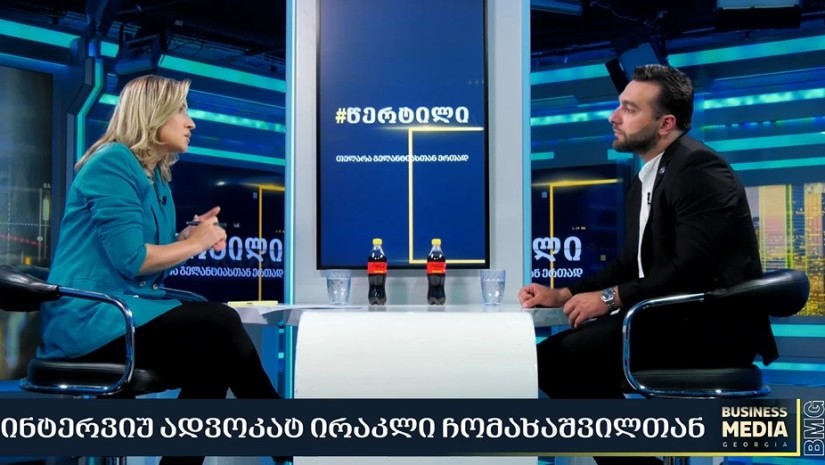

According to Irakli Chomakhashvili, a prominent human rights lawyer, the recent restrictions on media access to courtroom proceedings in Georgia are an attempt by the ruling party, Georgian Dream, to control the narrative and suppress independent reporting on politically sensitive trials.
Speaking on BMGTV, Chomakhashvili criticized the government for what he described as state-sponsored propaganda within the judiciary, which ultimately led to a decision to close trials to the public and the media.
“The state was running propaganda in the courtrooms, and now it wants to hide it. That’s why they closed the hearings. This isn’t just censorship, it’s damage control,” he said.
The lawyer emphasized the parallels between current events and previous abuses of judicial power, referencing the 2007 case under the former administration, where court transparency was also severely curtailed.
“I told the judge in court two days ago, they did the same thing in 2007, and it didn’t end well then either. History repeats itself when we fail to learn from it. That’s why it’s important to draw these comparisons,” Chomakhashvili said.
He added that public access to hearings had become inconvenient for the state due to a growing contrast between the official narrative and the actual courtroom proceedings. While the prosecution presented defendants as violent criminals, courtroom recordings often told a different story, revealing unreliable witnesses, unclear identifications, and a lack of solid evidence.
“Some witnesses didn’t even know the people they were testifying against. Others were clearly coordinating with the prosecution. This destroyed public trust in the justice system,” he said.
Chomakhashvili described the situation as a mix of tragedy and farce, individuals held in prison for over seven months without convincing evidence, while the public watched on, disillusioned by the spectacle.
“People see this and think, if it’s them today, it could be us tomorrow. That’s how trust in the system collapses. In history, no authoritarian regime has ever reduced restrictions — they only increase them,” he warned.
According to him, the decision to limit courtroom access is a sign of weakness, not strength.
“You only close the court when you’re trying to hide something, whether it’s a mistake, or something worse,” he concluded.
Beyond human rights, Chomakhashvili also stressed the economic implications of a compromised judiciary, particularly for Georgia’s attractiveness to international investors.
“If courts aren’t independent, it’s not just citizens who suffer. Large corporations and investors will think twice before bringing money into Georgia. If the system stays like this, they’ll go elsewhere, somewhere their investments are protected,” he said.
As media restrictions tighten and courtroom transparency declines, Chomakhashvili’s comments highlight a growing concern among legal professionals and civil society: that Georgia’s democratic institutions are eroding, and with them, the country’s international credibility and economic future.