


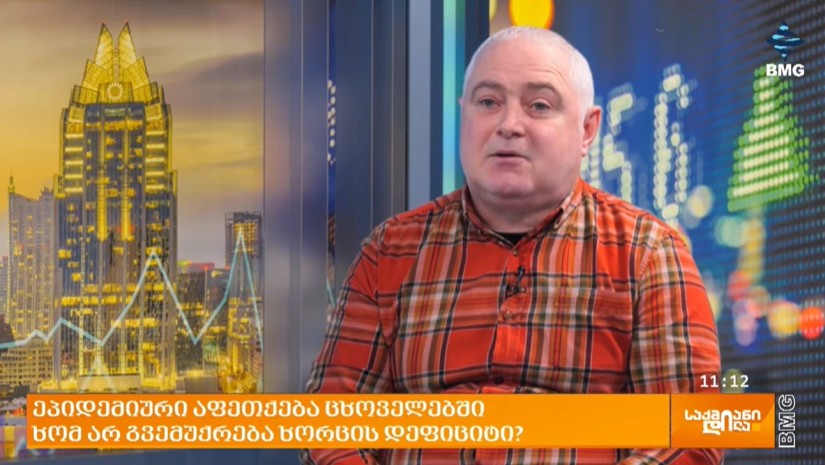

FAO Georgia’s Mikheil Sokhadze says there is no risk of a meat deficit in Georgia and no short-term basis for price increases. He noted that reports from Russia on the animal disease outbreak are unclear, as the strict measures being taken do not fully align with the officially reported diagnosis of pasteurellosis, raising suspicions of a possible zoonotic disease. Final conclusions, he stressed, await laboratory confirmation.
Sokhadze believes Georgia should strengthen preventive controls, and if the affected zone, currently covering about 2,500 kilometers, expands, additional measures such as targeted vaccinations may be required. Still, he is confident that rapid veterinary response and established procedures will help contain risks.
He also emphasized that the outbreak in Russia’s Novosibirsk region is far from Georgia, making significant market impact unlikely. Import volumes from this area are limited, and therefore no immediate pressure on supply or prices is expected.
However, the situation has prompted precautionary steps. Belarus has already restricted imports of livestock and animal products from several Russian regions, and some Georgian farmers warn of potential effects: according to farmer Guram Bichiashvili, beef prices in Georgia could rise by 20–25% in the coming two months due to disruptions in live cattle imports.