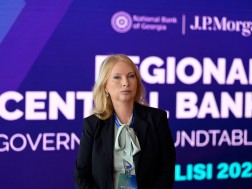

At least 2.2 percentage points of Georgia’s 5.9% annual inflation recorded in October were driven by external factors, primarily rising international oil prices amid the conflict in the Middle East, National Bank of Georgia (NBG) President Natia Turnava said. She noted that Georgia’s dependence on imported fuel, including gasoline and diesel, makes the country vulnerable to fluctuations in global energy markets.
Turnava said that core inflation and services inflation remain close to the NBG’s target, providing some reassurance despite rising headline inflation. However, the central bank maintains a tight monetary policy to contain inflationary risks.
In May 2026, the NBG raised its key refinancing rate by 0.25 percentage points to 8.25%, where it has remained unchanged since. Turnava said the bank is ready to tighten monetary policy further if external price pressures trigger second-round inflationary effects.
At the same time, the NBG may consider easing monetary policy if the conflict in the Middle East subsides and volatility in international markets declines, she added.