





Georgia’s fish production has declined for the fourth year in a row, according to the latest aquaculture sector review by Geostat, the country’s national statistics office.
In 2024, Georgia produced 2,452.5 tons of fish, marking a decrease of 17 tons compared to 2023. Since 2021, overall fish production has fallen by 14%, reflecting a persistent downward trend in the country’s aquaculture sector.
Fish Production by Year:
- 2021 – 2,861.1 tons
- 2022 – 2,791.7 tons
- 2023 – 2,469.5 tons
- 2024 – 2,452.5 tons
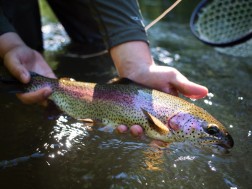
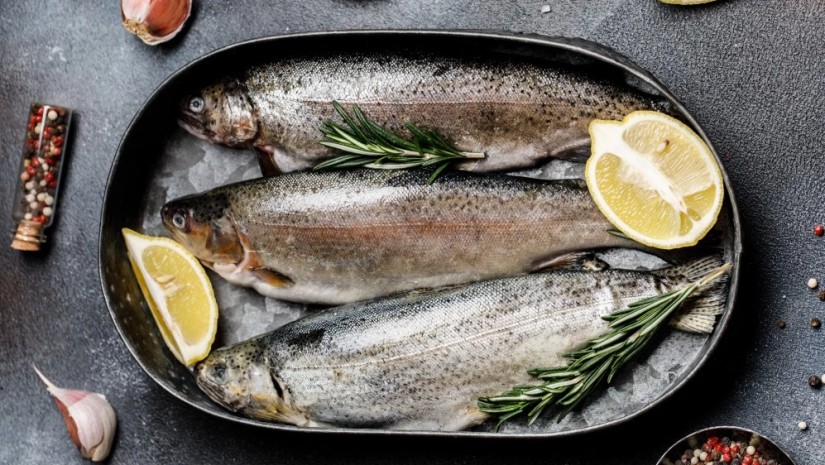
Despite the decline, rainbow trout remained the most produced species in 2024, accounting for 1,191.7 tons. When combined with other salmonid species, the total reached 1,206.9 tons.
Other key fish types produced include:
- Carp and Mirror Carp – 463.3 tons
- White Amur – 153.6 tons
- White and Spotted Bream – 299.1 tons
- Sturgeon – 278.6 tons
- Blob – 37.4 tons
- Other species – 0.6 tons
The Kakheti region once again led national fish production with 988.6 tons, followed by Shida Kartli with 750.3 tons, and Guria with 199.6 tons.
Production figures for other regions:
- Samegrelo-Zemo Svaneti – 56.9 tons
- Imereti – 87.0 tons
- Samtskhe-Javakheti – 141.8 tons
- Adjara – 122.7 tons
- Other regions – 105.6 tons
Notably, Samtskhe-Javakheti saw the largest increase in fish production, rising from 91.4 tons in 2023 to 141.8 tons in 2024, a gain of 50.4 tons.
Conversely, Shida Kartli experienced the sharpest decline, dropping by 131.9 tons, from 882.2 tons in 2023 to 750.3 tons this year.
The continued decline in national fish production raises concerns about the sustainability and competitiveness of Georgia’s aquaculture sector. While certain regions are showing localized improvements, broader structural or environmental challenges appear to be impacting national output.
Geostat's latest report underscores the need for renewed policy attention and investment to reverse the downward trend and support regional fish farms in increasing both yield and efficiency.