


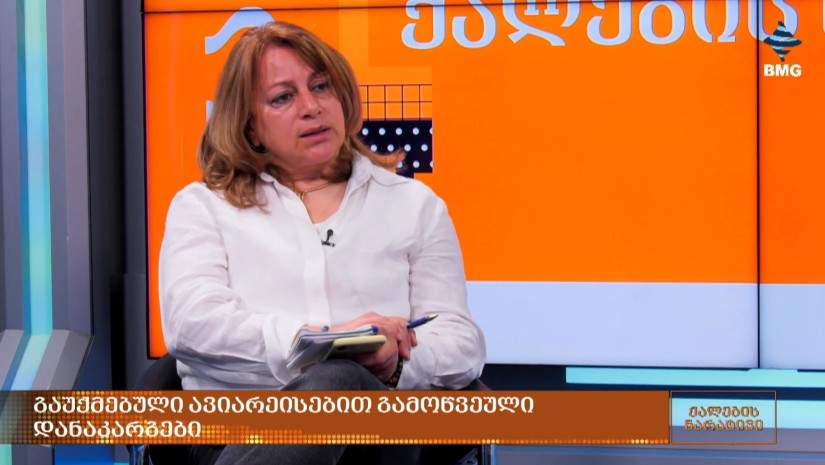

Georgia’s tourism industry is not dealing with a single shock but with multiple overlapping crises, tourism analyst Ia Tabagari said on BMGTV’s program Women’s Narrative. According to her, the sector’s problems are systemic and cannot be explained by external factors alone. “We don’t have one crisis, we have several — and we must get used to the idea that more are coming,” she noted.
Tabagari highlighted the sharp decline in visitors from the Middle East as one of the most painful blows, especially for Kakheti and Gudauri. These tourists traditionally combined Gudauri, Tbilisi, and Kakheti in a single trip, making the drop particularly damaging for these regions. However, she stressed that the deeper issue is the absence of a long-term tourism strategy: “The country has no tourism strategy — this has been our Achilles’ heel for years,” she said, arguing that many decisions are made intuitively rather than based on planning.
Despite strong demand during the 2025–2026 winter season in Gudauri, Tabagari says the resort closed abruptly and the government failed to respond. “There is no anti-crisis plan for any resort,” she emphasized, adding that the state could have prolonged the season or stimulated domestic tourism with discounted offers for Georgian visitors. “No one even considered making offers for our own citizens,” she said.
Tabagari believes the sector needs an anti-crisis task force focused on diversifying markets and improving the quality of Georgia’s tourism product. “Our tourism product is becoming increasingly low-quality and uncompetitive,” she warned. Georgia’s key assets — culture, wine, nature, and adventure tourism — are still not transformed into a strong, reliable offering. “We should be telling Europe we are a wine country with ancient culture — and when they arrive, the quality must match,” she concluded.