

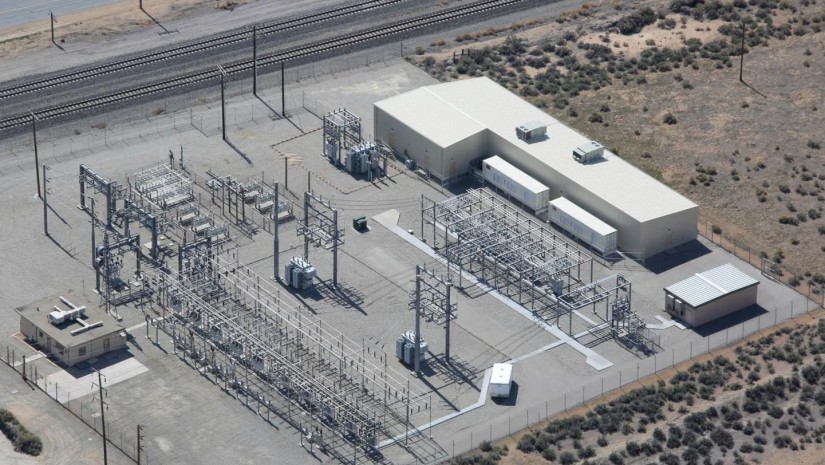

Georgia’s government is developing the country’s first large-scale electricity storage facility (a 200 MWh battery energy storage system) using a $104 million loan from the Asian Development Bank (ADB). However, according to the 2026 state budget, no funds have been spent on the project so far, despite an initial plan to utilize 35 million GEL in the first half of the year.
The procurement process for the project, carried out by the state-owned Georgian State Electrosystem, was announced twice and officially concluded in November 2025. However, no winning bidder has been announced, and it remains unclear whether companies submitted proposals or at what stage the evaluation stands.
The facility is planned to be built near the Ksani 500 substation in Mtskheta municipality. It is intended to supply electricity during peak demand periods and store surplus energy generated during times of excess production.
According to government projections, the project will reduce dependence on electricity imports, increase system flexibility, and improve energy security for critical infrastructure, including during emergencies affecting gas supply to thermal power plants or transmission disruptions between western and eastern Georgia. The system will be based on lithium-ion battery technology similar to that used in electric vehicles, scaled up to support grid-level electricity needs.