

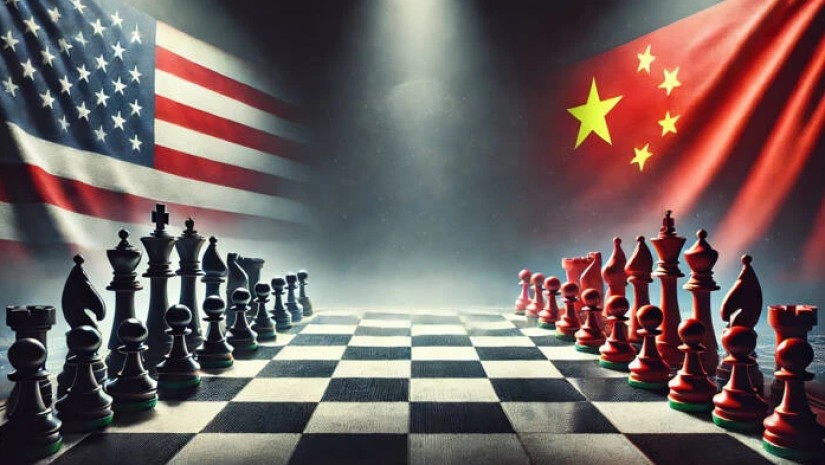

Understanding today’s global financial markets requires recognizing that we are no longer playing by old rules. Instead, we face a three-dimensional chess match - or perhaps a high-stakes poker game - between U.S. President Donald Trump, Chinese Communist Party General Secretary Xi Jinping, and U.S. Federal Reserve Chairman Jerome Powell.
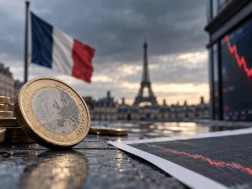
Just six months ago, The Economist magazine called the U.S. economy “the envy of the world.” Today, it warns of “how a Trump dollar crisis would unfold.”
On April 25th, 2025, Bank of America urged investors to "dump the U.S. dollar while they still can." Foreign exchange (FX) markets can move on momentum, and as technical analysis teaches, "the trend is your friend" — until it isn’t.
Challenging Old Assumptions
Traditional U.S.-centric asset allocation models often dismissed gold as unnecessary, viewing it as a non-cash-flow-producing asset. The United States was seen as having zero country risk.
But April 30, 2025, marks the 50th anniversary of the Fall of Saigon — an event Vietnam celebrates as “Liberation Day.”
Ironically, on April 2, 2025, President Trump announced sweeping new tariffs, calling it America's own "Liberation Day" — a "declaration of economic independence" aimed at decades of "unfair trade practices" that hurt American workers.
Amid this shift, Vietnam — a former wartime adversary — agreed to purchase U.S.-made F-16 fighter jets, representing the largest arms deal between the two nations and a symbolic victory for Trump’s trade agenda.
Legendary hedge fund manager George Soros once said, "I don't play the game by the rules — I look for when the rules change."
Today, Trump and his ally J.D. Vance seem determined to change the rules of global trade and perhaps the global financial system itself.
The implications for gold, silver, bitcoin, and the euro could be profound.
Signs of a New Era
Mark Carney, former Bank of England Governor and now a politician in Canada, declared:
"The 80-year period of U.S. economic leadership is over. America is no longer the anchor of global trade."
Carney warned that pensioners and global investors must rethink the U.S. dollar’s risk profile.
Indeed, in the dollarized economy of Cambodia — increasingly in China's orbit — banks offered higher U.S. dollar interest rates than American banks:
Development Bank of Singapore: 4% on USD deposits
South Korean banks operating in Cambodia: up to 9% on USD deposits
Investors must now worry not just about bank solvency but about the sovereign risk of the U.S. dollar itself.
"Assume Nothing"
HSBC’s private bank once advertised: “Assume nothing.”
This motto resonates more today than ever. As long-held assumptions about global finance collapse, capital market dislocations — even crashes — may follow.
Bitcoin's rise from $1,000 to $80,000 happened while many traditional banks discouraged their clients from including crypto in diversified portfolios.
Meanwhile, in Vietnam, gold prices in USD/VND terms breached $3,000 per ounce long before global markets followed.
J.P. Morgan's Chief Economist Bruce Kasman recently told Reuters that the U.S.'s "exorbitant privilege" is at risk if Trump’s policies undermine trust in American governance.
While this is not yet the global consensus, it is a growing view among serious investors.
Gold and Silver: Diverging Paths
President Trump’s April 2 tariffs didn't just shake global stock markets — they also disrupted silver’s chance to outperform gold.
Silver is more economically sensitive due to its industrial uses (solar, electronics).
A global trade slowdown acts as a headwind against silver prices.
Meanwhile, gold, prized as a "store of value," benefits from fiscal, market, and geopolitical uncertainty.
In early 2025, gold and silver were neck and neck with year-to-date gains around 14%. But by late April:
Gold rallied another 11%, reaching record highs.
Silver fell 5.4%, as industrial demand fears mounted.
The China Factor
The People's Republic of China seems acutely aware of U.S. dollar risk. Beijing is aggressively promoting the yuan (CNY) internationally and accelerating the construction of overseas gold storage facilities — part of a broader strategy to lessen dependence on the dollar.
As the South China Morning Post (owned by Alibaba Group) recently reported, China is moving to control more of global gold pricing — an effort that supports its larger push toward "de-dollarization."
Where the U.S. dollar bears George Washington’s image, China's yuan still carries that of Mao Zedong. The symbolism is not lost on careful observers.
Conclusion
The question global investors must now confront is simple but profound:
Is the United States still a zero-risk country, and is the U.S. dollar still a risk-free currency?
The unfolding answers could reshape global asset allocation — and fortunes — for decades to come.
The information contained in this article is provided for informational and educational purposes only and should not be construed as investment advice, financial advice, legal advice, or any other form of advice. The opinions expressed are those of the author and do not necessarily reflect the views of any affiliated organizations or entities. While every effort has been made to ensure the accuracy of the information provided, no representation or warranty, express or implied, is made as to its completeness or correctness.
Investing involves risk, including the potential loss of principal. Readers should conduct their own research and consult with licensed financial, legal, or tax professionals before making any investment decisions. Past performance is not indicative of future results.
Rainer Michael Preiss, Partner & Portfolio Strategist at Das Family Office in Singapore