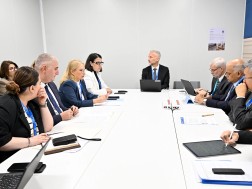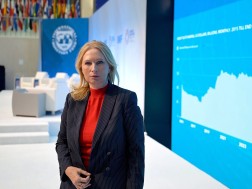




Alejandro Hajdenberg, head of the International Monetary Fund (IMF) mission, stated that Georgia still has steps to take in terms of corporate governance in state-owned enterprises, specifically regarding the selection and appointment of boards in line with the best international practices.
In response to a question about the ongoing reform of state-owned enterprises during the concluding press conference of the IMF mission, Hajdenberg acknowledged progress in enhancing oversight but highlighted that there are still steps to be taken. He emphasized that state-owned enterprises should be focused on commercial objectives and should not be subject to political influence.
"There are many aspects to the reform of state-owned enterprises. I would emphasize the operations of state enterprises and the framework for their governance. At the IMF, we are focused on the latter. I would divide this into two areas: one is oversight and fiscal risk management, and the other aspect is the corporate governance of the companies themselves. The Ministry of Finance monitors these companies, and there has been very good progress on strengthening oversight. The goal is to minimize fiscal risks and also ensure that the activities of these enterprises are reflected comprehensively and transparently in the budget.
For future progress, there is room for expanding the Ministry of Finance's capabilities to provide oversight over a larger number of companies. Currently, there are 7 such companies, but there are other important enterprises that need to be covered as well. This would be one step. Another important step would be identifying quasi-fiscal activities and reflecting them in the budget as government activities, so that these companies receive compensation for these activities. Some of these companies carry out activities that would normally be undertaken by the state, such as providing subsidies or offering services for free. This concerns financial monitoring.
Corporate governance, on the other hand, relates more to how companies are managed, how their boards are appointed, what qualifications are required, and what processes are in place. This will also be important, as the current practices are not in line with best practices. Typically, this is not a simple process, but it is crucial to ensure that the companies are managed with a commercial focus and without political influence, so that the primary goals of the enterprise are pursued," said Alejandro Hajdenberg.