


The International Monetary Fund (IMF) has not changed its position and will consider launching a new program with the Georgian Dream government only if the government itself formally requests one. This information was confirmed to Analytics with Elene Kvanchilashvili in a brief response from Andrew Jewell, the IMF’s Resident Representative in Georgia.
Requesting a program would require the government to present a detailed outline of its readiness to implement a reform agenda, followed by the IMF monitoring and evaluation of the reform process. The continuation of the IMF program depends on whether the reviews of these reforms are deemed completed. While the program also includes financial support, its mere existence can be even more important for investor confidence, serving as a sign of fiscal discipline and sound macroeconomic management.
Georgia last had such a program with the IMF, denominated in SDRs, but it did not draw on the approved credit. Still, the program significantly strengthened Georgia’s reputation for fiscal prudence on the international stage.
In 2023, the program—initially scheduled to run until June 2025—was first suspended and then allowed to expire without renewal. The reasons were serious concerns over the independence of the National Bank of Georgia (NBG) and the government’s failure to fulfill key reforms, particularly the corporatization of state-owned enterprises (SOEs). The IMF had urged the government to dismantle the quasi-economic nature of these enterprises and to end their use for electoral or political purposes.
Two years after the program’s suspension and expiration—which also ended IMF monitoring of the reforms—Prime Minister Irakli Kobakhidze proactively reintroduced the SOE reform agenda, claiming that the reforms had already saved GEL 700 million.
According to Kobakhidze, this saving resulted solely from personnel optimization. However, many analysts question this explanation, arguing that such a large amount likely reflects years of wasteful spending of state resources and that those responsible should be identified and held accountable. They also suspect that corruption and dishonest practices in procurement and tenders may have contributed to these inefficiencies. The Georgian Dream government, however, appears uninterested in exploring the deeper causes behind the claimed GEL 700 million in savings.
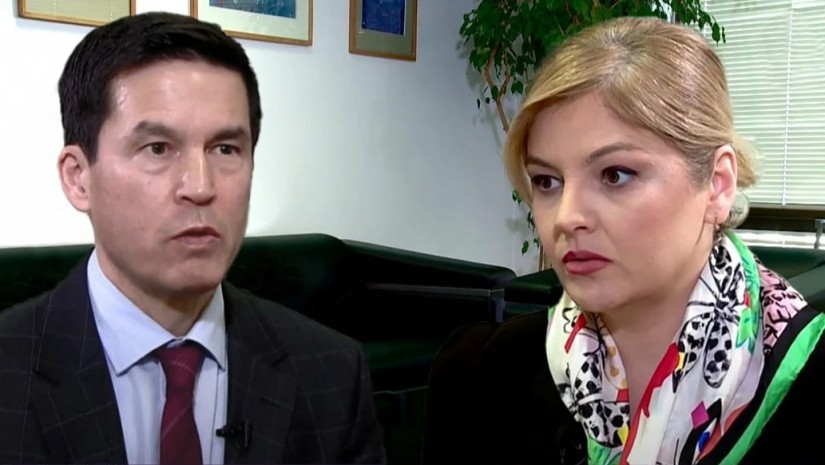
Amid this backdrop, Analytics with Elene Kvanchilashvili recently drew attention to a government press release stating that the Head of the Government Administration, Levan Jorjoliani, met with the IMF’s Resident Representative, Andrew Jewell.
According to the release, the meeting discussed cooperation between Georgia and the IMF, as well as the SOE reform. Jorjoliani emphasized that optimization processes had begun in the energy sector and at Georgian Railways, resulting in savings of several tens of millions of GEL.
“The meeting also focused on the main directions of the Government Efficiency Department’s work, the regulation of procurement issues in state enterprises, and the steps taken by the government in this regard,” the administration’s statement said.
As has become common practice for Georgian governmental bodies, the official press release did not include any comments from the other side—in this case, the IMF. Consequently, Analytics with Elene Kvanchilashvili reached out to the IMF’s Resident Representative for clarification and an interview request.
A noticeable trend has emerged: not only the IMF but international financial institutions in general—traditionally known for their high social responsibility and openness to public questions—are now increasingly choosing to remain silent or issue only brief written replies. This shift appears to parallel Georgian Dream’s growing tensions with the West and the corresponding decline in the party’s international legitimacy.
After Andrew Jewell’s meeting with Levan Jorjoliani, Analytics with Elene Kvanchilashvili sent him two questions:
1. What was discussed at the meeting? Was there any talk of launching a new program with the IMF, and what topics were covered?
2. What was discussed regarding SOE reform, and does the IMF believe that the Georgian government has begun implementing reforms according to its recommendations?
Jewell did not answer the second question. Regarding the first, he replied with just two sentences: “The authorities have not requested a new program. Our normal dialogue with the authorities continues, including through technical assistance in various areas.”
As in 2023—when the program was suspended—the meaning of “normal dialogue” remains unclear. This phrase is particularly ambiguous given that the IMF had previously accused the same ruling party with largely the same government of breaching its commitments under the program, including taking unilateral decisions about the National Bank without prior consultation with the IMF.
The IMF continues to conduct Article IV consultations with every member country, regardless of whether it has a separate individual program. However, these consultations are limited to assessing macroeconomic stability, have only advisory significance, and—unlike formal IMF programs—cannot be suspended or terminated if a government fails to implement recommendations.